
Software, AI and Web3 glossary
Short, plain definitions of the terms that come up when you plan a website, an app, an AI agent or a Web3 product, each linked to how we build it and what it costs.

First letter
76 of 76 terms
Product and development20
- CMS
- Cross-platform
- Fixed-price contract
- Flutter
- Headless CMS
- Landing page
- Low-code
- MVP
- Native app
- Proof of concept
- Push notification
- PWA
- React Native
- SaaS
- Technical debt
- Time and materials
- UI design
- UX design
- Web app
- White label
Every term in one line
- CMS
- Software that lets your team edit a website’s pages, posts and images without a developer.
- Cross-platform
- One code base that runs as an app on iOS and Android, and often on the web and desktop too.
- Fixed-price contract
- A contract where the price for an agreed scope is set before work starts and does not change.
- Flutter
- Google’s open-source toolkit for building iOS, Android, web and desktop apps from one code base.
- Headless CMS
- A content system with no built-in website: it stores content and sends it to any front end through an API.
- Landing page
- A single web page built for one campaign and one action, such as a sign-up, booking or enquiry.
- Low-code
- Building software mostly with visual tools and ready blocks, writing code only where needed.
- MVP
- The smallest version of a product that real customers can use, built to test an idea.
- Native app
- An app built for one operating system, iOS or Android, in that platform’s own language and tools.
- Proof of concept
- A small, quick test that shows whether an idea can work before you fund the full build.
- Push notification
- A message an app sends to a phone or browser that appears even when the app is closed.
- PWA
- A website that installs and behaves like an app, with a home screen icon, offline pages and notifications.
- React Native
- Meta’s open-source framework for building iOS and Android apps in JavaScript or TypeScript with React.
- SaaS
- Software you rent by subscription and use in a browser, while the vendor hosts and updates it.
- Technical debt
- The future cost of shortcuts in code, which makes every later change slower and riskier.
- Time and materials
- A contract where you pay for the hours worked and the costs incurred, at agreed rates.
- UI design
- Designing what users see and touch on screen: layout, colours, type, buttons and their states.
- UX design
- Deciding how a product works for its users, so they reach their goal without confusion.
- Web app
- Software that runs in the browser, with logins, data and actions, and needs no installation.
- White label
- A product built by one company and sold under another company’s brand as if it were its own.
AI and automation16
- AI agent
- AI hallucination
- AI voice agent
- Chatbot
- EU AI Act
- Fine-tuning
- Generative AI
- LLM
- MCP
- OCR
- Prompt engineering
- RAG
- RPA
- Vector database
- WhatsApp Business API
- Workflow automation
Every term in one line
- AI agent
- Software that uses a language model to plan the steps of a task and carry them out in your tools.
- AI hallucination
- When an AI model states something false or invented as confidently as if it were a fact.
- AI voice agent
- An AI system that answers and makes phone calls, talking with callers in natural speech.
- Chatbot
- A program that talks with people in a chat window, on a website, in an app or in messaging apps.
- EU AI Act
- The EU law that regulates AI systems by risk, from banned uses to transparency duties for chatbots.
- Fine-tuning
- Further training of an existing AI model on your own examples so it handles one task in a set way.
- Generative AI
- AI that creates new text, images, audio or code from a prompt, rather than only sorting data.
- LLM
- A large language model: an AI model trained on huge amounts of text to read and write language.
- MCP
- An open standard for connecting AI applications to tools and data sources in one consistent way.
- OCR
- Technology that reads text from scans, photos and PDFs and turns it into editable, searchable text.
- Prompt engineering
- Writing and testing the instructions given to an AI model so it produces reliable, usable output.
- RAG
- A way to make an AI model answer from your own documents by fetching the relevant passages first.
- RPA
- Software robots that copy a person’s clicks and typing to run repetitive tasks in existing applications.
- Vector database
- A database that stores text or images as vectors so it can find items by meaning, not exact words.
- WhatsApp Business API
- Meta’s platform that lets companies send and receive WhatsApp messages from their own software.
- Workflow automation
- Software that moves work between people and systems by set rules, without manual copying or chasing.
APIs and integration8
Every term in one line
- API
- A defined way for one piece of software to request data or actions from another.
- API integration
- Connecting two or more systems through their APIs, so data moves between them without retyping.
- Data migration
- Moving data from an old system to a new one, cleaned and mapped so the new system can use it.
- EDI
- Orders, delivery notes and invoices exchanged between companies’ systems in a standard format.
- Payment gateway
- The service that takes a card or bank payment at checkout and passes it on securely for approval.
- REST API
- A style of web API where data lives at URLs and is read or changed with standard HTTP methods.
- SSO
- One login that gives a user access to several applications without signing in to each one.
- Webhook
- An automatic message one system sends to another the moment something happens.
Business systems8
Every term in one line
- CRM
- Software that keeps every customer, conversation and deal in one place for sales and service teams.
- Customer portal
- A secure area of your website or app where customers log in to see orders, documents and requests.
- DATEV
- The German accounting and tax software, and data format, that most tax advisers in Germany work with.
- ERP
- One system that runs a company’s core processes: sales, purchasing, stock, production and finance.
- Headless commerce
- An online shop whose front end is built separately and talks to the commerce engine through APIs.
- Loyalty programme
- A scheme that rewards customers for repeat purchases with points, stamps, tiers or perks.
- Odoo
- A modular business software suite: CRM, sales, invoicing, inventory, HR and more in one system.
- Shopify
- A hosted e-commerce platform from Canada for building and running an online shop without your own servers.
Rules and compliance11
- Data processing agreement
- E-invoicing
- European Accessibility Act
- GDPR
- Making Tax Digital
- Peppol
- PSD2
- Verifactu
- WCAG
- XRechnung
- ZUGFeRD
Every term in one line
- Data processing agreement
- A contract that sets how a supplier may handle personal data on your behalf under GDPR.
- E-invoicing
- Sending invoices as structured data that the buyer’s software can read, not as a PDF or on paper.
- European Accessibility Act
- The EU law requiring many consumer products and services, including online shops, to be accessible.
- GDPR
- The data protection law that sets how organisations may collect, use and store personal data.
- Making Tax Digital
- HMRC’s programme that requires digital tax records and filing through compatible software.
- Peppol
- An international network and set of rules for exchanging e-invoices and orders between organisations.
- PSD2
- The EU payments directive behind strong customer authentication and open banking.
- Verifactu
- Spain’s rules for invoicing software: invoice records sent to the tax agency or kept tamper-evident.
- WCAG
- The W3C guidelines for making websites and apps usable by disabled people, in levels A, AA and AAA.
- XRechnung
- The German e-invoice standard in pure XML, required for invoices to German federal public bodies.
- ZUGFeRD
- A German e-invoice format: a PDF people can read, with the invoice data embedded as XML.
Web3 and blockchain13
- Blockchain
- Crypto wallet
- DAO
- dApp
- DeFi
- Digital product passport
- Layer 2
- MiCA
- NFT
- Smart contract
- Stablecoin
- Tokenisation
- Web3
Every term in one line
- Blockchain
- A shared ledger copied across many computers, where records are added in blocks and cannot be quietly changed.
- Crypto wallet
- An app or device that holds the keys to your crypto and lets you send, receive and sign transactions.
- DAO
- A group that makes decisions and manages shared funds through token votes and smart contracts.
- dApp
- An app whose core logic runs in smart contracts on a blockchain, used through a crypto wallet.
- DeFi
- Financial services such as trading, lending and borrowing, run by smart contracts instead of banks.
- Digital product passport
- A digital record of a product’s materials, origin and repair data, opened from a QR code on the label.
- Layer 2
- A network that runs on top of a blockchain such as Ethereum to make transactions faster and cheaper.
- MiCA
- The EU regulation for crypto-assets, covering stablecoin issuers, white papers and crypto service providers.
- NFT
- A unique token on a blockchain that records who holds a specific item, such as a ticket, artwork or membership.
- Smart contract
- A program stored on a blockchain that runs automatically when its conditions are met.
- Stablecoin
- A crypto token designed to keep a steady value, usually tied to a currency such as the US dollar or euro.
- Tokenisation
- Representing rights to a real or digital asset as tokens on a blockchain that can be held and transferred.
- Web3
- Online services built on blockchains, where users hold their own assets and identity in a wallet.
Related projects
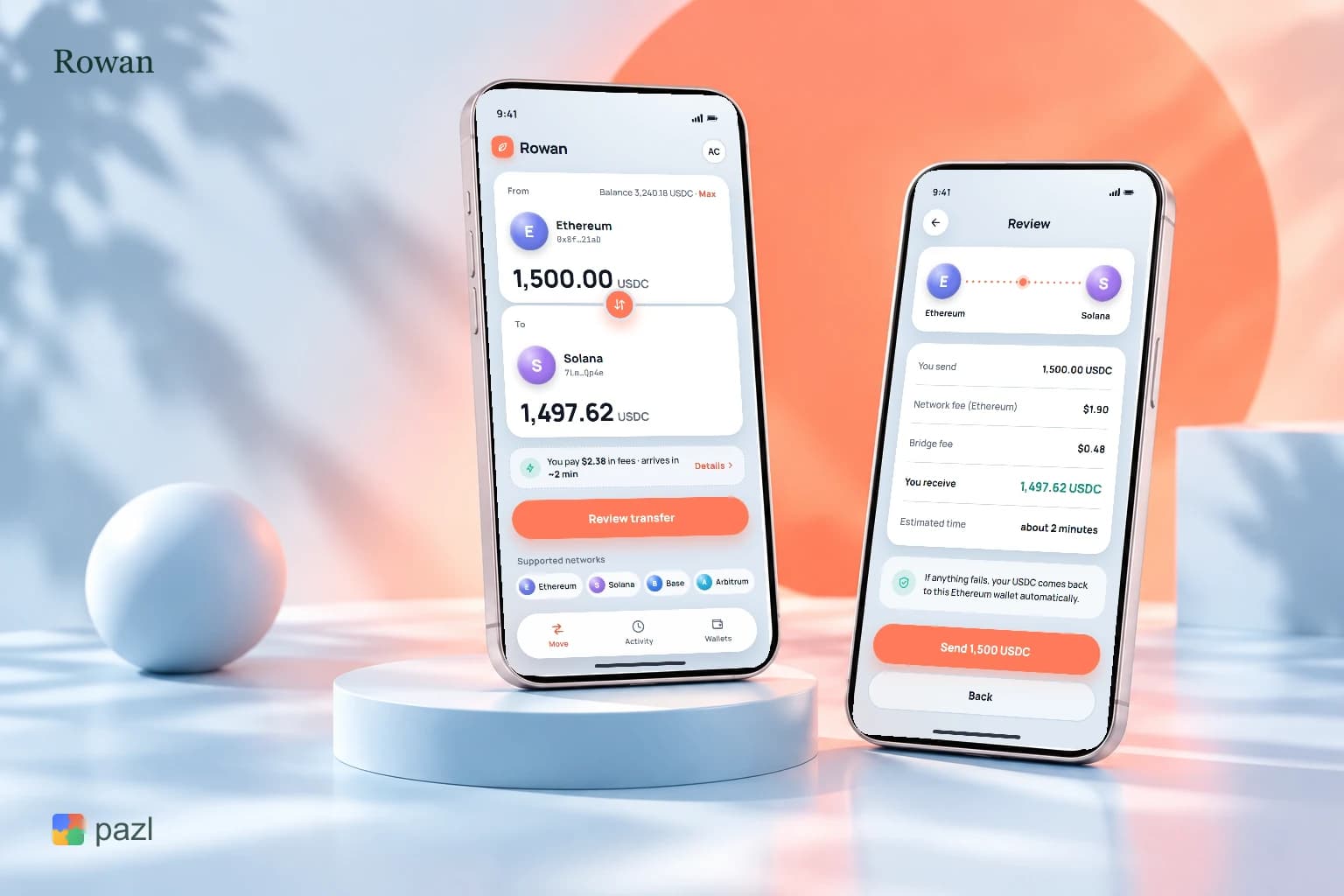
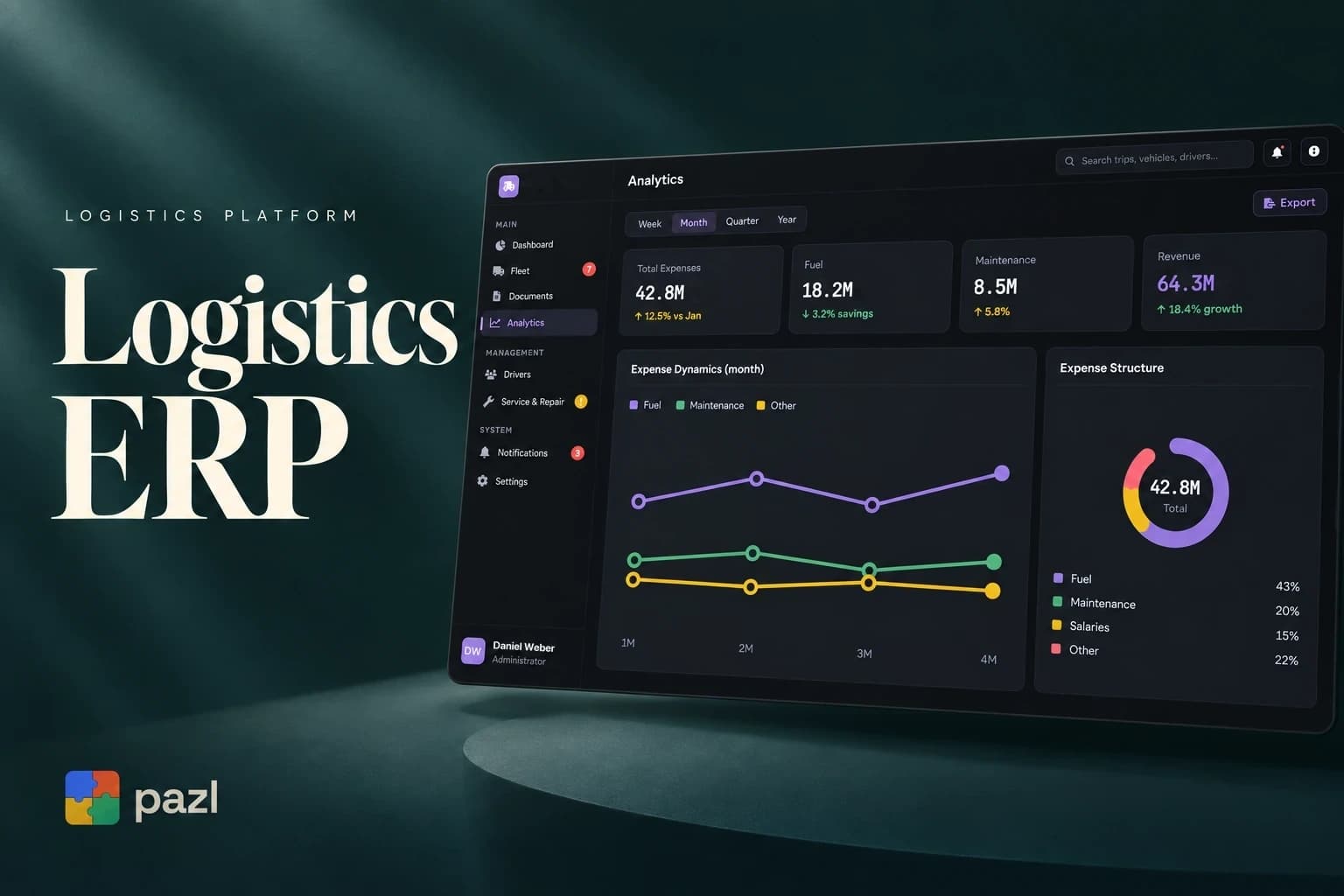
A few of the products we have built: a business system, an AI agent, a Web3 app.




From the founder
I keep this glossary so you can follow every conversation about your project. If a term you need is missing, write to me.
Anatoly MikhailovFounder of Pazl