
What is a headless CMS?
A headless CMS is a content management system with no front end of its own: it stores content and sends it through an API to websites, apps or other screens.

Why it matters for a business
A headless CMS lets your marketing team edit content once and publish it to the website, the app and anywhere else, while developers build the front end with the technology that suits it.
More
Contentful, Strapi and Sanity are common examples.
It costs more to set up than a theme-based site, so it pays off when you have several channels or strict speed targets.
Why “headless”
The head is the front end people see; a headless CMS keeps only the content and the editing screens.
Traditional vs headless
A classic CMS stores content and renders the pages; a headless CMS hands content to a separate front end.
WordPress headless
WordPress can run headless too, with its REST API feeding a front end built in Next.js or similar.
- Landing page
- CMS
- Headless CMS
One pageContent for every channel
What it costs
Starting prices of our services on this topic, in your currency.
Headless CMS in practice
A content system with no built-in website: it stores content and sends it to any front end through an API.
Example
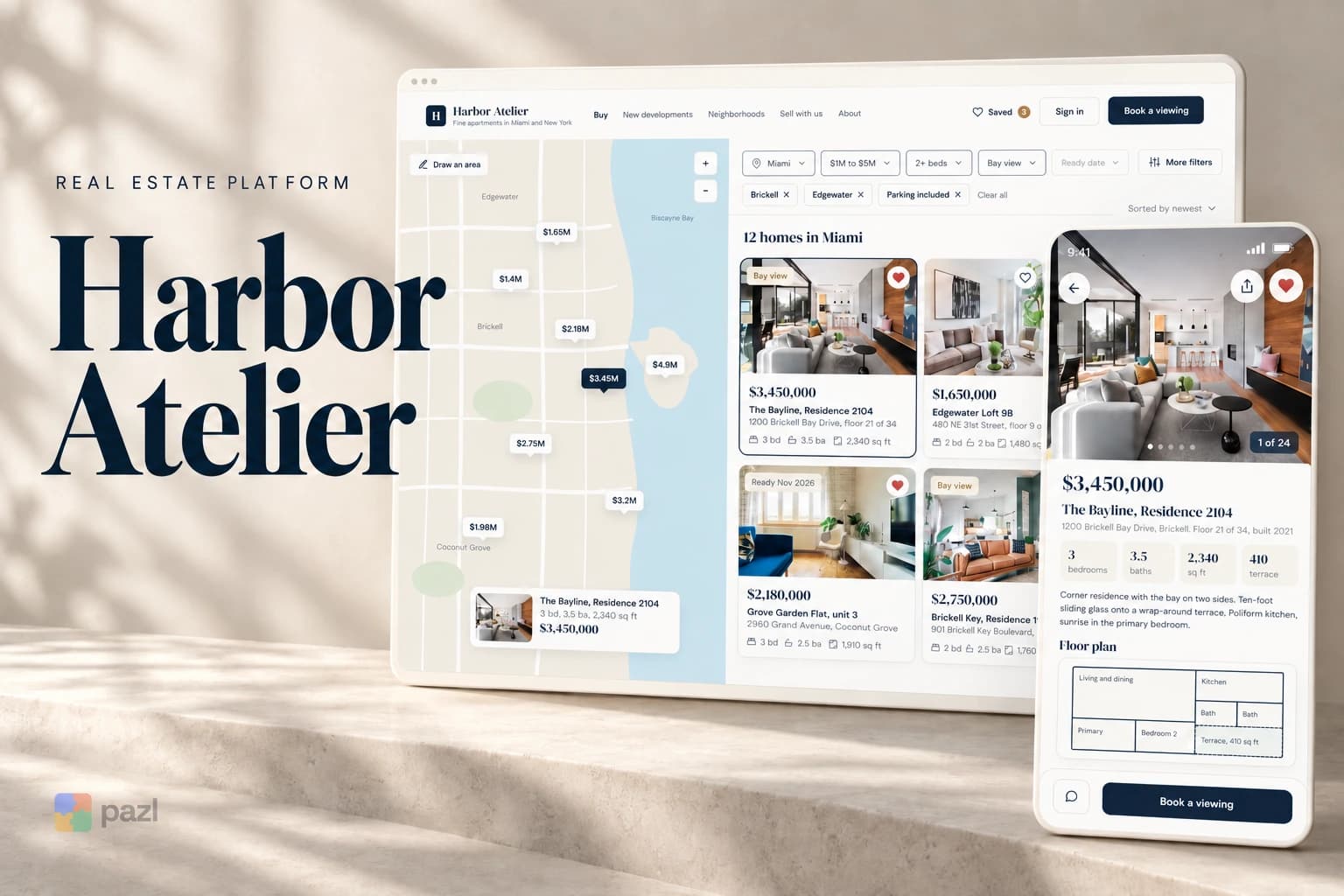
- A property agency in Bristol publishes listings on its website, a mobile app and screens in its branch windows.
- With a headless CMS, staff add a listing once and the API sends it to all three.
- Developers can redesign the website later without touching the content.
Which term is it?
An online shop whose front end is built separately and talks to the commerce engine through APIs.




From the founder
When you bring me an idea, my first job is to find the smallest version real users will pay for. Scope and price are agreed before anyone writes code.
Anatoly MikhailovFounder of Pazl