Web development agency
Custom web apps, SaaS and MVPs for startups and growing businesses
Pazl is a web development agency for products and processes that have outgrown spreadsheets, email and off-the-shelf tools. We build web applications: MVPs for new products, SaaS platforms with accounts and subscriptions, client portals and internal dashboards.
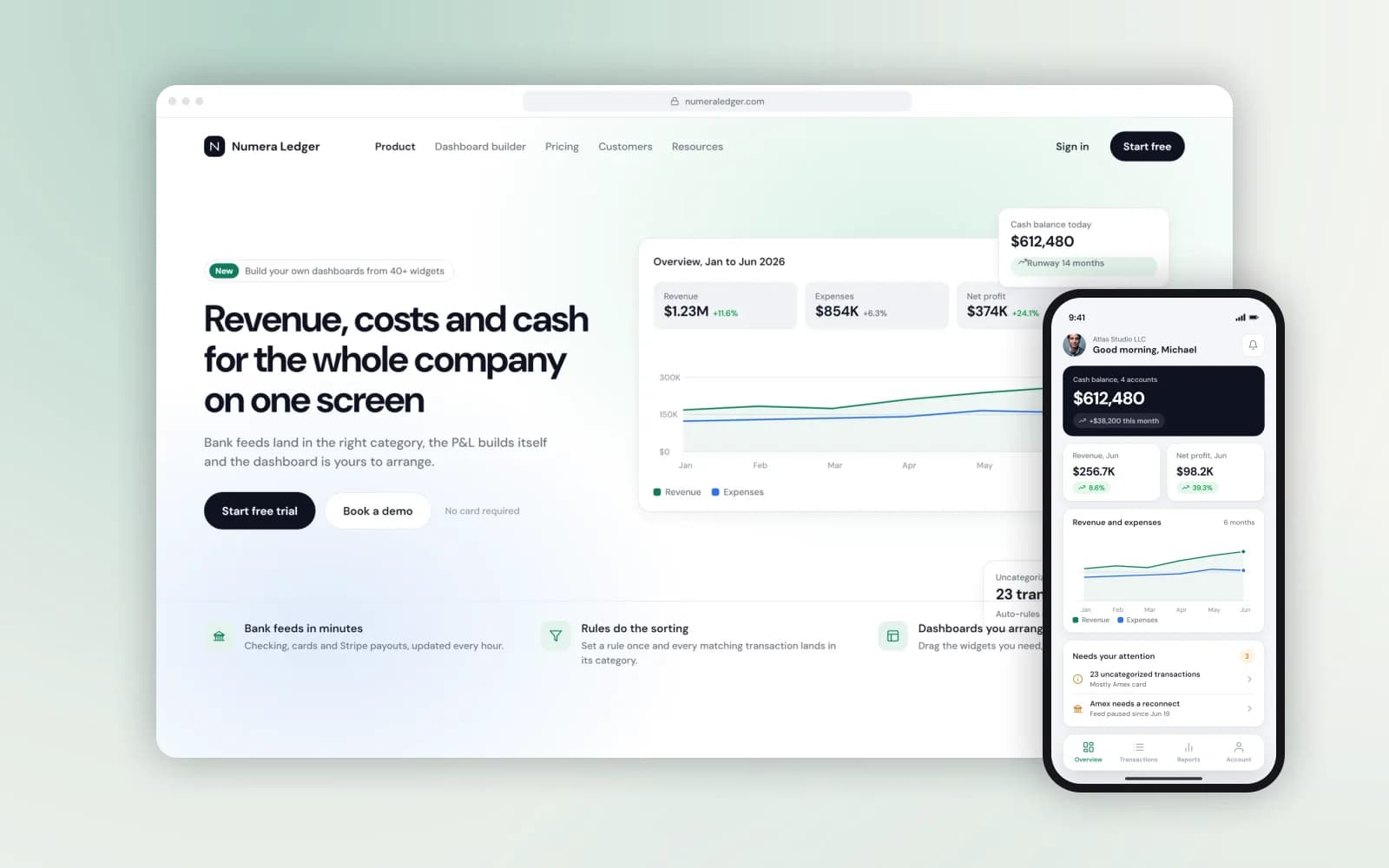
A finance web app.
Numera Ledger: dashboards, a dashboard builder, transactions and a P&L — the kind of web app this page sells.
Custom web development for products and processes
Custom web development makes sense when the thing you need does not exist as a product you can subscribe to, or when the subscription forces your process into someone else’s shape. Projects usually start with one of these:
- A new product idea that needs a first version real users can try — an MVP.
- A SaaS product that needs accounts, roles, subscriptions and an admin behind them.
- A process your team runs by hand — requests in email, data in spreadsheets, statuses in someone’s head — that needs one web interface.
- Clients or partners who keep asking for the same information and could find it themselves in a portal.
- An existing web app that has become hard to change and needs to be rebuilt on a clean base.
If you need a company website to present your services and collect enquiries, that is a different, smaller scope — see website design for small businesses.
Web app development company: what we build
Web MVPs
The core journey of a new product: the main user action, the data behind it and the tools you need to manage it. Later ideas go into a separate backlog, so the first version stays small enough to launch and learn from.
SaaS platforms
Multi-user products with sign-up, accounts, roles, plans and billing. We plan the data model up front, so each customer’s data stays separate and new features do not mean starting again.
Client and partner portals
A place where customers submit requests, see statuses, download documents and manage their relationship with your business. Access is defined by role. More on this in customer portal development.
Internal dashboards and tools
One interface for a specific workflow: track requests, update records, see the numbers that matter — without buying and configuring a full enterprise system from day one.
Custom web application development on top of your systems
Many web apps have to talk to what you already run: a CRM, accounting, payments, a messenger. We assess the available API, the access we need and the data that has to move between systems. An integration is included only when it is in the agreed scope.
MVP development services: a first version you can launch
An MVP is not a smaller version of everything. It is one journey done properly: the user can sign up, do the main thing and come back. Our MVP development services follow the same order every time:
- 1
Define the one job
Who the first users are and what they must be able to do on day one.
- 2
Cut the scope
Everything that does not serve that job moves to a backlog with a note on why.
- 3
Build on proven foundations
Sign-in, roles, payments and admin use components we have built before, so the budget goes into what is specific to your product.
- 4
Launch to real users
Decide the next phase from what they do, not from the original wish list.
A starting delivery plan can be around four weeks once the scope and the inputs we need are ready. For a step-by-step guide to scoping, read How to build an MVP web app; for how we run the four weeks, see MVP in four weeks: our development process.
SaaS development: accounts, subscriptions and roles
As a SaaS development company, we plan the parts that are expensive to change later before the first screen is drawn:
- Accounts and tenants — how teams, users and permissions are organised, and how one customer’s data is kept apart from another’s.
- Plans and billing — subscriptions, trials and invoices through Stripe or the payment provider you choose.
- Admin and support tools — so your team can see customers, fix problems and change plans without a developer.
- Data protection — GDPR obligations such as consent, export and deletion are part of the design, not a later fix.
The first release covers the core product and billing; features for larger customers come as later phases.
The stack we build with
We choose a mainstream, well-supported stack, so your product is not tied to us or to a rare skill set:
- Front end: TypeScript, React, Next.js, Tailwind
- Back end: Node.js, Python, FastAPI
- Data: PostgreSQL, MongoDB, Prisma
- Payments and messaging: Stripe, Telegram
- Hosting: AWS, Vercel
The choice for your project is written into the proposal, together with hosting and any third-party services.
Web app development pricing and timelines
What moves the price: the number of user roles and the main journeys in the first release; integrations with your CRM, accounting, payments or other systems; billing and subscriptions; data migration from an existing system; admin tools for your team.
A starting delivery plan can be around four weeks once the scope and required inputs are ready. A multi-role platform, a complex integration or a substantial data migration gets its own estimate. Hosting, third-party services and ongoing support are listed in the proposal.
Once the scope is agreed, the price is fixed, and the project comes with a six-month warranty; coverage and ongoing support are set out in your project agreement. Why fixed prices hold: Fixed-price software development: how we make the numbers hold.
What the starting price includes
- One core user journey, designed and built end to end
- Sign-in, roles and an admin view on proven components
- The data model and the API behind the first release
- Deployment on your hosting or ours, with the access handed over
- Senior engineering review before every release
- Six-month warranty on the delivered scope
Hire web developers or a web development company?
If you want to hire a web developer, there are three common routes:
Good for
- Freelancer
- a clear, small task
- In-house developer
- a product you will develop for years
- Web development company
- a first version or a new product with a fixed budget
Who covers design, testing, deployment
- Freelancer
- you
- In-house developer
- you build the team around them
- Web development company
- the team
Price
- Freelancer
- hourly or per task
- In-house developer
- salary and hiring time
- Web development company
- fixed price for an agreed scope
If one person leaves
- Freelancer
- the knowledge often leaves too
- In-house developer
- you hire again
- Web development company
- the company still delivers under the agreement
The routes combine well: a company builds and launches the first version, then an in-house developer takes it over. We plan for that — the code and access are handed over as set out in the agreement, so your product does not have to depend on us. More in Custom software without vendor lock-in.
From first message to launch.
Tell us what needs to work
Share the goal, the users and any systems you already use. A short message is enough to start.
Agree the scope and quote
We define the first release, responsibilities, price and delivery plan before development begins.
Review the build
You see the agreed screens and working flows as the project develops. Changes are assessed before extra work starts.
Launch and hand over
We prepare the release, test the agreed flows and hand over the project as set out in your agreement.
Web applications we have built
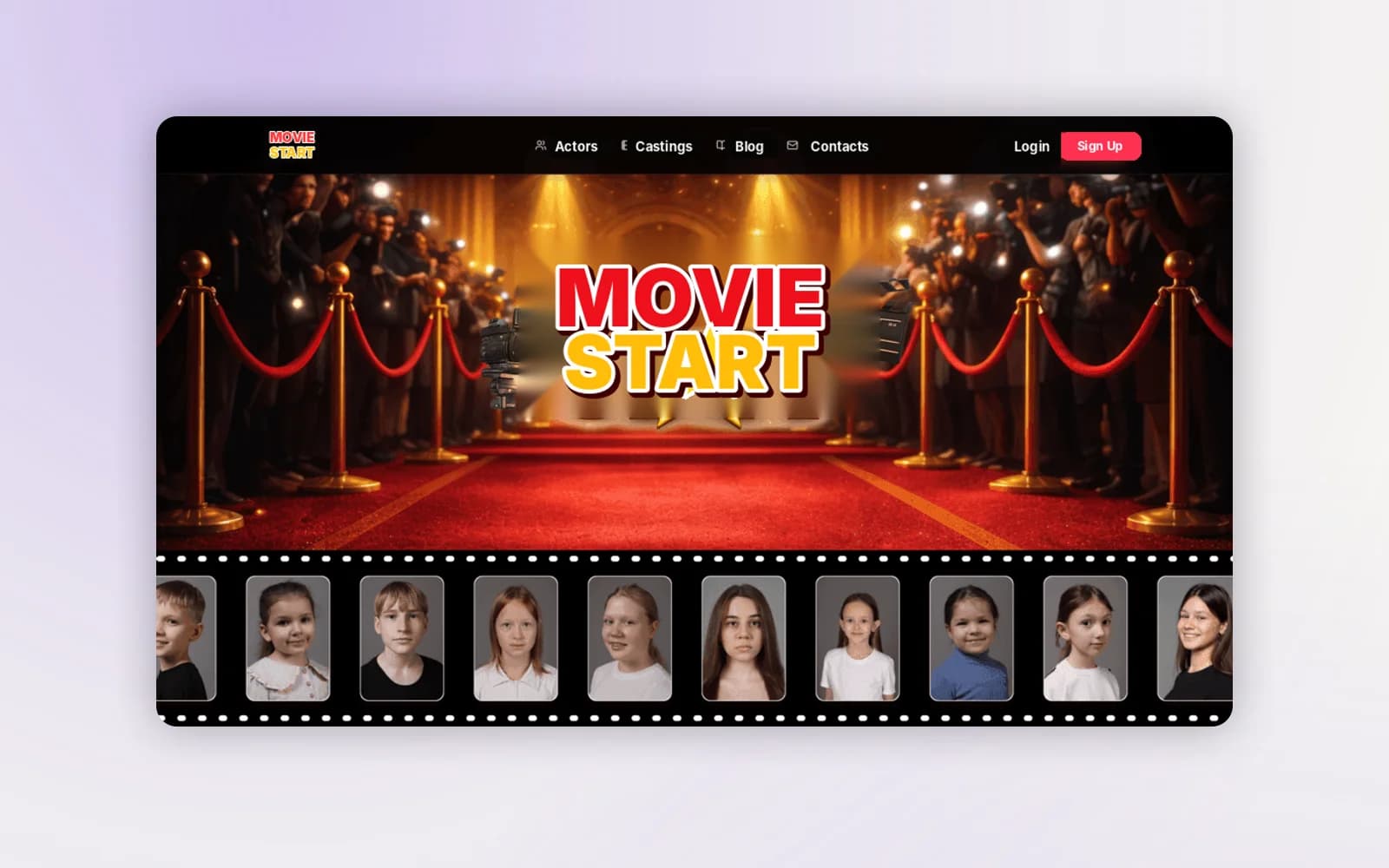
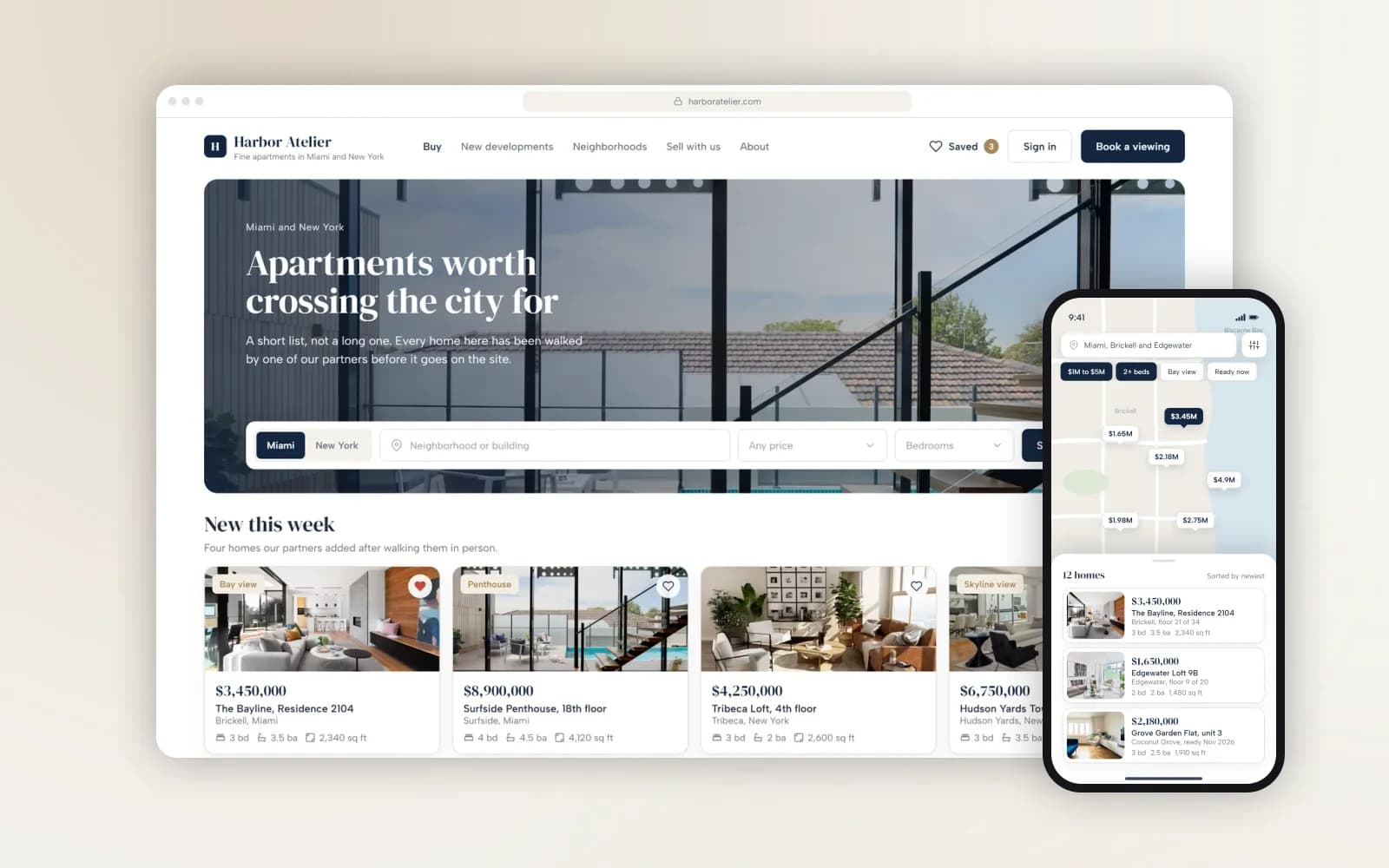
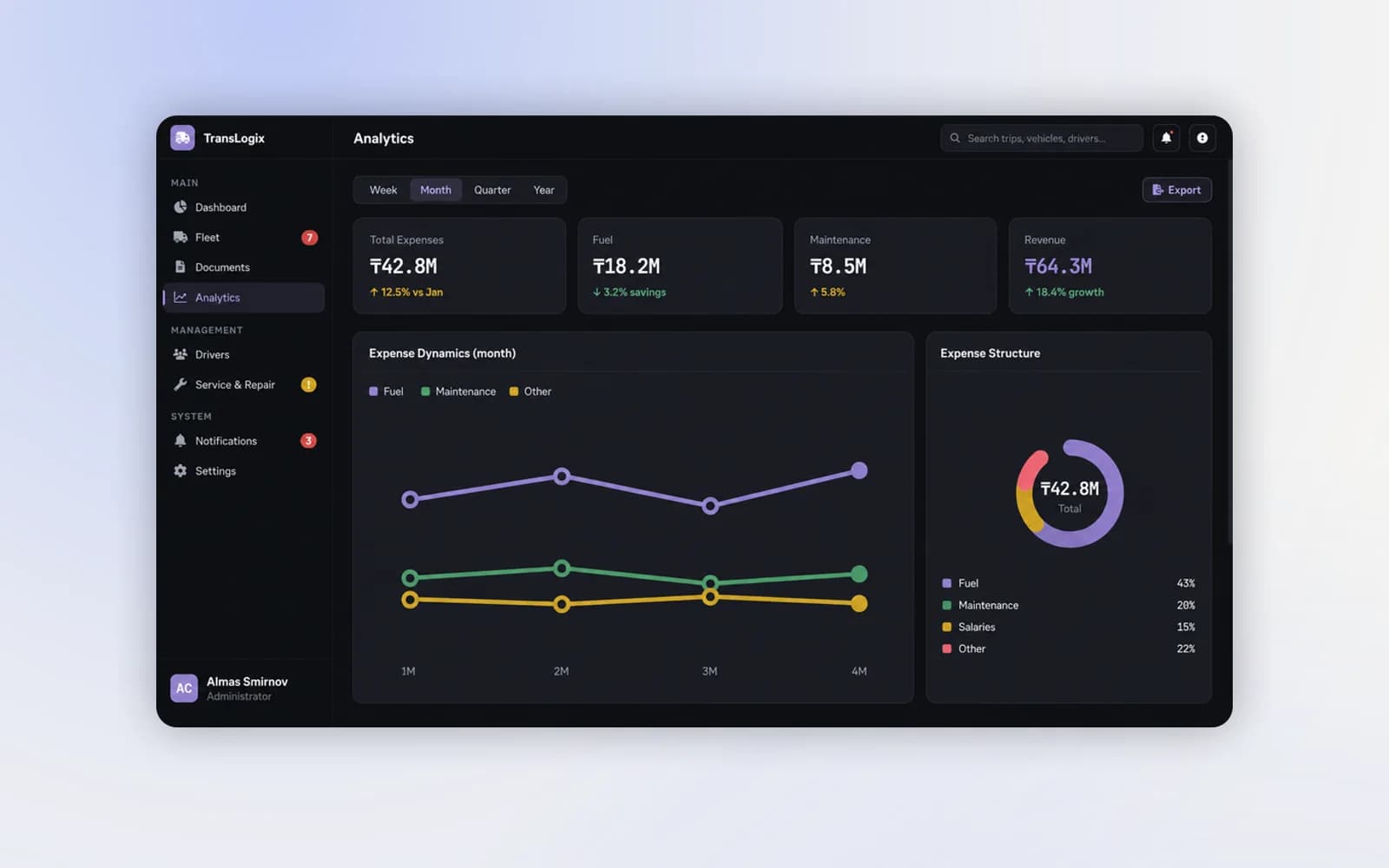
A casting platform with three roles, subscriptions and a blog; an ERP web system with separate interfaces for the director, dispatcher, accountant and driver; a founder’s finance app with a dashboard builder and a P&L; and Harbor Atelier — a property catalogue with a partner desk where agencies manage listings, viewings and leads.
The stack we build with.
One team, six crafts.
Web development questions, straight answers
Tell us what the first version must do
Share your idea, existing workflow or rough feature list. We’ll help define a practical starting scope and estimate the work.