Ecommerce website development
An online store built around the way you sell
A store builder gets you online in a weekend. Then the workarounds start: variants the template cannot show, a checkout without the payment method your customers use, orders copied by hand into accounting, stock that is wrong on the site. Our ecommerce website development starts from how you actually sell — your products, your customers, your fulfilment — and builds the store around it.
Assemble a storefront in ten seconds.
Pick what you sell and your colour — the page rebuilds itself. A real store starts the same way: from your products and your customers.
It’s live — try it right here, nothing saved.
Ordering and checkout.
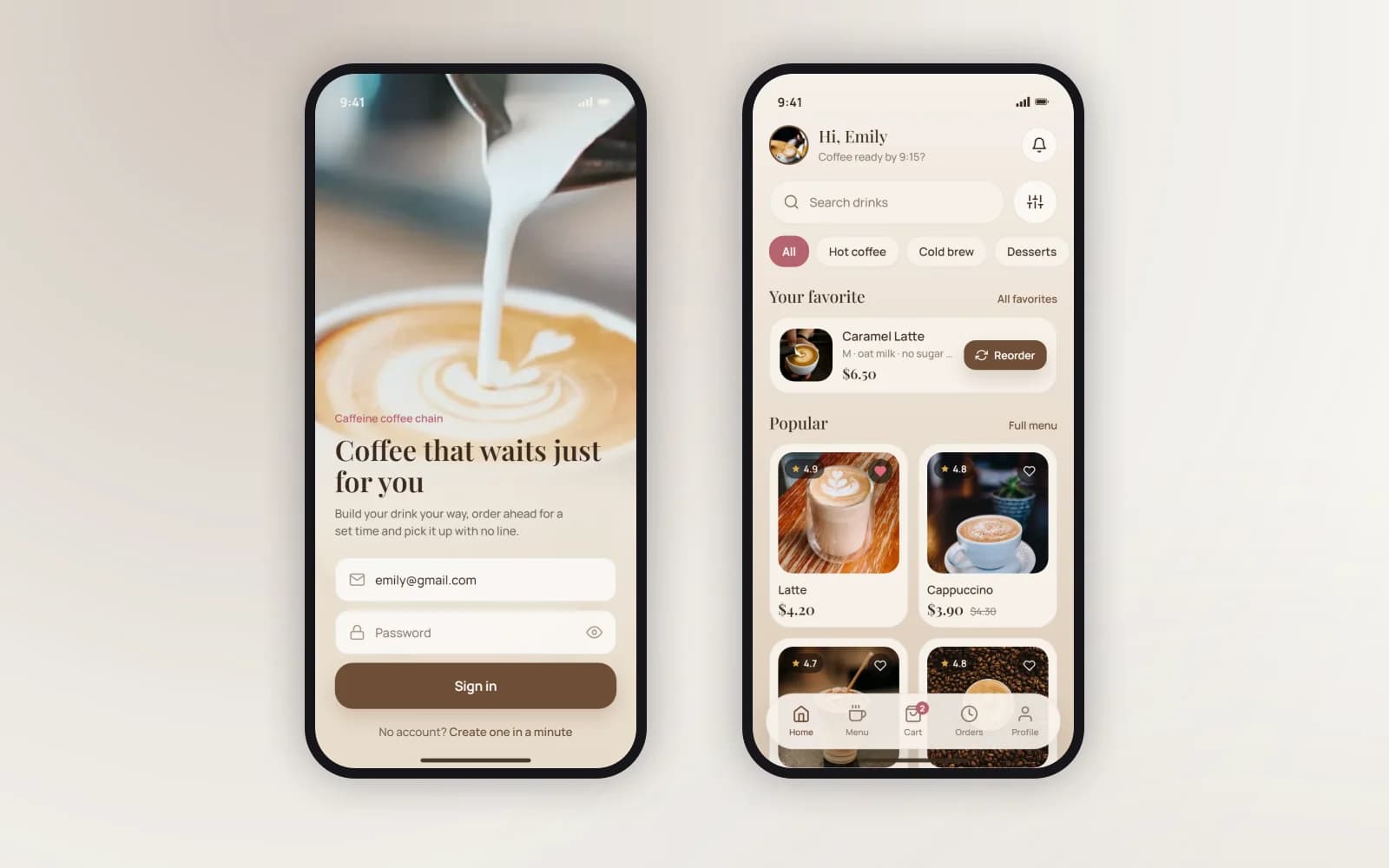
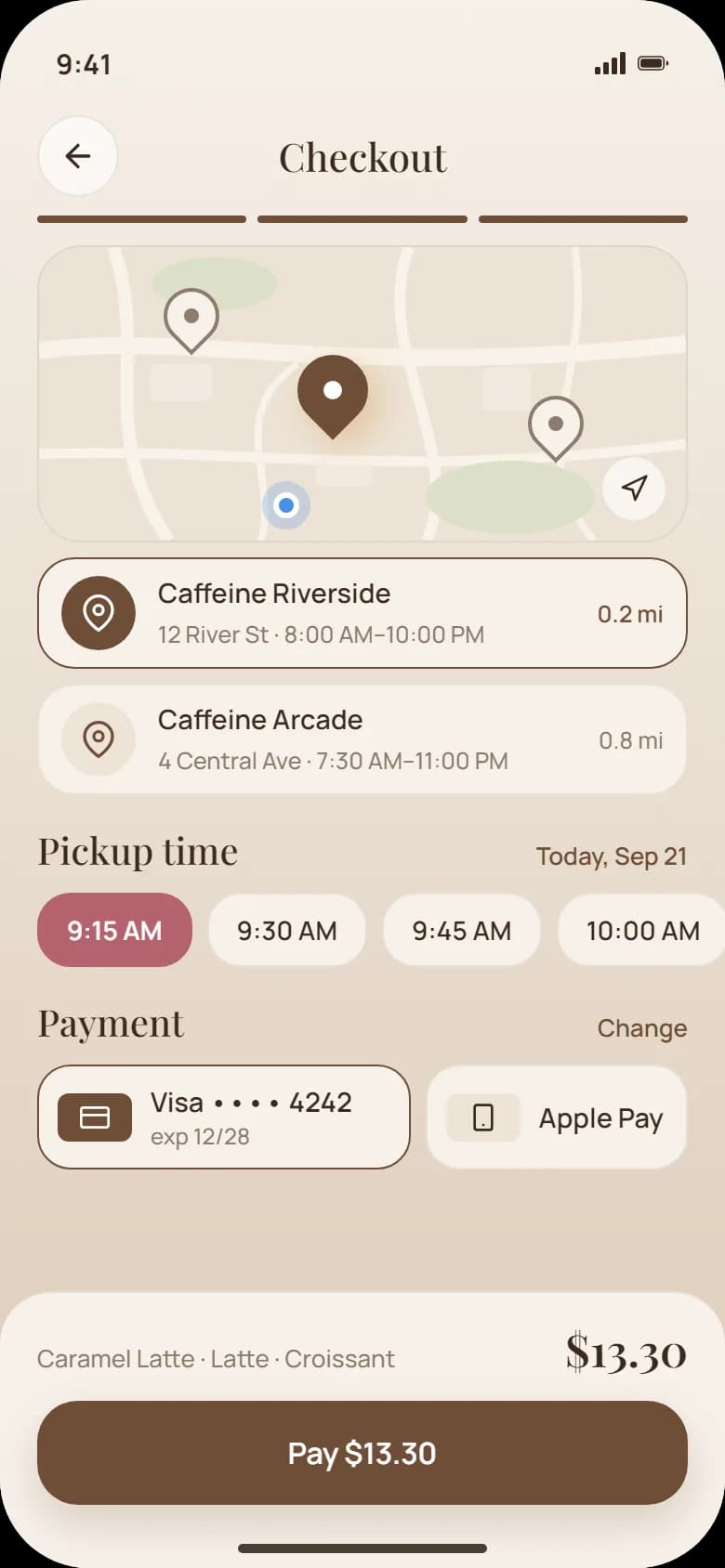
Caffeine: a coffee chain’s menu, cart and checkout with pickup time and payment — the buying flow this page sells, on a phone.
Who a custom online store is for
A custom store is worth it when a standard template gets in the way of selling. Typical cases:
- Your products do not fit a template: many variants, configurable products, bundles, made-to-order items or prices that depend on the customer.
- You sell to businesses as well as consumers and need price lists, minimum orders, invoices or accounts for company buyers.
- Orders have to reach other systems — accounting, a warehouse, a POS or a CRM — without someone retyping them.
- You sell in several EU countries and need local payment methods, VAT handling and more than one language.
- You already sell through a platform and the monthly apps, fees and limits now cost more than the store earns them.
If you are starting out with a small catalogue and standard checkout, a hosted platform is usually the better first step. We explain the trade-off below.
Ecommerce website development: what we build
Catalogue and product pages
Categories, filters and search that match how your customers look for products. Product pages carry the photos, the variants, the price updating as options change, availability and delivery information — the questions people ask before they buy.
Cart and checkout
A short checkout that works on a phone: guest checkout or an account, delivery or pickup, and the payment methods your customers expect. Payments run through Stripe or your provider — cards, wallets and local methods such as SEPA transfers, iDEAL or PayPal, depending on the provider and your markets. Confirmation emails and receipts follow your rules.
Orders, stock and customers in one admin
Your team sees new orders, changes statuses, issues refunds and updates stock in one place. Where you already run a warehouse, accounting or POS system with an API, the store reads from and writes to it instead of keeping a second copy.
Accounts, repeat orders and promotions
Customer accounts with order history and one-tap reorder, promo codes, and — when it pays off — subscriptions or a loyalty programme. For a loyalty programme in its own app, see loyalty app development.
Shopify-type platform or a custom store?
We would rather tell you to use a platform than build something you do not need. A rough guide:
Best for
- Hosted platform (Shopify and similar)
- A standard catalogue, standard checkout, fast start
- Custom online store
- Non-standard products, B2B rules, integrations
Launch
- Hosted platform (Shopify and similar)
- Days to weeks, with a template
- Custom online store
- Weeks, after the scope is agreed
Monthly costs
- Hosted platform (Shopify and similar)
- Subscription plus paid apps and transaction fees
- Custom online store
- Hosting and payment provider fees
Changes
- Hosted platform (Shopify and similar)
- Within what the platform and its apps allow
- Custom online store
- Anything in the agreed scope
Data and code
- Hosted platform (Shopify and similar)
- On the platform
- Custom online store
- You receive the rights to the custom work, as set out in the agreement
A common path is to start on a platform, learn what customers buy and how, and move to a custom store when the workarounds cost more than the build.
Payments, taxes and the rules that come with selling online
Selling online in the EU and the UK comes with obligations, and the store has to support them from the first release:
- Payment security. Card data is handled by the payment provider’s hosted fields or checkout, so it never passes through your server.
- Strong customer authentication for card payments, handled by the provider’s checkout flow.
- Prices and VAT shown the way your markets require, and invoices your accountant can use.
- Terms, refund and withdrawal rules published and applied at checkout.
- Personal data under GDPR: consent for marketing, data export and deletion are part of the design. EU hosting is available.
For a wider comparison of ways to take money online — links, hosted checkout, embedded checkout, chat payments — read How to accept payments online.
Online store pricing
Hosting, payment provider fees and third-party subscriptions are listed separately in the proposal. Once the scope is agreed, the price is fixed, and every project includes a six-month warranty; coverage and ongoing support are set out in your project agreement.
What moves the price
- The number of product types and how complex the variants are
- Payment methods, markets, languages and currencies
- Integrations with a warehouse, accounting, POS or CRM
- Migration of products, customers and orders from another platform
- Accounts, B2B rules, subscriptions or loyalty
How we build an online store
Tell us what and how you sell
Your products, markets, how orders are fulfilled and which systems you use. A short message is enough to start.
Agree the scope and quote
We define the first release — catalogue, checkout, payment methods, admin and integrations — with the price and delivery plan, before development begins.
Review the build
You see the agreed screens and a working checkout with test payments as the project develops. Changes are assessed before extra work starts.
Launch and hand over
We test the agreed flows — order, payment, refund, emails — prepare the release and hand over the project as set out in your agreement.
If you are moving from another platform, product data, customers and old URLs are part of the scope, so search traffic and customer accounts survive the move.
Project examples
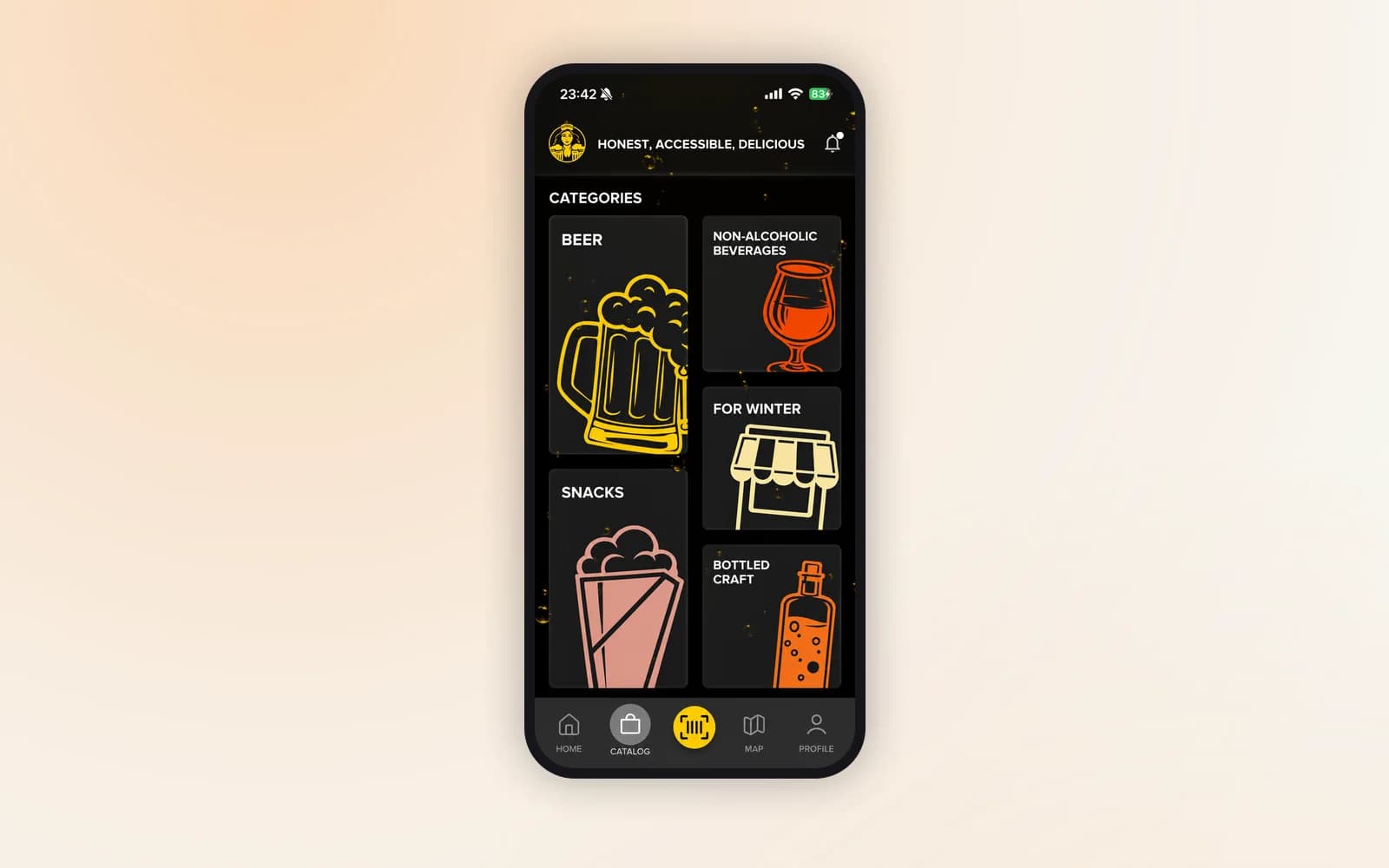
Two products built from the same parts as an online store: a checkout where the options set the price, and promotions that bring customers back.
The stack we build with.
One team, six crafts.
Online store questions, straight answers
Tell us what you sell
Send a link to your current store or a short description of your products, markets and how orders are fulfilled. We’ll propose the first release, name the integrations and estimate the work.