AI development
AI development company: custom AI agents for business
Pazl is an AI development company for businesses that want one repetitive job done by software, not a strategy deck. We build custom AI agents that read your messages and documents, answer from information you approve, take agreed actions in the tools you already use and hand the conversation to a person when it needs one.
Ask our assistant anything.
The same kind of agent we build for clients: grounded in real answers, with a human one tap away. It’s live — try it right here, nothing is saved.
It’s live — try it right here, nothing saved.
An AI workflow.
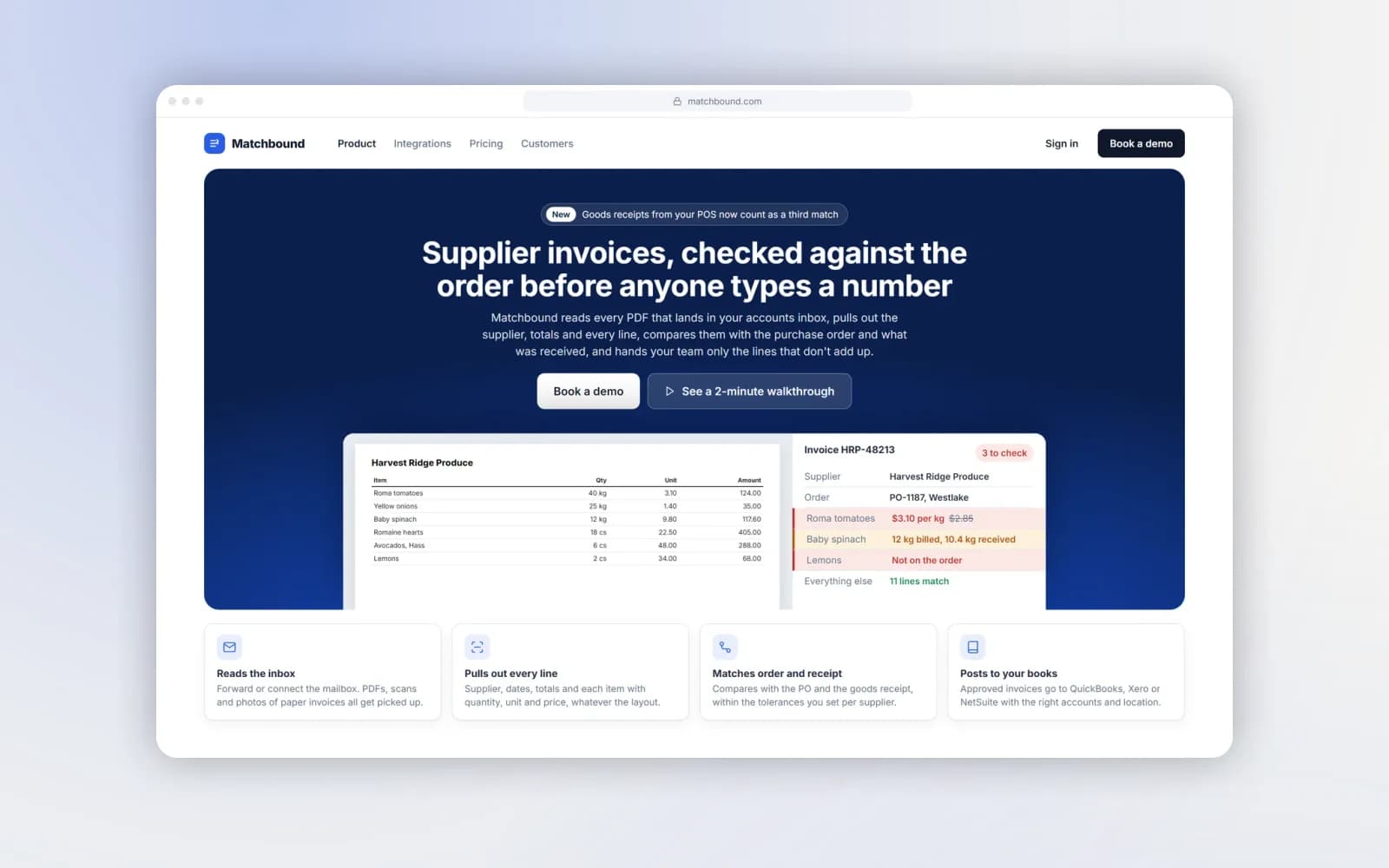
Matchbound: supplier invoices read by AI, matched line by line against the order and the delivery, posted to the books — a finished AI product.
An AI development company that starts with one task
Most AI projects that stall try to do everything at once. We do the opposite. The first release covers one workflow end to end: a type of customer question, a request that turns into a task, a pile of documents someone retypes every week. It goes live, it runs on real cases, and you judge it by what it does.
That is also how we keep the price honest. Scope, price and dates are agreed in writing before development begins. Senior engineers review the work. You get a six-month warranty after launch and full ownership of the code, prompts and integrations.
Not every problem needs AI. Some steps work better with ordinary rules and integrations: a fixed form, a rule-based chatbot, a direct connection between two systems. We use AI where reading language or handling varied inputs is useful, and plain rules where the outcome has to be predictable. If your task doesn’t need a model at all, we’ll say so before you pay for one.
Not sure where AI fits in your business at all? Start with AI consulting.
AI agent development services
Every agent we build does three things: it understands an input (a message, a voice note, a PDF, a photo), it decides what to do within limits you set, and it does it in your systems or passes the case to a person. Here is what that looks like in practice.
Agents that handle customer enquiries
The agent answers questions from your approved information: services, prices, opening hours, policies, order status. It collects the details your team needs, books a slot or creates a request, and routes anything outside its scope to a person with the full context. It works in website chat, WhatsApp, Telegram, Instagram and email. If your main goal is a support or website assistant, see our AI chatbot for customer service. If the goal is answering and qualifying leads, see the AI sales agent.
Request-to-task agents
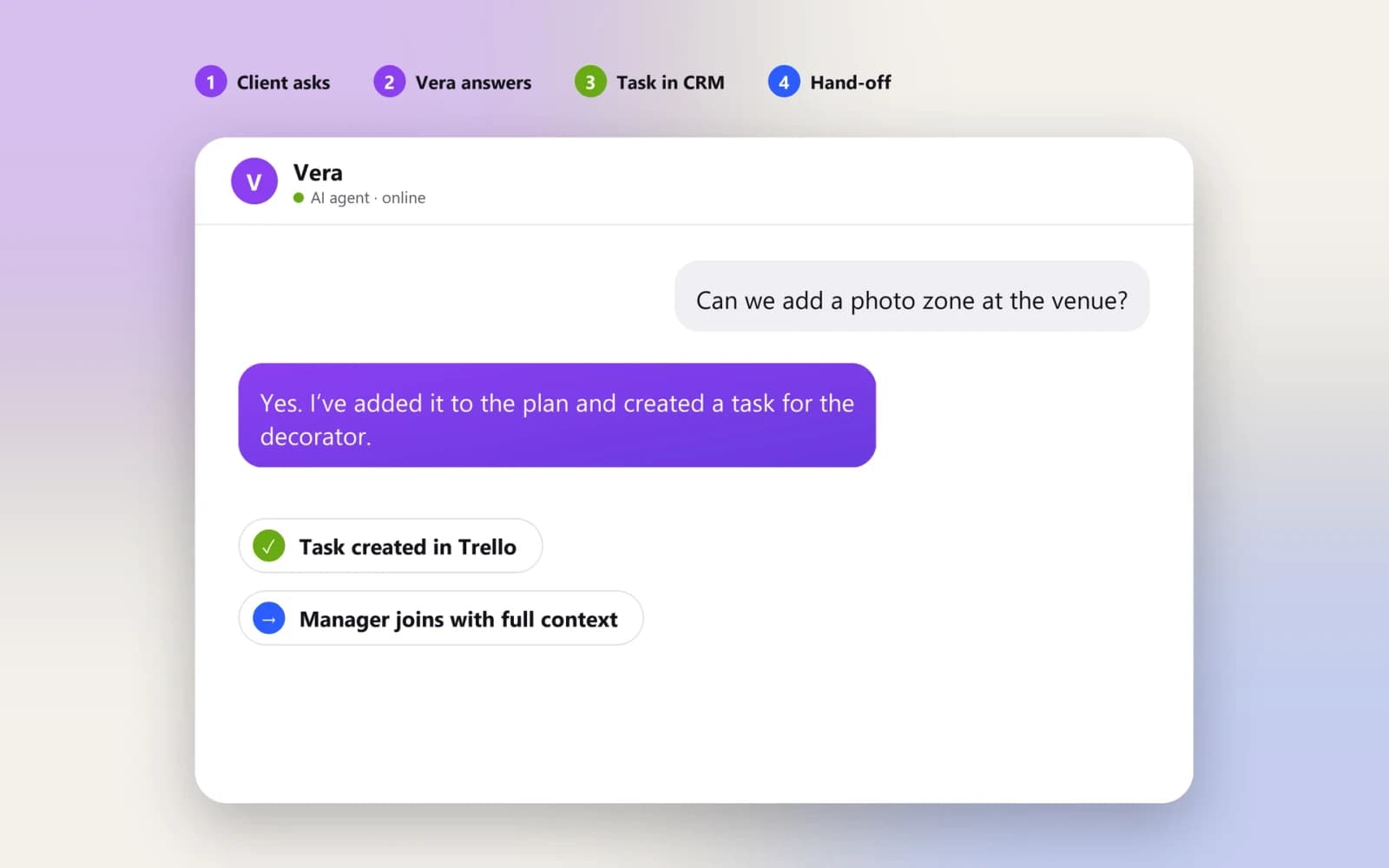
A message comes in; a structured task comes out. The agent reads a free-form request, pulls out who, what, when and how much, and prepares the next step: a card in Trello, a record in your CRM, a notification to the right team member. People stop copying details from chat into tools.
Document and data agents
Invoices, orders, contracts and forms arrive as PDFs, scans and photos. The agent recognises the fields, checks them against the data you already have and flags only what doesn’t match. The person reviews exceptions instead of retyping everything. Matchbound is an example: supplier invoices matched line by line against the order and the delivery.
Internal assistants for your team
Staff ask a question and get an answer from your own documents, or get a first draft prepared from material you provide. We define who checks the output and which actions, if any, the assistant may perform on its own.
AI features inside your web or mobile product
If you already have a product, we can add an AI feature to it: search over your content, document recognition, a smart assistant inside your app, automatic sorting of incoming items. We build web and mobile products too, so the AI part and the product around it are done by one team. See web app development and mobile app development.
Voice and phone agents
An agent can also answer calls: take a booking, answer a common question, pass the caller to a person. Phone work adds number setup and call testing to the scope. See AI voice agent and AI receptionist.
Automation around the agent
An agent is rarely the whole story. Around it there is usually a workflow: a deal moves, an invoice is raised, a reminder goes out. Where those steps are predictable we build them as rules, not AI. More on that on our AI workflow automation page.
AI agents for business: what they do well and where they stop
An AI agent is software built around a language model that can read an input, decide the next step within set limits and use tools: look up an order, create a task, send a message. That makes it different from a classic chatbot, which follows a fixed script, and from plain automation, which does exactly the same steps every time. We explain the difference in more detail in What an AI agent is and what it can do for your business.
Where AI agents for business earn their keep:
- Varied inputs. Customers write the same request in a hundred ways, with typos, voice notes and photos. A model handles that; a form-based script doesn’t.
- Reading and sorting. Classifying requests, pulling fields from documents, deciding which team a case belongs to.
- First answers at any hour. A first reply in seconds at night and on weekends, while your team is offline.
- Drafting. A reply, a summary of a long thread, a first version of a document that a person approves.
Where an AI agent needs a person or a rule instead
- Decisions with money or legal weight. Refunds above a limit, contract terms, medical or legal advice. The agent prepares the case; a person decides.
- Answers that must be 100% correct. No one can guarantee every AI answer is right. We limit the agent to approved information, test it against real scenarios and set escalation rules.
- Fully predictable steps. If the same input always leads to the same output, a rule is cheaper, faster and easier to check.
In practice most useful systems are mostly rules with one or two AI steps. The scope document says which step is which.
What a first AI agent usually looks like
The best first project is narrow, frequent and easy to check. Three typical shapes (examples of scope, not client stories):
“Answer and book”
A clinic, salon or studio gets the same questions every day: prices, availability, what to bring. The agent answers from the approved price list and rules, offers free slots from the calendar, books the appointment and sends a confirmation. Anything medical, any complaint and any request for a person goes straight to the front desk with the conversation attached. Success measure: share of enquiries closed without staff, and time to first reply.
“Read and file”
A B2B company receives requests by email in every possible format. The agent reads each one, extracts the customer, the product, quantities and dates, creates a deal or a ticket in the CRM and assigns it to the right manager. If a field is missing, it asks the customer for it. Success measure: requests filed without retyping, and requests lost.
“Check and flag”
An operations or finance team compares documents against each other: invoices against orders, delivery notes against stock. The agent does the comparison and shows only the mismatches, each explained. A person approves. Success measure: hours per week spent on checking, and errors caught.
Each of these can go live as a pilot and be extended once it proves itself on real cases: a second channel, a second document type, a second team.
Custom AI agent or an off-the-shelf tool?
There are good ready-made AI tools, and sometimes one of them is the right answer. A custom AI agent makes sense when the job depends on your data, your tools and your rules.
Setup
- Off-the-shelf AI tool
- Fast, often self-serve
- Custom AI agent
- Scoped and built, from around two weeks for a first version
Knowledge
- Off-the-shelf AI tool
- General, or a document upload
- Custom AI agent
- Your approved information, structured for the task
Actions
- Off-the-shelf AI tool
- Limited to the tool’s own features
- Custom AI agent
- Actions in your CRM, calendar, accounting, messengers through their APIs
Rules and handover
- Off-the-shelf AI tool
- Generic settings
- Custom AI agent
- Your escalation rules, your limits, handover with full context
Channels
- Off-the-shelf AI tool
- Usually one
- Custom AI agent
- Website, WhatsApp, Telegram, Instagram, email, phone
Ownership
- Off-the-shelf AI tool
- Subscription; data stays in the vendor’s product
- Custom AI agent
- Code, prompts and workflows are yours; runs in your accounts
Cost
- Off-the-shelf AI tool
- Monthly per seat or per conversation
- Custom AI agent
- A fixed development price, starting at the pilot price below; running costs listed separately
A simple test: if you can describe the task as “answer common questions from our FAQ page”, start with a tool. If it sounds like “read the request, check it against our system, do X or Y, and call a manager when Z”, that is a custom AI agent. Not sure which one you have? Send us three real examples and we’ll tell you.
Industries we have built AI and automation for
We don’t claim expertise in every sector. Here is where we have shipped work, and what the AI or automation part did.
- Events and weddings. An AI agent that runs a wedding agency’s daily client conversations, creates tasks and brings in a manager only when it matters. Vera case study.
- Restaurants and hospitality. Supplier invoices read by AI and matched against orders and deliveries before posting to QuickBooks. Matchbound.
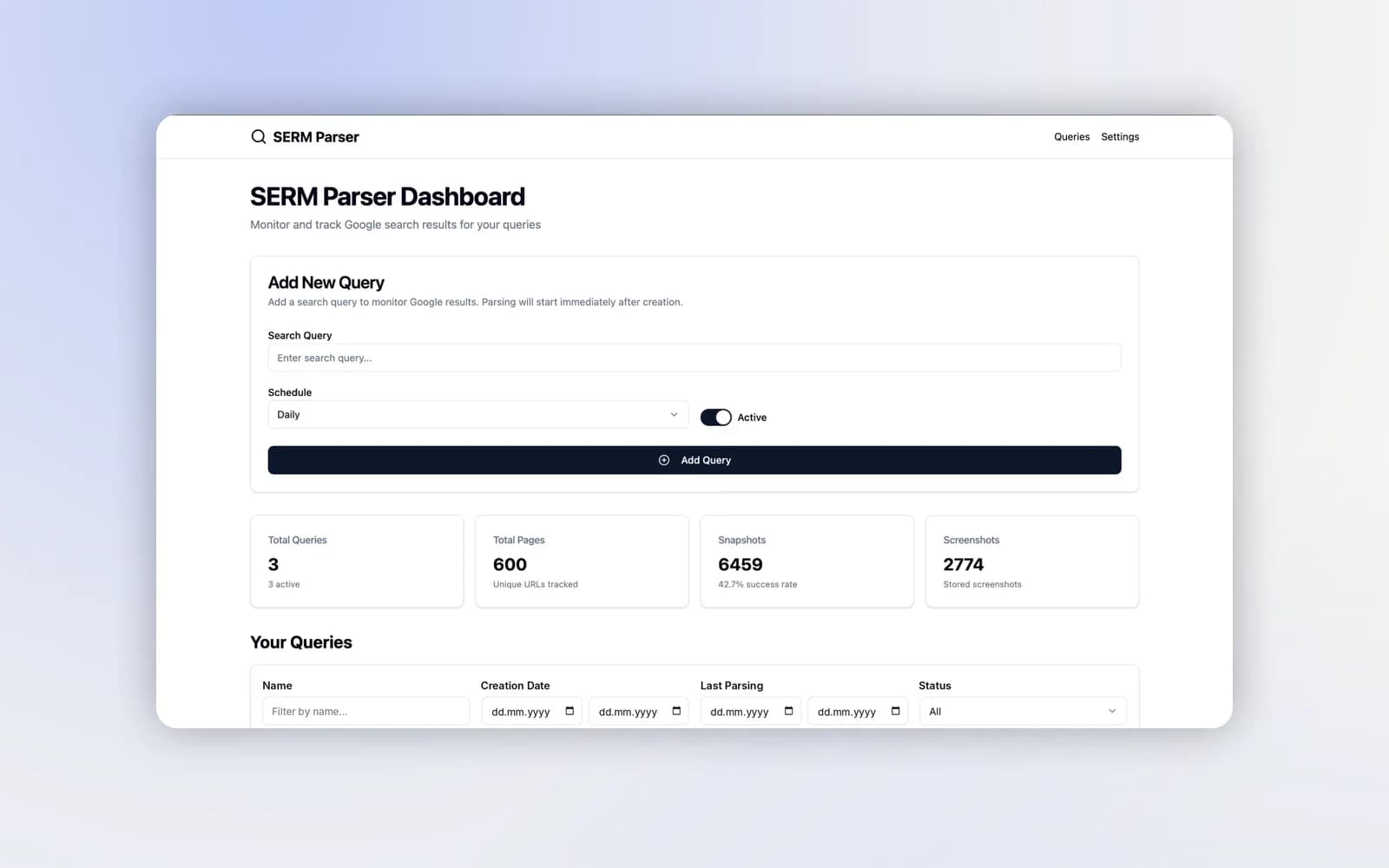
- Legal services and content protection. A system that finds copyright infringements in search results and prepares DMCA complaints automatically, with a Telegram bot for the operator. DMCA automation case.
- Logistics. An ERP that combines fleet monitoring, documents, finance and daily operations. It’s not an AI project, but it’s the kind of system an agent later plugs into. ERP case study.
- Retail, clinics, real estate, finance, home services. We have built apps, platforms and booking systems in these areas; see all case studies. The AI tasks there look alike: enquiries, bookings, documents, follow-ups.
AI agent development case studies
Three projects in which software took over a repetitive job: client conversations, legal routine and supplier invoices. Each card opens the full case study.
How we develop an AI agent: from first message to launch
Tell us what needs to work
Share the goal, the users and the systems you already use. A short message is enough. Real examples help most: ten incoming requests and what your team did with each.
Agree the scope and quote
We define the first release: input sources, permitted actions, handover rules and the examples the agent must handle. Price, responsibilities and delivery date are fixed in writing before development begins.
Prepare the knowledge and access
You give us the approved information and access to the tools the agent will use. This is usually what decides the start date.
Build and review
You see the working flows as the project develops. We test the agent against the agreed scenarios, including the ones it must refuse or hand over. Changes are assessed before extra work starts.
Pilot on real cases
The agent starts on real conversations or documents, with your team reading the output. Review is relaxed only when the results warrant it.
Launch and hand over
We release, test the agreed flows and hand over the project with documentation, as set out in your agreement. The six-month warranty starts here.
Timing. A limited first version can be planned from around two weeks when the required information and access are ready. Channels, connected tools, data preparation and checks change the estimate.
Guardrails, data and GDPR
An agent that talks to your customers or touches your systems needs boundaries before it needs features. Here is what we put in place on every project:
- Approved information only. The agent answers from sources you approve. Outside them, it says it doesn’t know or hands over.
- Permitted actions, listed. The proposal lists every connected tool and every action the agent may perform on its own. Anything else goes to a person.
- Handover with context. When the agent passes a case on, your team gets the conversation and the collected details, so the customer doesn’t repeat themselves.
- Logs and a stop button. Every run is logged, exceptions are routed to a person, and the workflow can be paused.
- Human review at the start. The first weeks run with someone reading the output.
- Personal data. Builds are GDPR-compliant; EU hosting is available and a DPA is available on request. The agent runs in your accounts.
Tech stack and AI models
We pick tools for the task, not the other way round.
- Languages and backend: Python, FastAPI, TypeScript, Node.js.
- Web and apps: React, Next.js, Swift, Kotlin, Flutter.
- Data: PostgreSQL, MongoDB, Prisma.
- Infrastructure: AWS, Vercel.
- Channels: website chat, WhatsApp, Telegram, Instagram, email, phone.
- Tools we connect to: CRMs such as HubSpot and Pipedrive, Trello, Notion, Google Workspace, QuickBooks, Stripe, and workflow platforms such as n8n where they fit.
Model choice affects quality, speed and running cost, so we test the agent on your examples before committing to a model.
AI development cost: pilot, MVP and product
The price of an AI project depends less on “AI” and more on how many channels, systems and exceptions it touches. MVP agent: several channels or tools, CRM and calendar actions, a dashboard for your team. AI product: a full product built around AI, like Matchbound, with several screens, integrations, roles and settings. Both are priced and scheduled after scoping.
What moves the estimate: the number of channels (website, WhatsApp, email, phone); the number of connected tools and whether they have a usable API; how much information has to be prepared and structured; how many scenarios the agent must handle and how many checks are needed.
Running costs are separate. Model usage, messaging providers, hosting and third-party subscriptions create ongoing costs. We list them separately from the development scope; model usage is billed at cost. You see how they will be paid and monitored before the build starts.
Support after launch. Six-month warranty on every project. Coverage and ongoing support are set out in your project agreement.
You pay by card or bank transfer; the contract is with Pazl LLC, a US company, under a standard service agreement.
What the starting price includes
- One focused workflow, agreed in writing
- Your approved information, structured for the task
- The agreed actions in your tools
- Handover to a person with the full context
- Testing on your real examples before launch
- Six-month warranty on the delivered scope
How to hire an AI developer or an AI agent development company
Whether you hire an AI developer as a freelancer or an AI agent development company, the same questions separate a working agent from an expensive demo. Ask them of anyone, including us.
- 1
“What would you build first?”
A good answer names one workflow and one measure of success. A vague answer names a platform.
- 2
“Can this be done without AI?”
If the answer is always “no”, be careful. Plenty of steps are cheaper and more reliable as rules.
- 3
“What happens when the agent is wrong?”
Look for approved sources, escalation rules, logs, a way to pause, and human review in the first weeks.
- 4
“What exactly is in the price?”
A fixed price should come with a written scope: channels, tools, actions, scenarios. Running costs should be listed separately.
- 5
“Who owns the result?”
Code, prompts, workflows and accounts should be yours, with documentation to change them later. See why this matters in your own software or vendor lock-in.
- 6
“Show me a case with numbers.”
Ask what changed for the client after launch, not only what was built.
- 7
“Who supports it after launch?”
Agents need tuning on real conversations. Ask about the warranty and what support costs afterwards.
A single freelancer can be a good fit for a narrow prototype. A team makes more sense when the agent has to connect to several systems, needs a product around it (a dashboard, an app, a website) or has to be supported for years. We work as one team with senior review: see how we keep fixed prices fixed.
Working with Pazl
- Fixed price. One number, quoted upfront, written into the contract.
- Fixed scope. Listed in writing before you pay anything.
- Fixed dates. A delivery date, not a range.
- Chat first. Everything can run in chat. Prefer to talk? Book a call in English.
- Senior review of every build.
- Six-month warranty on every project and full IP transfer.
The stack we build with.
One team, six crafts.
Fair questions, straight answers.
Show us the process you keep repeating
Share examples of incoming requests and explain what your team does next. We’ll propose a focused AI agent, and estimate both its development cost and its running costs.