App development agency
iOS and Android apps your customers keep on their phone
Pazl is a mobile app development company for businesses that need one clear thing done on a phone: a customer collects points, orders ahead, books a class or finds what they came for. We design and build that app for iOS and Android, review it with senior engineers and hand it over with a six-month warranty.
A loyalty card that lives in the app.
Tap "scan" a few times — the points climb and the free reward unlocks. That is what retention feels like.
It’s live — try it right here, nothing saved.
A branded app.
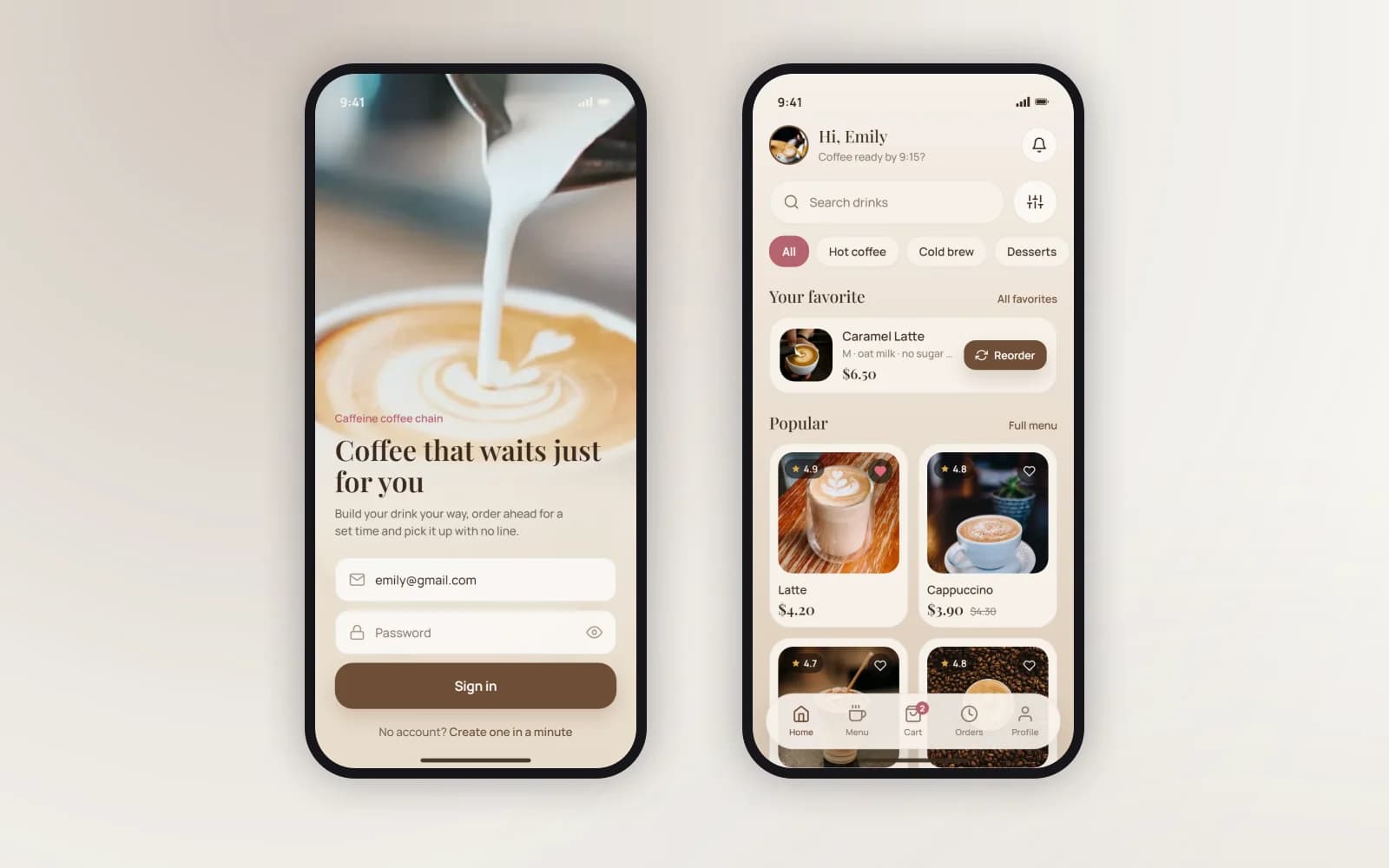
Caffeine, a coffee shop app for ordering ahead: a regular reorders the usual in one tap, every customisation sits on one product screen with the price updating live, and checkout offers pickup slots and a saved card.
Mobile app development services for business
Most apps we build start with one customer action that happens again and again. We build the first version around that action, then add roles, integrations and features once people use it.
Loyalty apps
A branded home for your loyalty programme: a member card, points or stamps, rewards, offers and push notifications, with an admin panel your marketing team runs. More in loyalty app development.
Ordering and pickup apps
A menu, a cart, pickup times or delivery, Apple Pay and Google Pay, and orders that land in your POS. Built for cafés, coffee chains and restaurants. More in restaurant app development.
Booking and membership apps
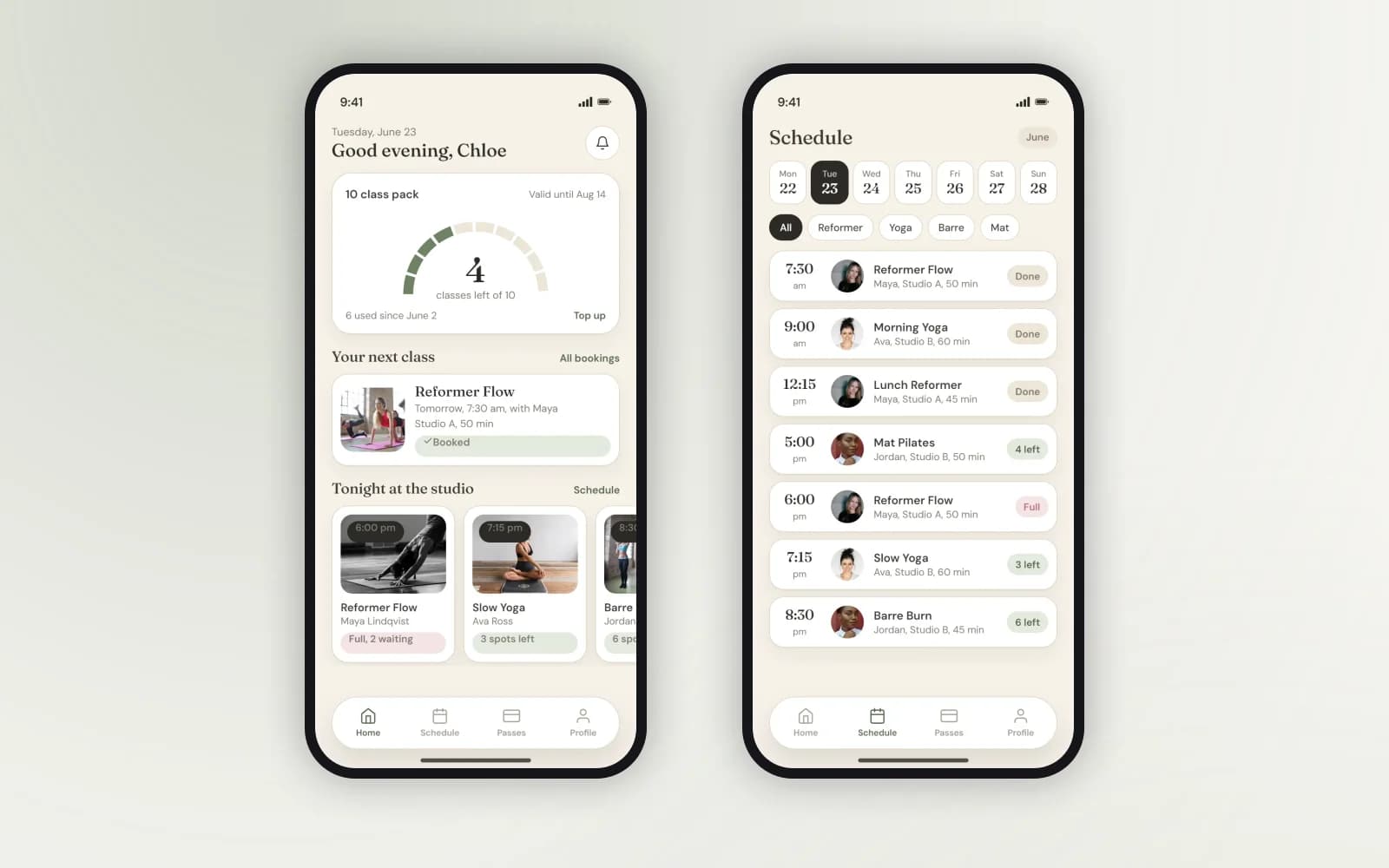
Schedules, class packs, waiting lists and reminders — the app a member opens instead of calling the front desk. Often paired with a web schedule people can book from before they install anything. See our online booking system.
Service and marketplace apps
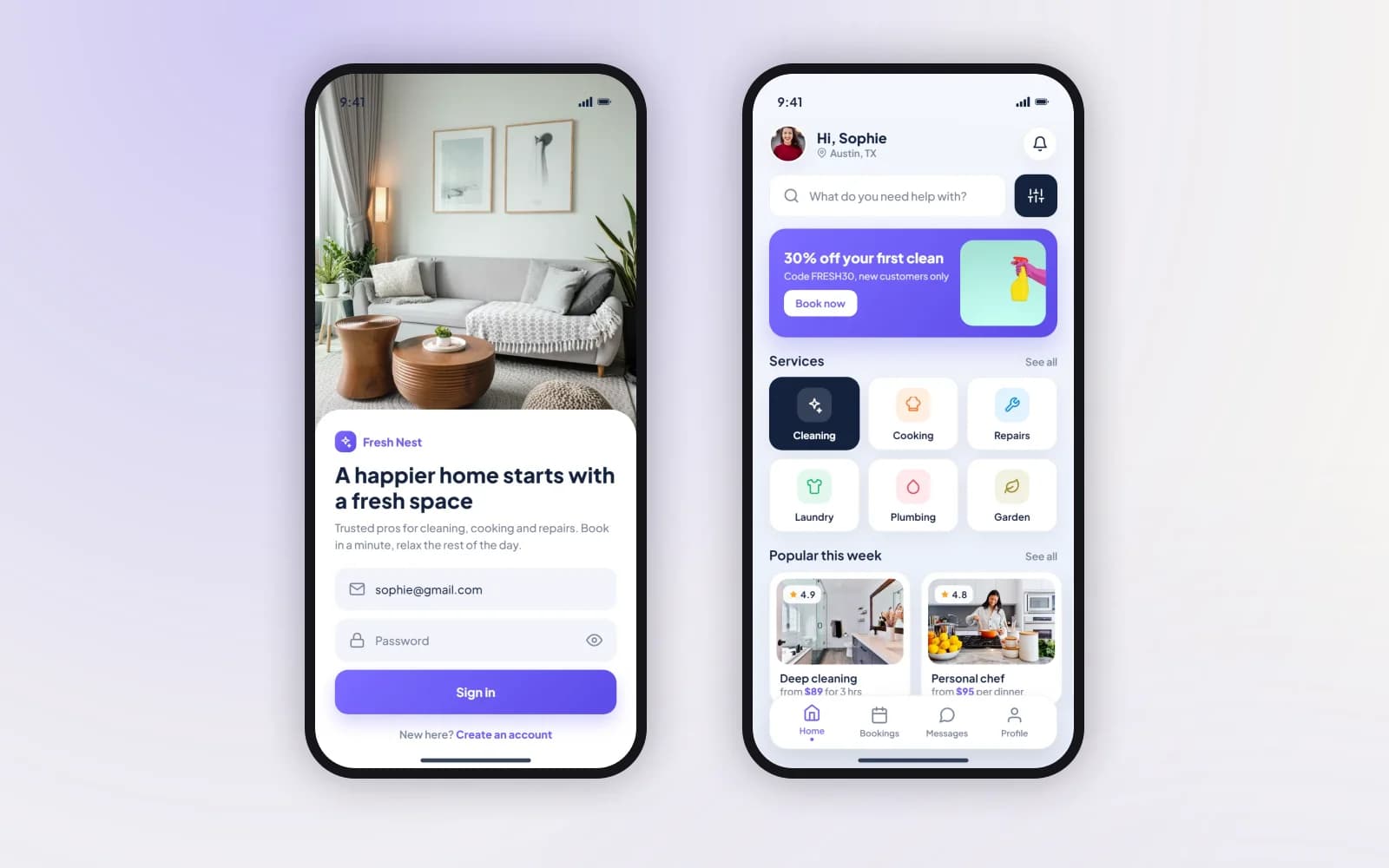
Several services behind one booking pattern: pick the service, the slot and the extras, pay in the app and keep all visits in one schedule.
A mobile MVP
Your main product idea as a focused first release. We pick the one journey that proves the idea and leave extra roles and integrations for later versions, so you learn from real users sooner.
iOS, Android or both: how we choose the platform
The first question in almost every brief is "iPhone or Android?" For a business app the answer is usually both, and the real question is how to build it. We decide that with you based on what the app must do, not on what we prefer to write.
iOS app development
For iOS we build with Swift when the app needs deep access to the device, and with a cross-platform framework when it does not. Either way we handle the iOS-specific parts: sign-in, push notifications, Apple Pay and Apple Wallet cards. We also prepare the build and the store listing for review.
Android app development
The Android version gets the same care, not a quick copy. When a native build is needed we write it in Kotlin; otherwise it shares code with iOS. We test the agreed flows and prepare the Google Play release.
Flutter and React Native: one codebase for both stores
A cross-platform build shares most of the code between iOS and Android, so you pay for one app instead of two. As an app development company we work with both Flutter and React Native and choose per project: Flutter gives more freedom in design, React Native has a mature JavaScript ecosystem and many ready-made libraries. For ordinary users the difference from native is usually invisible.
When native is worth it
Native Swift and Kotlin make sense for complex animation, heavy media work, hardware features or specific system functions. If your app needs that, we say so in the estimate. If it does not, we will not sell you two codebases. Read more in cross-platform vs. native development.
Custom mobile app development or an app builder?
Not every business needs custom mobile app development. Here is how we would decide.
Best for
- App builder or ready-made service
- A standard catalogue or a simple loyalty card
- Custom app from Pazl
- Your own rules, journeys and integrations
Your brand
- App builder or ready-made service
- Template with your logo
- Custom app from Pazl
- Designed around your brand and your customers
Integrations
- App builder or ready-made service
- What the platform supports
- Custom app from Pazl
- Your POS, CRM, checkout or booking system, where they have an interface
Customer data
- App builder or ready-made service
- Stays on the platform
- Custom app from Pazl
- In your systems
Code
- App builder or ready-made service
- Rented
- Custom app from Pazl
- Full IP transfer to you
Cost over time
- App builder or ready-made service
- Monthly fee for as long as you use it
- Custom app from Pazl
- Project price upfront, running costs listed in the proposal
If a ready-made service already covers the task, we will tell you — it may be the simpler option. Custom development pays off when the app is part of how you sell or serve customers every day.
What goes into the build
The starting scope covers the agreed app experience and the supporting work listed in the proposal. Nothing is assumed:
- Design of the agreed screens in your brand, approved before development.
- App development for the supported platforms, with senior engineering review.
- Backend and admin tools where the app needs them: accounts, content, offers, orders.
- Integrations with your POS, checkout, CRM or loyalty platform, once we have reviewed their interfaces.
- Payments through Stripe or your provider, Apple Pay and Google Pay where relevant.
- Store submission assistance for the App Store and Google Play. No agency controls the stores’ review decisions, but we prepare the build, the listing and the requirements that apply.
- Handover as set out in your agreement, with full IP transfer.
We use reusable modules where they fit and AI-assisted development with human review, so budget goes to the parts that make your app different.
Price and timeline
This starting price suits a first version that can use our existing modules with an agreed design and feature set. A small release can be planned from around five weeks once the necessary inputs are available.
We list third-party fees and ongoing running costs — store accounts, payment and push providers, hosting — in the proposal. Six-month warranty; coverage and ongoing support are set out in your project agreement.
What moves the estimate
- The number of screens and user roles
- Integrations with your POS, CRM, checkout or loyalty platform
- Native features and platform-specific work
- Admin tools and analytics
- External reviews and store requirements
Want market ranges before you talk to anyone? Read how much it costs to build an app in 2026.
How we work: from first message to launch
Tell us what needs to work
Share the goal, the users and any systems you already use. A short message is enough to start, and everything can run in chat. Prefer to talk? Book a call.
Agree the scope and quote
We define the first release, responsibilities, price and delivery plan before development begins. One number, written into the contract, and a delivery date rather than a range.
Review the build
You see the agreed screens and working flows as the project develops. Changes are assessed before any extra work starts.
Launch and hand over
We prepare the release, test the agreed flows, help with store submission and hand over the project as set out in your agreement. The six-month warranty starts at launch.
Mobile app case studies
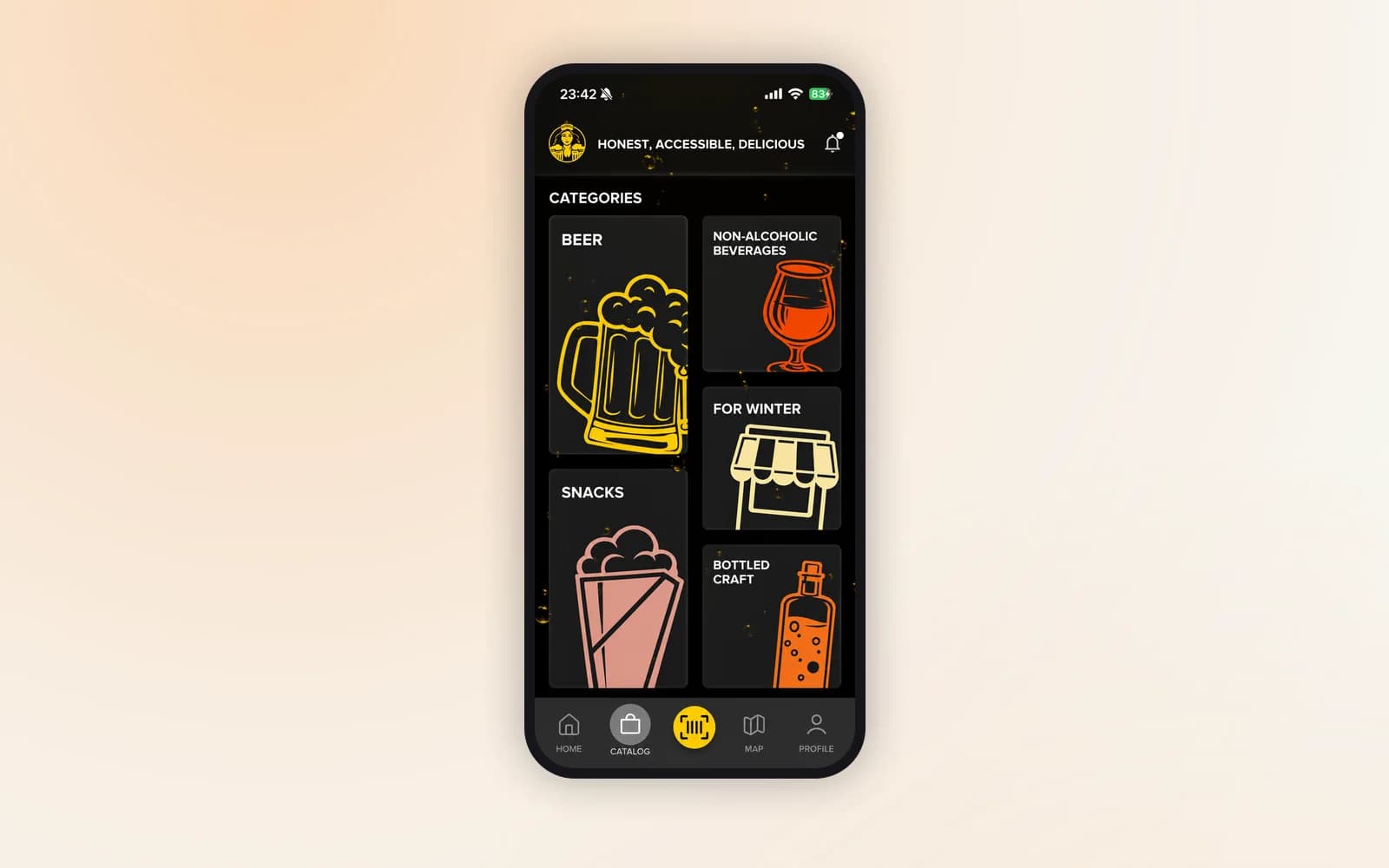
A beverage retail chain’s old app had become slow and expensive to maintain. We rewrote it from scratch on a new architecture, migrated the customer base and added a loyalty programme with an Apple Wallet card, push offers, a collectible-card game mechanic and an admin panel for promotions, promo codes and segments. Also from our mobile work: Dupli, a cosmetics match app that finds cheaper products with a near-identical ingredient list and shows the match percentage and the saving side by side.
Industries we build apps for
- Cafés, coffee chains and restaurants — ordering ahead, pickup, delivery and stamp cards.
- Retail chains — loyalty programmes, push campaigns, promo codes and sales analytics.
- Fitness and wellness studios — class packs, schedules, waiting lists.
- Home and local services — booking, scheduling and in-app payment.
- Consumer products — search, comparison and personalised results.
Your industry is not on the list? Tell us the main customer action; the building blocks are usually the same.
How to choose an app development agency
Rankings are a good place to start a shortlist, but they will not tell you which agency fits your project. Before you sign with any app development agency — us included — ask these questions:
- 1
Can I see apps you actually built?
Case studies with screens and results, not only logos.
- 2
What exactly is in the price?
Design, backend, admin, integrations, store submission, warranty — each one written down.
- 3
Is the price fixed or hourly?
A fixed price needs a written scope; hourly needs a budget cap and regular reports.
- 4
Who owns the code and the store accounts?
You should get the full IP and keep the accounts in your name.
- 5
Who reviews the work?
Ask who checks technical decisions before release.
- 6
What happens after launch?
Warranty terms, response times and how new features are priced.
Hire an app developer or an agency?
A freelance app developer can be the right choice for a small, well-defined task and a budget with no room for extra roles. An agency costs more per hour but brings design, backend, testing and store release under one contract, plus someone who is responsible when a person leaves. If you plan to hire app developers in-house later, agree the handover and code ownership from day one — with us, both are written into the agreement.
For the full path from idea to launch, see how to make an app for your business.
The stack we build with.
One team, six crafts.
Fair questions, straight answers.
What should your customers be able to do?
Describe the main action your app needs to support. We’ll suggest a first version, identify reusable parts and estimate the remaining work.