
Web, app and AI development for Dublin companies
Technology drives Dublin’s commercial activity, and in 2026 OpenAI announced an EU headquarters here.
More
Fintech firms keep adding jobs, hotels ran at 86.9% occupancy in July 2026 and Dublin Port handles 80% of the Republic’s unitised freight. We build the software these businesses run on, ready for Ireland’s e-invoicing timetable.
Six services, each with its own Dublin page
Choose one for its starting price and usual schedule. Each opens a Dublin page on Irish e-invoicing, payment habits and data protection.
 Websitesfrom €2,500Sites for hotels, restaurants and tour firms that want direct bookings, and for start-ups at Dogpatch Labs getting ready to raise or hire.
 Web apps and MVPsfrom €2,500Onboarding portals and account dashboards for fintechs, shipment portals for forwarders and first versions for founders in NDRC.
 Mobile appsfrom €4,750Guest apps for hotels, job and delivery apps for hauliers, and the app a new fintech puts in its customers’ hands.
 AI agents and automationfrom €2,250Agents that answer fintech support questions, read shipping documents or reply to hotel guests, with staff signing off.
 Online storesfrom €2,500Stores for Irish brands, hotel vouchers and trade orders, with phone wallets at checkout and e-invoices where buyers need them.
 Integrations and systemsfrom €2,250Links between your ERP, CRM, carriers, Xero and payroll, with Peppol e-invoicing in place ahead of November 2028.
Projects we can show you
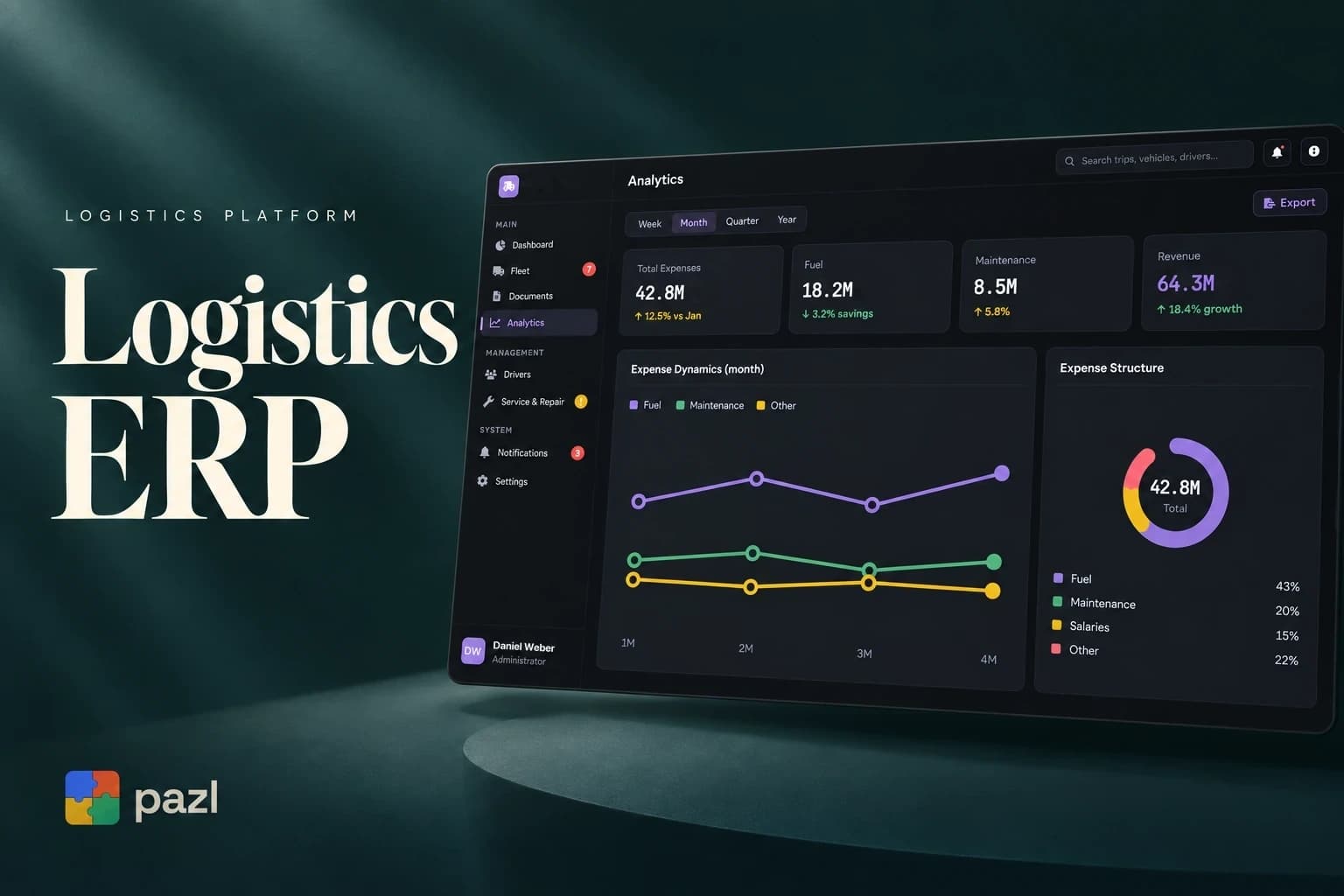 Web · LogisticsERP for a Logistics CompanyFleet, documents, finance and operations in one place.
 Mobile · RetailMobile App for a Beverage ChainBuilt from scratch: loyalty, gamification, sales analytics.
 AI agent · EventsAI Agent “Vera” for an AgencyVoice, text and media replies, CRM tasks, manager handoff.
What drives business in Dublin
The figures come from the Dublin Economic Monitor and Dublin Port.
More
Choose a sector to see the friction firms there face and what we would build first.
Technology drives commercial activity in Dublin; in 2026 OpenAI announced an EU headquarters in the city, with 250 new jobs over two years.[3]
- AI features with logs and human review
- Internal tools in place of spreadsheets
- Partner portals with data kept in the EU
What gets in the way
Tech firms here sell across the EU under EU data rules, so internal tools and AI features need data handling that stands up to GDPR scrutiny from the first release.
Fintech firms including Qashio, Trading 212 and Currenxie announced new jobs in Dublin in summer 2026.[3]
- Guided onboarding with document capture
- Account dashboards and statements
- Compliance views with full audit trails
What gets in the way
A growing fintech has to onboard customers, explain fees and handle support at the pace it hires, while compliance staff need every step on record.
Tourism and hospitality are part of the city economy, and Dublin hotel occupancy stood at 86.9% in July 2026.[3]
- Guest app for check-in and requests
- Extras offered before arrival
- Payment by phone wallet
What gets in the way
With rooms that full, hotels and restaurants compete on how smoothly they handle guests: pre-arrival details, extras, table bookings and payment, ideally with no platform in between.
Trade and logistics run through Dublin Port, which handles 80% of all unitised freight in the Republic of Ireland.[4]
- Shipment status shared with customers
- Bookings and documents synced between systems
- E-invoices sent over Peppol
What gets in the way
Hauliers, forwarders and importers pass bookings, documents and delivery notes between carriers, terminals and customers, much of it by email and spreadsheet.
Irish rules a Dublin project has to meet
Ireland is bringing in e-invoicing in phases: public bodies already receive e-invoices, large corporates must issue them from 1 November 2028, and every business must be able to receive them from that month.
- Coming upRevenue becomes the Peppol Authority[6]
- Coming upEvery business can receive e-invoices[7]
- Coming upLarge corporates issue e-invoices[8]
- Card payments
- Mobile wallets
- Cards and credit transfers
- BrightPay and Thesaurus Payroll Manager
- Xero
All dates and details
Below are the dates, how people in Ireland pay, the software in use and the data protection authority.
The standard VAT rate is 23%, and a reduced rate of 13.5% applies to some goods and services.[2]
- In forcePublic bodies receive e-invoices
Since 12 June 2019 every Irish public sector body must receive and process structured e-invoices that comply with EN 16931, under S.I. 258/2019.[5]
- Sources checked on 14 November 2026
- Coming upRevenue becomes the Peppol Authority
Revenue plans to become Ireland’s Peppol Authority from 1 January 2027, and Peppol will be the default network for e-invoices from 1 November 2028.[6]
- Coming upEvery business can receive e-invoices
From November 2028 all businesses in Ireland must be able to receive e-invoices from other Irish businesses.[7]
- Coming upLarge corporates issue e-invoices
From 1 November 2028 VAT-registered large corporates must issue e-invoices for domestic B2B sales and report the data to Revenue in real time.[8]
- Coming upBusinesses trading within the EU join
From 1 November 2029 the domestic B2B e-invoicing obligation extends to VAT-registered businesses engaged in intra-EU trade.[8]
- Coming upViDA for cross-border B2B
From July 2030 the EU’s ViDA e-invoicing and digital reporting become mandatory for all cross-border B2B transactions within the EU.[8]
- Card paymentsIrish households made 250.17 million card transactions worth €9.31 billion in September 2026, according to the Central Bank of Ireland.[9]
- Mobile walletsRoughly 61% of domestic point-of-sale card volume went through mobile wallets in September 2026.[9]
- Cards and credit transfersIrish payment service providers recorded 4.96 billion payment transactions in 2025, with card payments and credit transfers driving the growth.[10]
Startups, a university and a new campus: the Dublin setting
Three places in the city that change who buys software here and what they expect from it.
- Dogpatch Labs and NDRC[14]
Dogpatch Labs is a startup hub in the CHQ Building in Dublin’s Docklands and runs NDRC, Ireland’s national accelerator programme.
What it means for your project
Founders in an accelerator need a product people can try before the programme ends, not a long build. We scope one journey, fix the fee and ship in step with the programme’s milestones.
- Trinity College Dublin[15]
Created by royal charter in 1592, Trinity College Dublin sits in the city centre and is home to 22,000 students.
What it means for your project
Research groups and the student-facing businesses around the campus need tools for studies, events and bookings, with consent handled the way GDPR requires.
- Google’s The Bakery[3]
Google plans a new Docklands office, The Bakery on Grand Canal Street, with capacity for up to 1,900 staff.
What it means for your project
A workplace that size draws caterers, facilities firms and service providers that sell to corporate buyers. Those buyers ask for clean ordering, invoicing and data records, which we build in.
When does e-invoicing become mandatory for Dublin businesses?
In stages. Public bodies have had to receive EN 16931 e-invoices since 12 June 2019. From November 2028 every business must be able to receive e-invoices, and VAT-registered large corporates must issue them for domestic B2B sales from 1 November 2028, reporting to Revenue in real time. Intra-EU traders follow on 1 November 2029.
Who supervises GDPR for a Dublin company?
The Data Protection Commission, Ireland’s national data protection authority. Before building we list what each screen, app and agent collects, where it is processed and how long it is kept, so your privacy notice and any DPC question can be answered from one document.
Which payment methods do Irish customers expect?
Cards and phones. Irish households made 250.17 million card transactions in September 2026, and roughly 61% of domestic point-of-sale card volume that month went through mobile wallets. Online, that means Apple Pay and Google Pay next to card entry.
We are in the NDRC accelerator at Dogpatch Labs. Can you build to its timetable?
Yes. Tell us the date and the journey that must work by then. We cut the scope to fit, put the fee and the date in writing and share a staging link early. The code and the accounts are in your company’s name from the start.
We trade through Dublin Port. Can you connect our systems with carriers and customers?
Yes, where they offer an API, EDI or file exchange. We map each partner’s data to your own system once, so bookings, status updates and documents move without retyping, and invoices can go out over Peppol, Ireland’s default e-invoicing network from 1 November 2028.

Dublin’s tech and fintech firms buy software with EU rules in mind, and its hotels and hauliers want software that saves time on the busiest days.
More
From our blog



Checked on 14 November 2026
All 15 sources
- data.cso.ie/table/F1004A
- revenue.ie/en/vat/vat-rates/search-vat-rates/current-vat-rates.…
- dmonitor-prd.s3.eu-west-1.amazonaws.com/wp-content/uploads/2026…
- dublinport.ie
- ec.europa.eu/digital-building-blocks/sites/display/DIGITAL/eInv…
- revenue.ie/en/corporate/consultations-and-submissions/modernisi…
- revenue.ie/en/corporate/consultations-and-submissions/modernisi…
- revenue.ie/en/corporate/consultations-and-submissions/modernisi…
- centralbank.ie/statistics/data-and-analysis/monthly-card-paymen…
- centralbank.ie/statistics/data-and-analysis/payments-services-s…
- thesaurus.ie
- xero.com/ie
- dataprotection.ie/en/who-we-are
- dogpatchlabs.com
- tcd.ie/about
The facts about the city and its country come from the pages listed, read on that day. Rules change: confirm what applies to your company with your tax adviser.
A project in Dublin?
Tell us what you need and by when. We reply with questions or a first estimate.