Items players own, a wallet inside the game with no seed phrase, a marketplace for trades and an economy designed to hold up. Unity, Unreal, web or mobile.
from €4,900
Unity, Unreal, web or mobile
Wallet inside the game
Game first, tokens second
Fixed price / You own 100% of the code / 6-month warranty
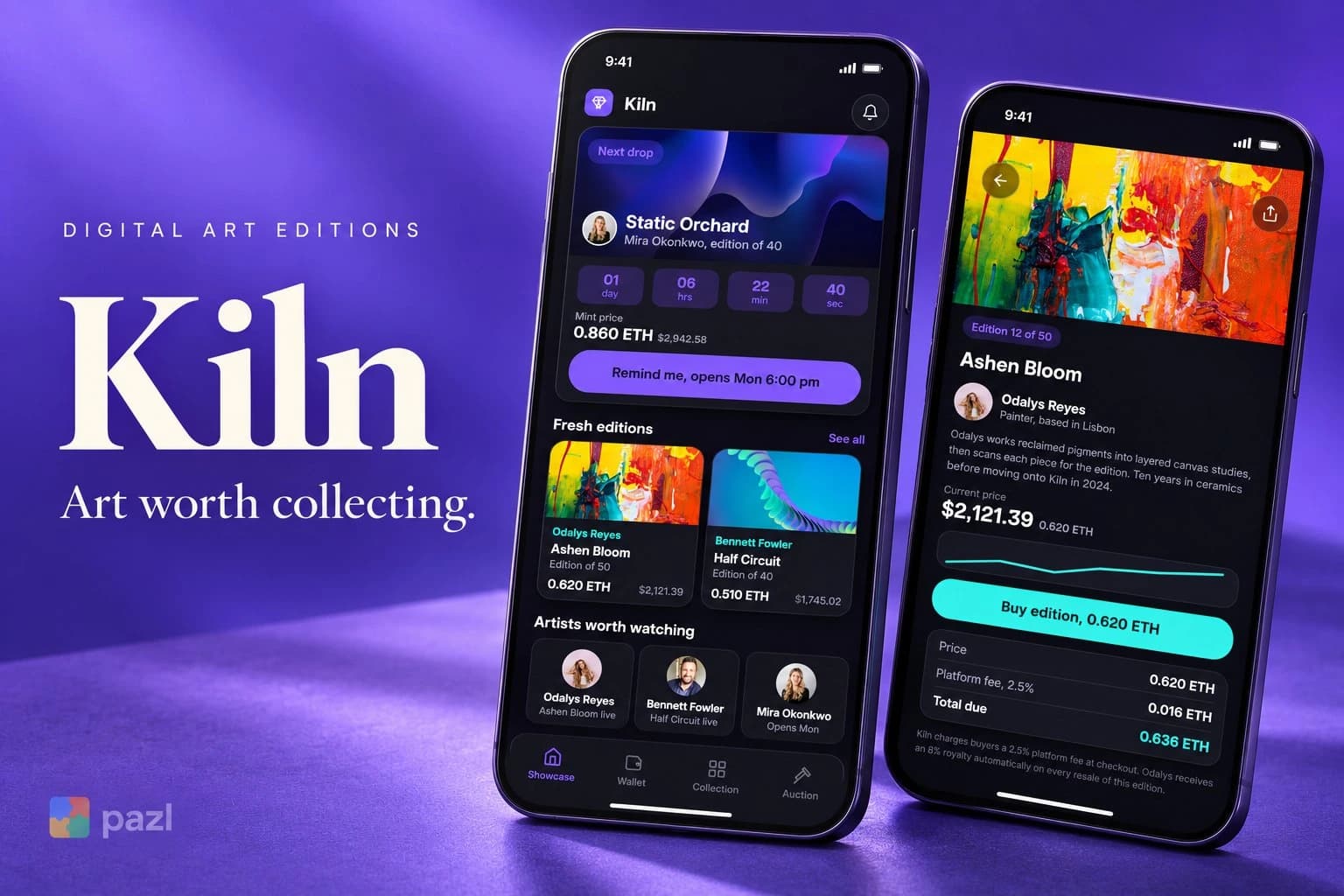
Concept Kiln: Digital Art Editions
01 How it fits together
Five layers, one product.
Every Web3 product is the same chain of parts. Tap a layer to see what it does; the bright ones are what this page builds.
01 / 05Wallet
Where the user’s keys live and every transaction is signed.
We build Connected
02 Delivered work
Real projects by the same team.
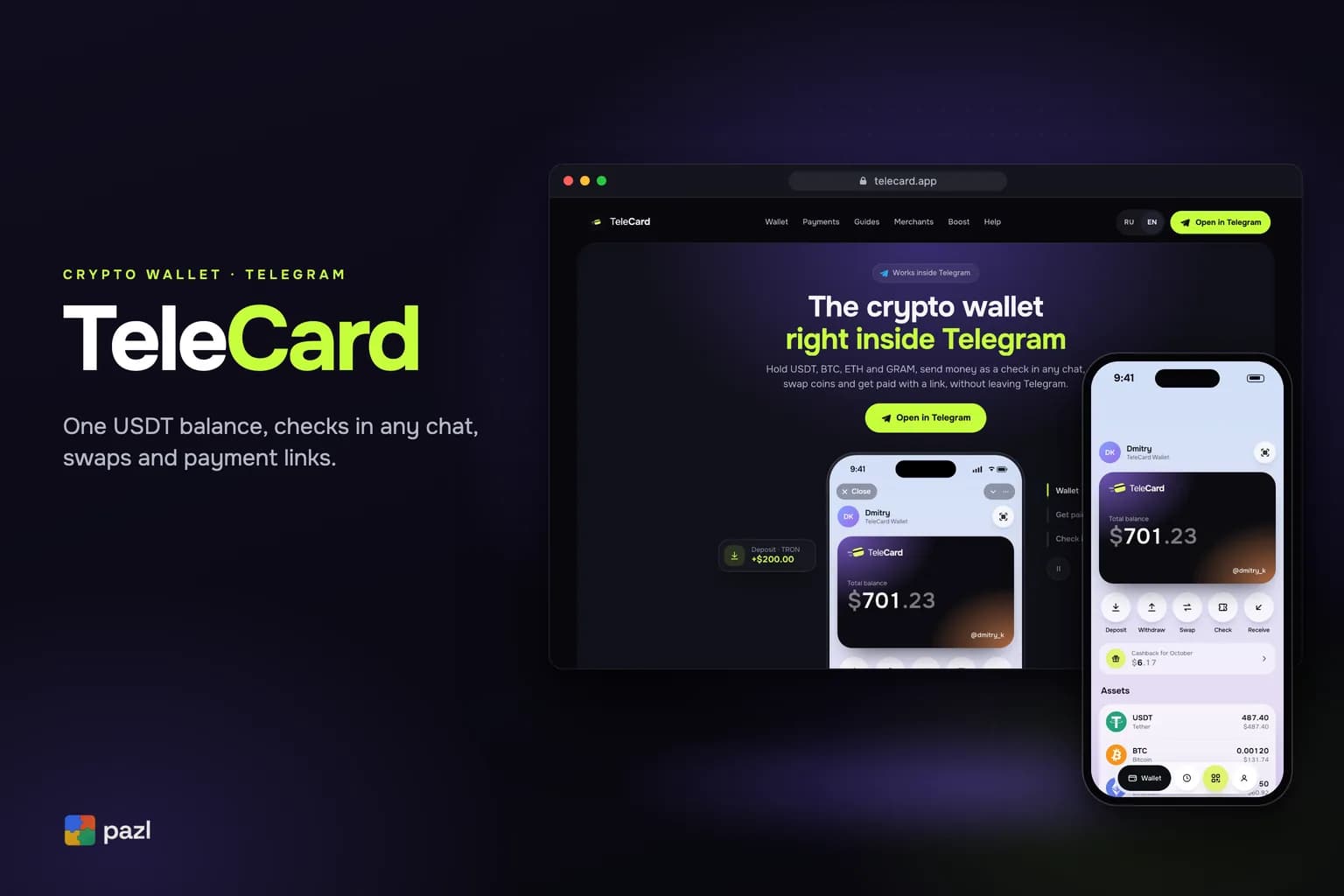
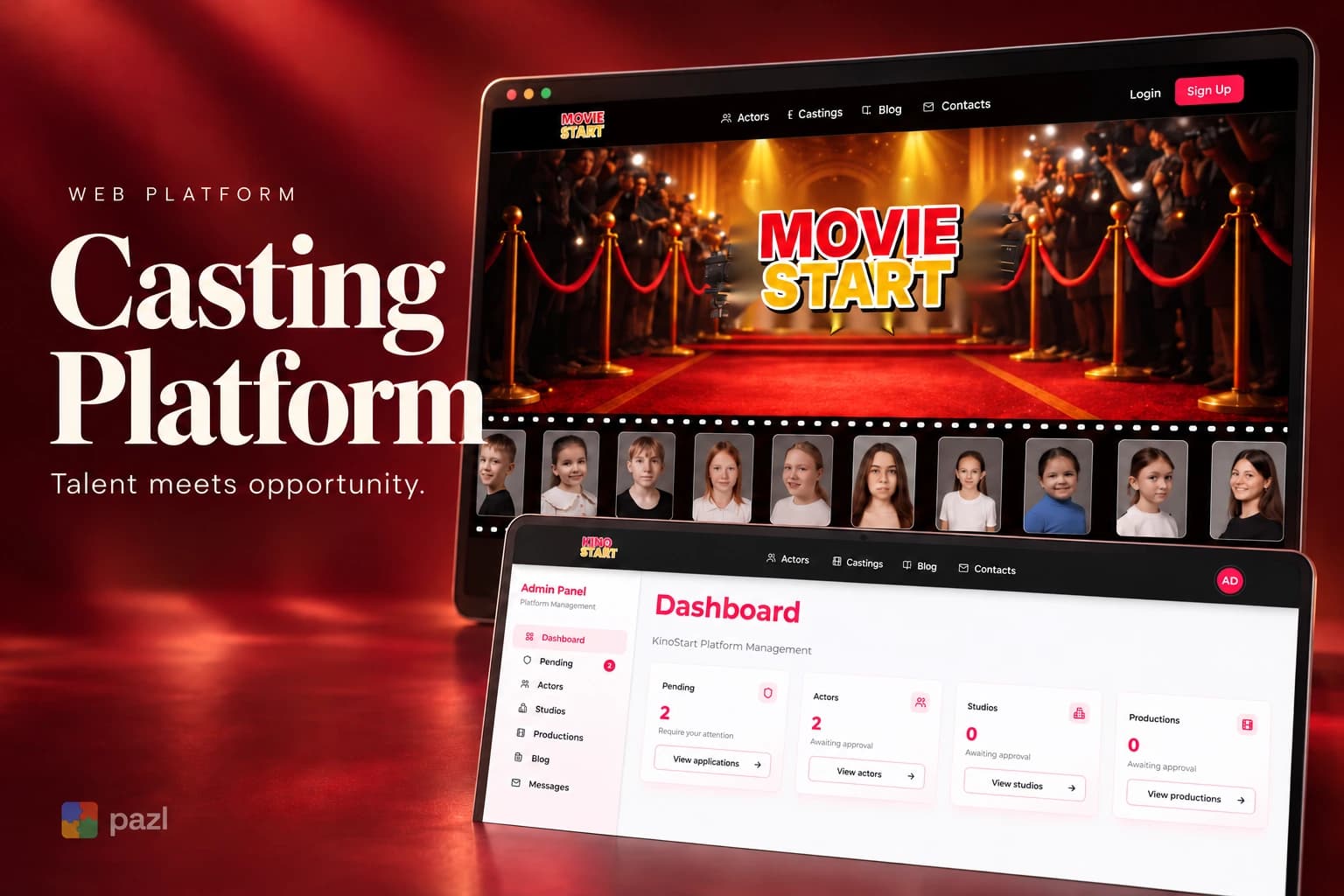
TeleCard is our own crypto wallet. We have no Web3 client project to show yet; the other projects are the same kind of work, built and shipped by the same team.
On-chain items. Skins, gear and land as ERC-721 or ERC-1155, only where ownership matters.
In-game wallet. Embedded and created at sign-up: no seed phrase, no pop-ups mid-match.
Marketplace. Trades between players in the game and on the web, with royalties.
Game economy. Sinks and faucets modelled before release, so items keep their meaning.
04 Sounds familiar?
Players came for the game, not the wallet.
Where studios are when they write to us.
More
01A wallet pop-up in the middle of a match.
02An item economy that inflated within a season.
03Items minted on-chain that nobody needed to own.
04A token-first pitch and a game nobody plays.
05 In the UK
Tradeable items can count as money’s worth.
Chance, cash-out and ownership each bring their own rules, so we design around them from the start.
Starting pricefrom €4,900Fixed price for the agreed scope, set after the brief.
Gambling CommissionCash-out items are money’s worthFCA · PS26/18Unique items are judged on fungibilityDigital Assets Act 2025Items can be the player’s property
Details and sources
Cash-out items are money’s worth. The Gambling Commission treats in-game items that can be cashed out or traded as money or money’s worth; offering gambling with them requires a licence. Paid chance mechanics stay away from tradeable items unless your lawyer clears them.
Unique items are judged on fungibility. A cryptoasset that is genuinely not fungible is not a qualifying cryptoasset, and the NFT label alone doesn’t decide it; NFTs can still be cryptoassets under the Money Laundering Regulations. We document how each item type is minted, for your lawyer.
Items can be the player’s property. Since 2 December 2025, the Property (Digital Assets etc) Act 2025 confirms that digital assets can be objects of personal property rights. The game’s terms should say what happens to items if the game closes.
No. A wallet is created when they sign up, and items land in it without pop-ups. Players who already use MetaMask can connect it on the web.
Can you add Web3 to a game we already have?+
Yes. We add items, the wallet and the marketplace to your Unity, Unreal or web build, and leave the gameplay code alone where we can.
Do we need a licence for tradeable items or loot boxes?+
Possibly. The UK Gambling Commission treats in-game items that can be cashed out or traded as money or money’s worth, and offering gambling with them requires a licence. Paid random rewards with tradeable items need your lawyer’s view first. We build games and hold no licence.
What does a Web3 game cost?+
Web3 game work starts at €4,900. The fixed price for your scope follows the brief and is agreed before work starts.
Can players cash out their items?+
That is a design and legal decision, not a feature we push. Cash-out changes how items are treated, so we model the economy for play first and decide on trading with you and your lawyer.
Anatoly MikhailovFounder of Pazl
14 From the founder
Rather talk it through?
Web3 is software first. I want every contract, wallet and screen to be clear to your users, your auditor and your lawyer, with the price agreed before any code.
A free 30-min call with a product lead, or a fixed-price quote by email within 24h.
 pazlWEB3←Main site