
What is a payment gateway?
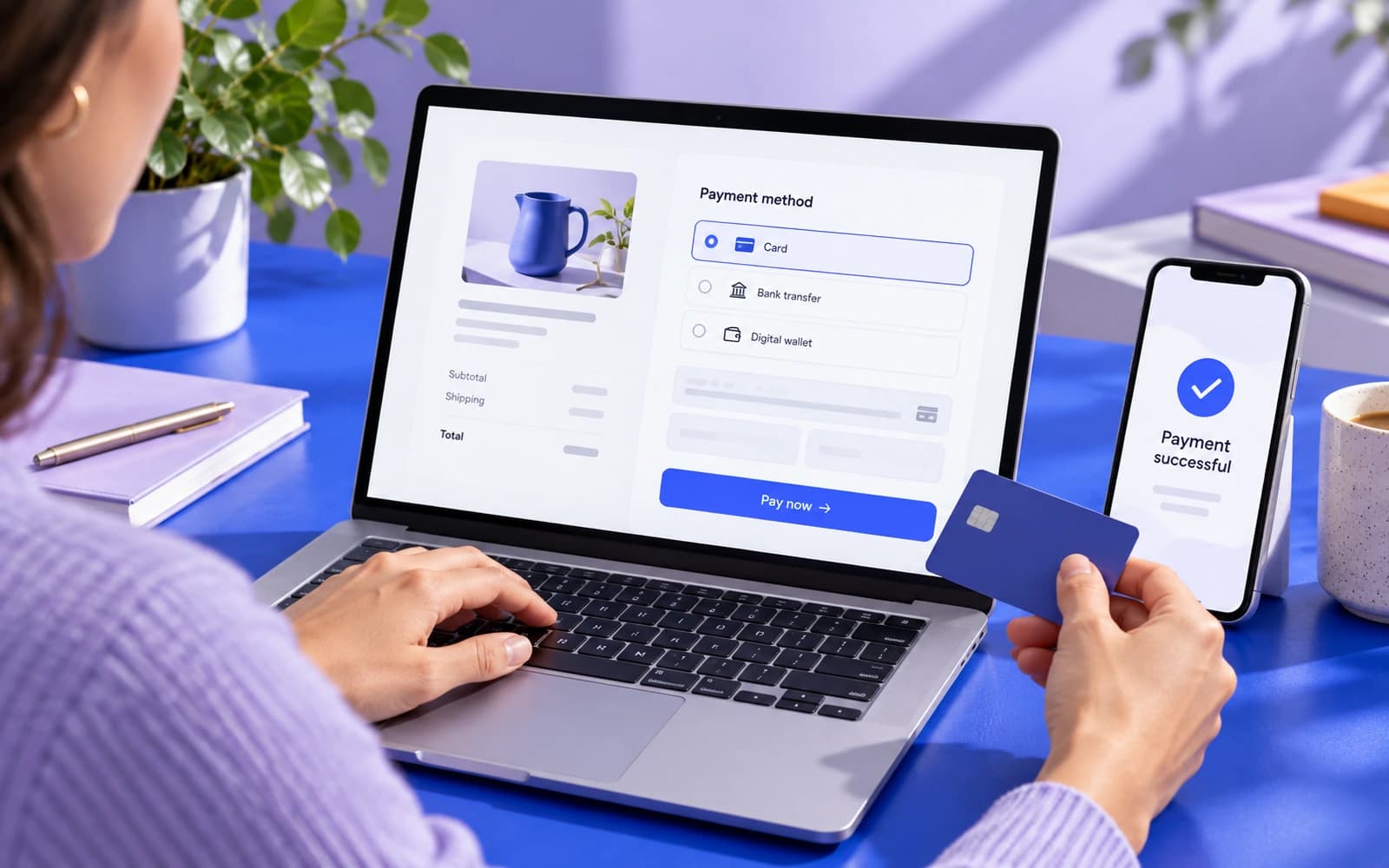
A payment gateway is the service that takes card or bank payment details at checkout, sends them securely for authorisation and returns the result to your website.



Why it matters for a business
The gateway decides which payment methods you can offer, how strong customer authentication is handled and how money reaches your account.
More
Stripe, Adyen and Worldpay are examples.
A hosted checkout handles strong customer authentication for you and keeps card data off your servers, which narrows your security obligations. Fees and payout times differ, so compare them before you build.
Gateway vs processor
The gateway collects and passes on the payment; the processor and card networks move it between banks.
Gateway vs aggregator
An aggregator such as Stripe or PayPal gives you a gateway and a shared merchant account in one sign-up.
Pay by bank
In the UK, Open Banking lets customers pay straight from their bank account through an FCA-authorised provider.
What it costs
Starting prices of our services on this topic, in your currency.


Payment gateway in practice
The service that takes a card or bank payment at checkout and passes it on securely for approval.
Example
- An online tea shop in Harrogate takes cards, Apple Pay and Google Pay through a hosted checkout, so card details do not pass through its own server.
- Larger wholesale orders can be paid by bank through Open Banking.
- Every payment is matched to its order in Xero.
Which term is it?
A hosted e-commerce platform from Canada for building and running an online shop without your own servers.



From the founder
Often nothing is missing except a connection: two systems that should share data and do not. We map what moves where, then agree scope and price up front.
Anatoly MikhailovFounder of Pazl