Customer portal development
A customer portal your clients actually use
Orders, invoices, documents, requests, appointments — the things clients ask your team about by email and phone become a page they can open themselves. A portal is a web application with accounts and roles: each client sees their own data, each partner their own listings, your team one admin behind it all.
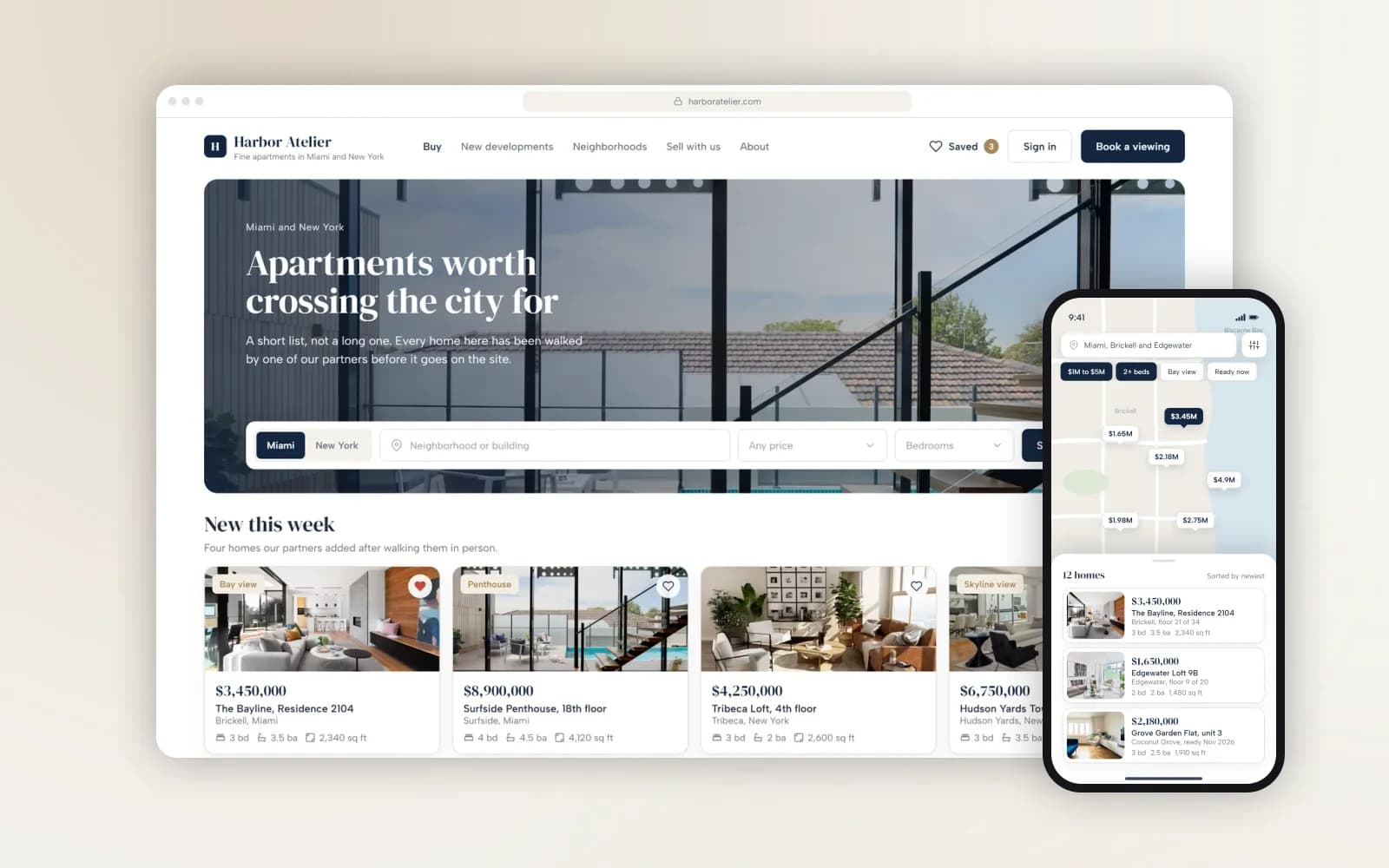
A partner portal.
Harbor Atelier: a property catalogue for buyers and a partner desk where agencies manage listings, viewings and leads — one web app with two kinds of accounts.
What a portal takes off your team
Orders, invoices and documents in one account
Clients see the status of what they bought, download invoices and contracts, and upload what you need from them. The questions that filled your inbox — “where is it”, “can you resend” — answer themselves.
Requests and approvals with a trail
A client submits a request, your team picks it up, both sides see the status and the history. Approvals, comments and attachments live on the request instead of in five email threads.
Partners and resellers with their own view
Give partners a desk of their own: their listings, their leads, their commissions, nothing else. Roles decide who sees what; your admin sees everything.
Built around your workflow and your systems
We start from what clients ask for today and where that data lives — your CRM, accounting, order system, shared drives. The first release covers the two or three pages that remove the most email; each further page is added when the first ones are in use.
Accounts, roles and access are designed before anything else: clients, partners and staff see different things, and the audit trail records who did what. GDPR obligations — consent, export, deletion — are part of the design, not a later fix.
The portal reads from and writes to your existing tools through their APIs where they exist. Where a system has no usable interface, the scope says so and proposes the closest workable option.
Customer portal cost and timing
The estimate depends on the number of user types, the pages in the first release and the systems the portal has to talk to. A partner desk with its own workflows is scoped as its own phase. Portals are part of our work as a web development agency, so yours can grow into a full web application later.
A first release can be live from around four weeks once access to the systems and a few real client cases are ready. Hosting and third-party subscriptions are listed separately in the proposal.
Six-month warranty. Coverage and ongoing support are set out in your project agreement.
From first message to launch.
Tell us what needs to work
Share the goal, the users and any systems you already use. A short message is enough to start.
Agree the scope and quote
We define the first release, responsibilities, price and delivery plan before development begins.
Review the build
You see the agreed screens and working flows as the project develops. Changes are assessed before extra work starts.
Launch and hand over
We prepare the release, test the agreed flows and hand over the project as set out in your agreement.
Project examples: a partner portal and a finance web app
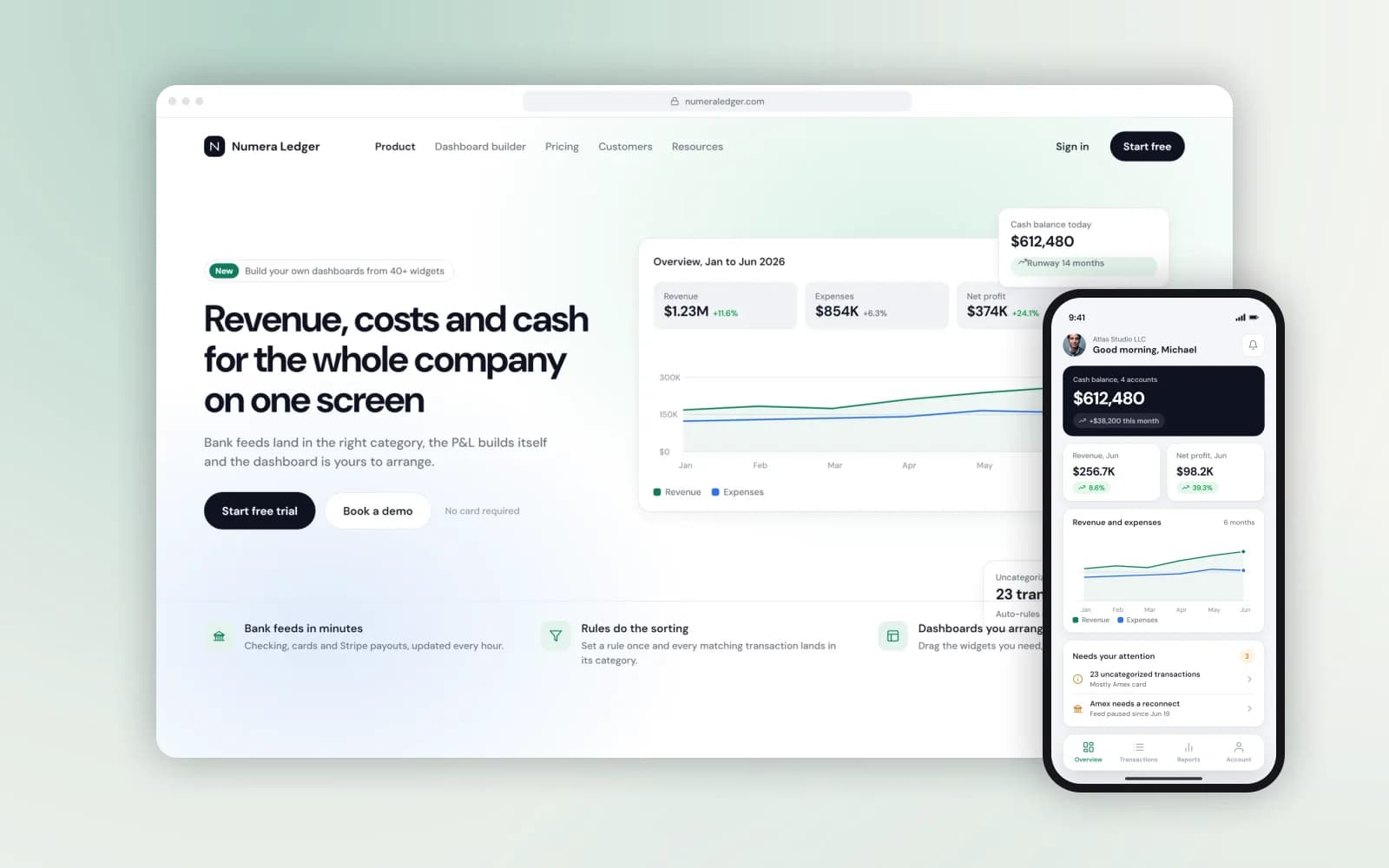
Harbor Atelier gives buyers a catalogue and partner agencies a desk of their own; Numera Ledger gives a founder their company’s finances in a dashboard they assemble themselves. Both are web applications with accounts and roles — the kind of product this page sells.
The stack we build with.
Fair questions, straight answers.
Tell us what your clients keep asking for
Send the three questions your team answers most often and the systems where the answers live. We’ll sketch the portal’s first pages and estimate the work.