
What is a crypto wallet?
A crypto wallet is an app or device that stores the private keys controlling blockchain assets and uses them to sign transactions.
Why it matters for a business
If your product handles crypto, the wallet model decides who can recover funds and what you must register for.
More
The coins themselves stay on the blockchain; the wallet proves who may move them.
A custodial wallet means your company or a provider holds the keys; a non-custodial one leaves them with the user. In the UK, custodian wallet providers must register with the FCA before starting in-scope services.
Wallet address
A public address, derived from the keys, works like an account number you can share to receive funds.
Custodial or not
Custodial wallets keep keys on a provider’s servers; non-custodial wallets keep them on the user’s device or in a seed phrase.
Hot and cold
Hot wallets are online and convenient; cold wallets, such as hardware devices, keep keys offline for larger sums.
- AppWhere people click
- crypto walletWalletHolds the keys and signs
- Smart contractRules that run as code
- BlockchainRecords every transaction
Token
What it costs
Starting prices of our services on this topic, in your currency.
Crypto wallet in practice
An app or device that holds the keys to your crypto and lets you send, receive and sign transactions.
Example
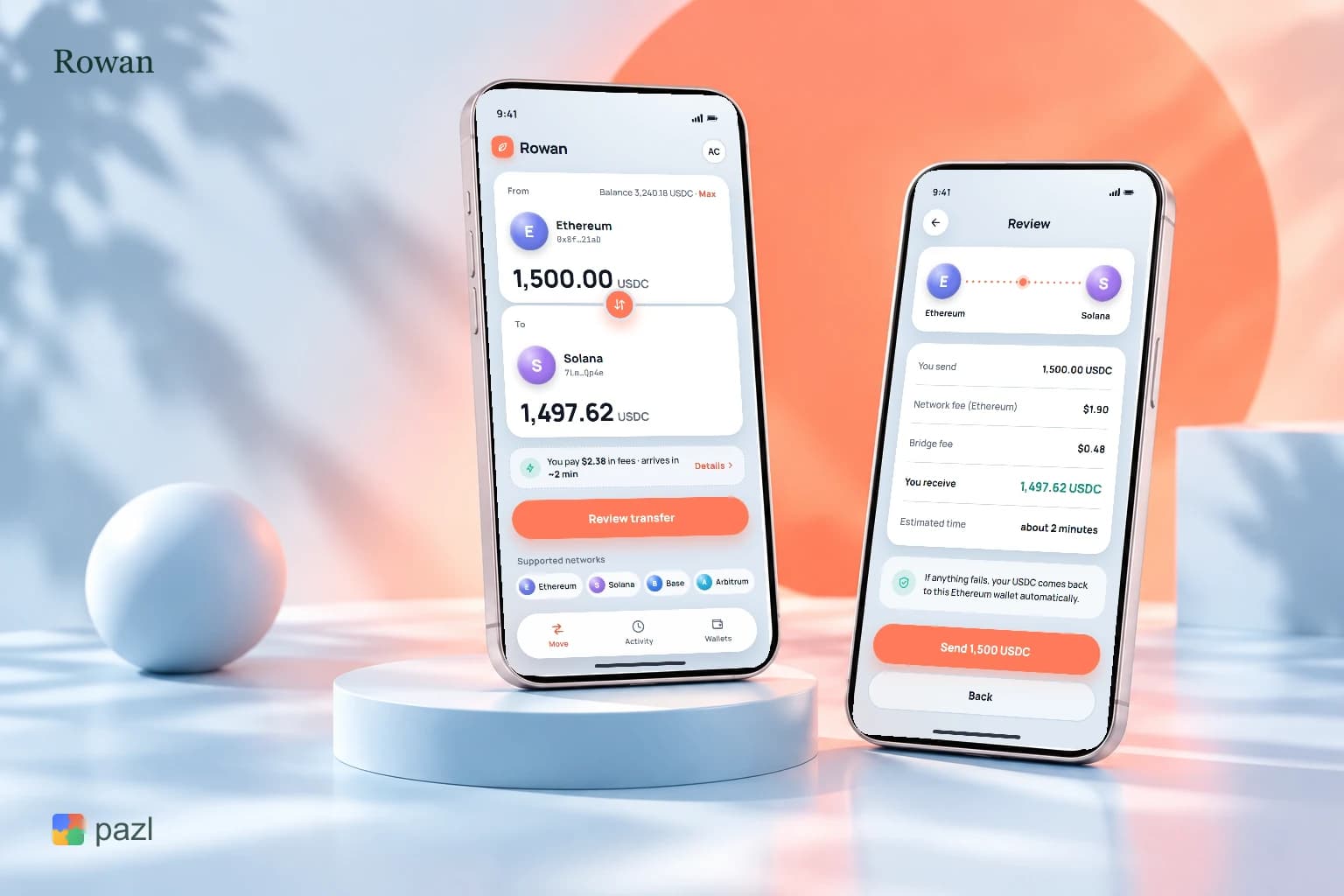
- A fintech app in London adds stablecoin payouts for freelancers.
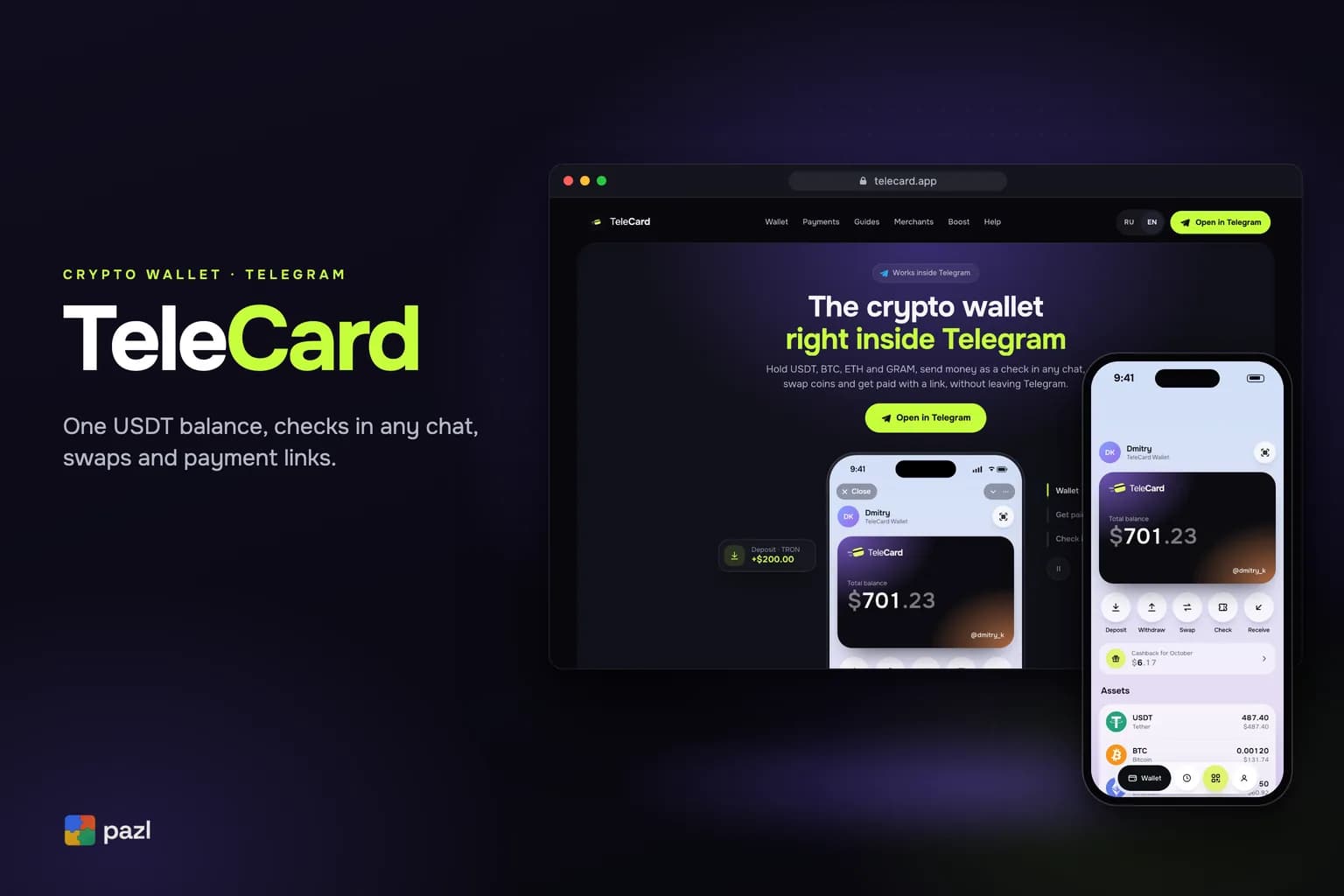
- It uses an embedded non-custodial wallet: users sign in with email, keys are created on their phone, and they can export them later.
- Because the firm cannot move users’ funds, the design is documented for its lawyer as part of the custody assessment.
Which term is it?
A crypto token designed to keep a steady value, usually tied to a currency such as the US dollar or euro.




From the founder
In Web3 I care about products people can actually use: clear wallets, tested smart contracts, costs you can see. Scope and price are agreed up front, as for everything we build.
Anatoly MikhailovFounder of Pazl