
Odoo vs custom ERP: when each one pays off
Odoo covers accounting, sales and stock out of the box.
- Fixed price
- 6-month warranty

The choice is rarely all or nothing.
More
Odoo pays off where your work looks like everyone else’s: invoicing, purchasing, stock, accounting with VAT or sales tax. Custom software pays off where the process is your edge, such as pricing, scheduling or a service your customers use online. We are an independent developer who implements and integrates Odoo and also writes custom software, so a common answer is Odoo for the back office and a custom app on top.
Custom software fits a process nobody else has. We build both, so our advice does not depend on which one you pick.
What it costs
Tap what you need. The starting price shows next to each item.
- Setup and configurationFixed quote after a brief
- Custom modules and extensionsFixed quote after a brief
- Customer portalfrom €2,500
- Mobile appfrom €4,750




More
The first release has a fixed price, agreed in writing before work starts. Six-month warranty on what we deliver.
Licences of the system itself are paid to its vendor, not to us.
- Setup and configuration
- Apps, users, rights, numbering and templates set up the way you work.
- Custom modules and extensions
- Fields, screens and logic the standard product does not have.
- Customer portal
- Orders, invoices and documents online for your customers or dealers, from the same data.
- Mobile app
- An iOS and Android app for your team or your customers on top of the system.
Projects close to this one
Client projects with the same kind of work: integrations, internal systems, automation and apps.
Odoo or custom software? Five questions
Answer for your business as it is today. The marker moves with every answer.
Odoo and custom software, side by side
More
Odoo: what we build
- Fit-gap analysis
- Odoo with custom modules
- Custom web application
- Mixed setup
- Customer portal or mobile app
More
- Fit-gap analysis
- Your processes laid against Odoo’s standard apps: what fits, what needs a module and what does not fit at all.
- Odoo with custom modules
- Standard apps set up, the gaps closed with Python modules kept lean enough to port to each new version.
- Custom web application
- A system of your own, with the data model, screens and user rights built around the way you work.
- Mixed setup
- Odoo for accounting, stock and invoicing, with a custom app or portal on top for the part that is yours alone.
- Customer portal or mobile app
- Built on Odoo data or on your own backend, for customers, dealers or field staff.
What has to work: United Kingdom, United States
- Making Tax Digital
- Open Banking
- Sales tax by state
- ACH payments
More
- Making Tax Digital
- VAT records kept digitally and returns filed from compatible software.
- Open Banking
- Bank feeds and pay-by-bank through the UK’s open banking APIs.
- Sales tax by state
- Rates and nexus per US state, applied at quote and at checkout.
- ACH payments
- Bank transfers and direct debits on the US ACH network.
From the first call to go-live
- Brief
- Scope and fixed price
- Build on a test copy
- Your acceptance
- Go-live and warranty
More
- Brief A call or the form: what you run, what should connect, where it hurts.
- Scope and fixed price Systems, data flows and edge cases written down, with one fixed price.
- Build on a test copy We connect and test against a sandbox or a copy of your data, never live first.
- Your acceptance You check real cases: a refund, a new tax rate, a duplicate customer.
- Go-live and warranty The switch-over with monitoring, then six months of warranty on what we built.
Questions about Odoo
When is Odoo the better choice?
When most of your processes are standard: sales, invoicing, purchasing, stock, accounting. You get working apps fast and pay to build only the gaps.
When does custom software pay off?
When the core of your business is a process no standard app models well, or when Odoo would need so many modules that every upgrade turns into a project.
Can we combine both?
Yes, and it is often the best answer. Odoo keeps the books, the stock and the invoices; a custom portal or app reads and writes the same data through the Odoo API.
Is custom software more expensive?
At the start, usually yes, because nothing exists yet. Over the years it can come out lower when Odoo would need heavy modules, ported every version, plus Enterprise licences per user. We compare both for your scope after a brief.
What if we outgrow Odoo later?
Odoo runs on PostgreSQL and your data can be exported in full. Moving to a custom system later is a migration, not a restart from zero.
1 more question
Who owns the code?
Custom software we build is yours, code and data. On Odoo, your own modules are yours too; the core stays under its open-source licence and Enterprise under Odoo’s.
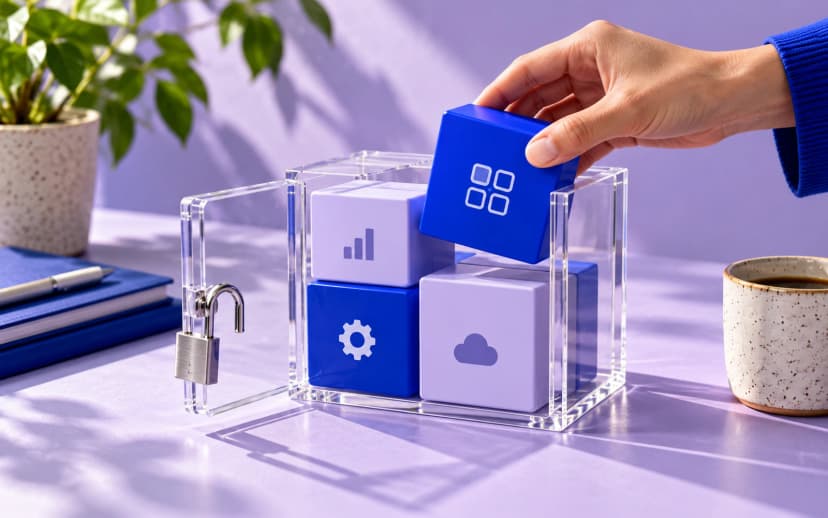

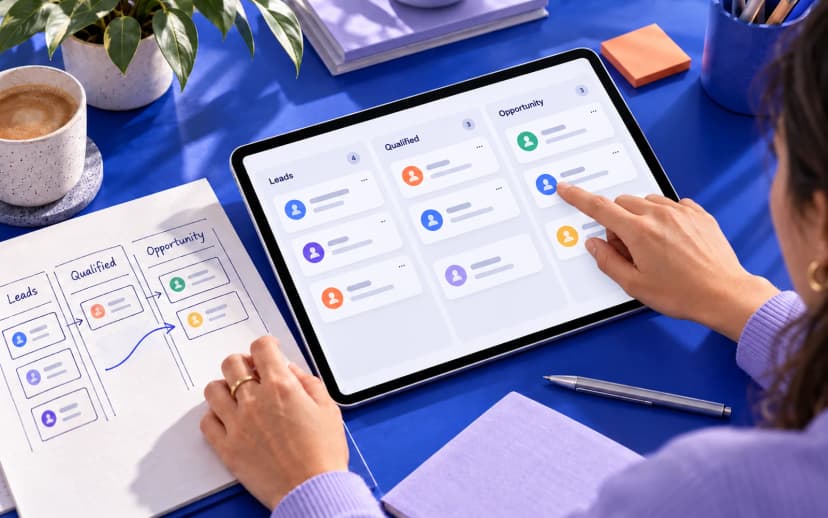

We use Odoo where its standard fits and write our own code where it does not. I keep that choice honest, with scope and price fixed in writing before we start.
Anatoly MikhailovFounder of Pazl
Keep exploring
Tell us about your Odoo setup.
What you run, what should connect, where it hurts. You get scope and a fixed price.