AI consulting and integration
AI consulting services: find where AI pays off, then plug it in
Everyone tells you to “use AI”. Few tell you where, for what, and at what cost. Our AI consulting services start with your real work: the requests, documents and hand-offs your team deals with every day. We tell you which of them AI can take over, which are better done with simple rules, and which should stay with people. Then we integrate the chosen piece into the tools you already use.
Where could AI help my business?
Ask the assistant about your own process. It is the same kind of agent we integrate into a CRM, a helpdesk or an inbox.
It’s live — try it right here, nothing saved.
Who this is for
- You know AI could help, but not where. You have read the articles and tried a chatbot. You need someone to look at your processes and say what’s worth doing first.
- You’ve been pitched an AI platform and want a second opinion before signing a yearly contract.
- You already use tools like a CRM, a helpdesk or accounting software and want AI to work inside them, not as yet another app your team has to open.
- You tried something that didn’t stick: a bot nobody used, an automation that broke. You want to know why before spending again.
If you already know exactly what you want built, go straight to AI agent development.
What our AI consulting services cover
An AI opportunity review
We go through your processes with you: where requests come in, who handles them, which tools they pass through, where things wait or get retyped. For each candidate we look at how often it happens, how predictable it is, what an error would cost and what data exists. The result is a short list of tasks ranked by payoff and effort, not a hundred-slide strategy.
Tool or custom build
For each task on the list we say whether a ready-made AI tool will do, whether your current software already has the feature, or whether a custom agent or integration makes sense. Sometimes the answer is a subscription you can set up yourself this afternoon. We’d rather tell you that than sell you a project.
Data and system readiness
AI is only as useful as what it can read and where it can act. We check whether the information the task needs is written down and current, and whether your systems have usable APIs and permissions. If a tool has no usable interface, we say so and propose the closest workable option.
Guardrails and data protection
For every recommended task we define the boundaries upfront: approved information sources, actions the AI may take on its own, when a person must review, how exceptions are handed over. Our builds are GDPR-compliant; EU hosting is available and a DPA is available on request.
A pilot plan with a measurable goal
The review ends with one concrete first step: the task, the scope, what success looks like (for example, share of requests handled without staff, or hours saved per week), a fixed price and a date. You can build it with us, with another team or on your own.
AI integration services: AI inside the systems you already run
Most of the value of AI comes from where it is connected, not from the model itself. An assistant that can’t see your orders or create a task in your CRM just adds another window to check. Our AI integration services put the AI step inside your existing flow.
CRM and sales tools
Incoming leads are read, qualified and written to the CRM with a summary and the next step. Deals trigger drafted follow-ups for approval. We work with the CRMs you already use, such as HubSpot and Pipedrive, through their APIs. For a ready-made scenario, see our AI sales agent.
Email, chat and messengers
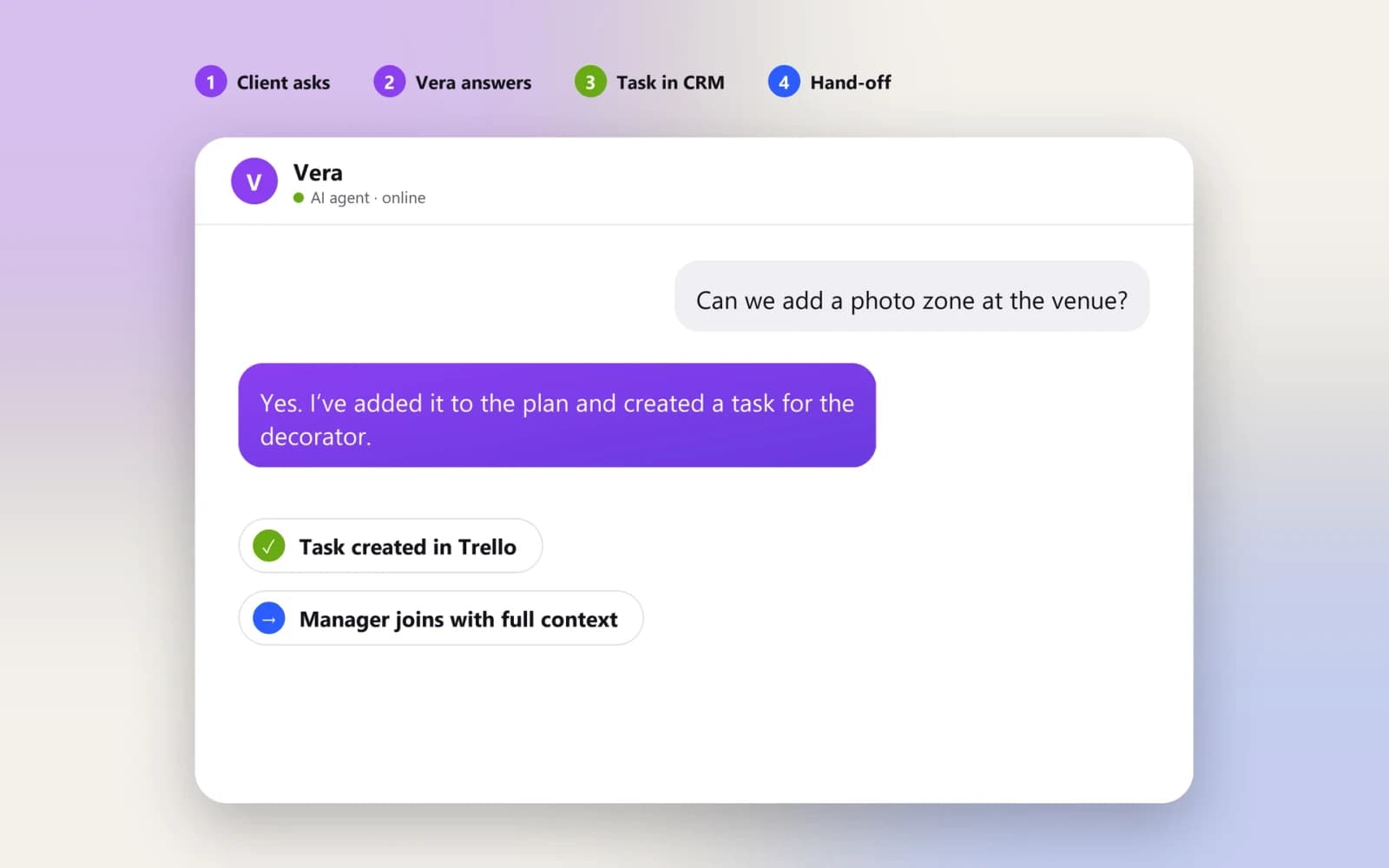
Messages from the mailbox, website chat, WhatsApp or Telegram are sorted by type and routed to the right person or answered from approved information. Conversations that need a person are handed over with full context.
Accounting and documents
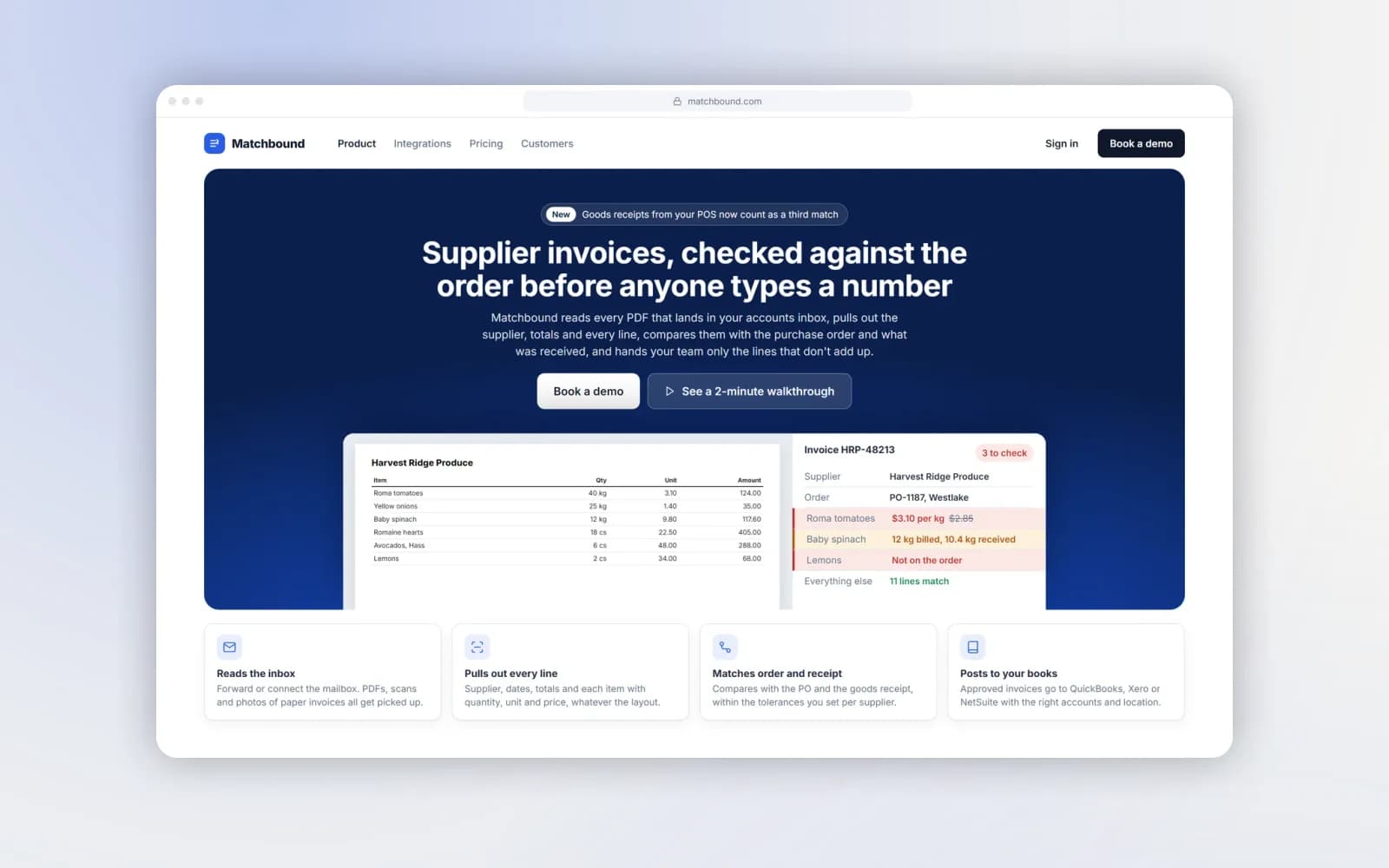
Invoices, orders and forms that arrive as PDFs or photos are read by AI, checked against your data and posted to your accounting system, with a person reviewing only the mismatches.
Task and project tools
Requests become structured tasks in tools like Trello or Notion, with the details filled in and the right person assigned.
Your own web or mobile product
If you run a product, we add AI features to it: an assistant inside the app, smart search over your content, recognition of uploaded documents. We build web and mobile products as well, so the integration is done by the same team. See web app development.
Where steps are predictable, we connect systems with rules or workflow platforms such as n8n rather than AI. More on that on our AI workflow automation page.
When we’ll tell you not to use AI
A good AI consultant should sometimes talk you out of AI. We will, when:
- The process is fully predictable. Same input, same output, every time. A rule or a direct integration is cheaper, faster and easier to check.
- The information isn’t there. If the answers live in people’s heads, AI will make them up. The first job is writing them down.
- The volume is tiny. Automating something that happens twice a month rarely pays back.
- Every answer must be 100% correct and there’s no room for a human check. No one can guarantee AI output; we design for review, not for blind trust.
- A ready-made tool already does it. Then the advice is which tool and how to set it up.
This is also why we give a fixed scope and price before any build: you know what you are buying and why.
How an AI consulting engagement works
Send us a message
Describe the business and the work that eats the most time. A few real examples (anonymised requests, a sample document, a screenshot of the process) help most.
Process review
We go through the workflows with the people who run them, by chat or call.
Written findings
A short list of AI candidates ranked by payoff and effort, the “no AI needed” items, risks, and running-cost estimates.
One pilot, scoped and priced
Scope, price and date agreed in writing before development begins.
Build and integrate
A first version can be planned from around two weeks when the information and access are ready. You review the working flows as they develop.
Measure, then extend
The pilot runs on real cases with a person reviewing the output. We extend only after it proves itself.
Complex integrations, regulated workflows, large migrations and unusual infrastructure need additional discovery. We’ll explain the work needed before quoting the build.
Integration examples from our work
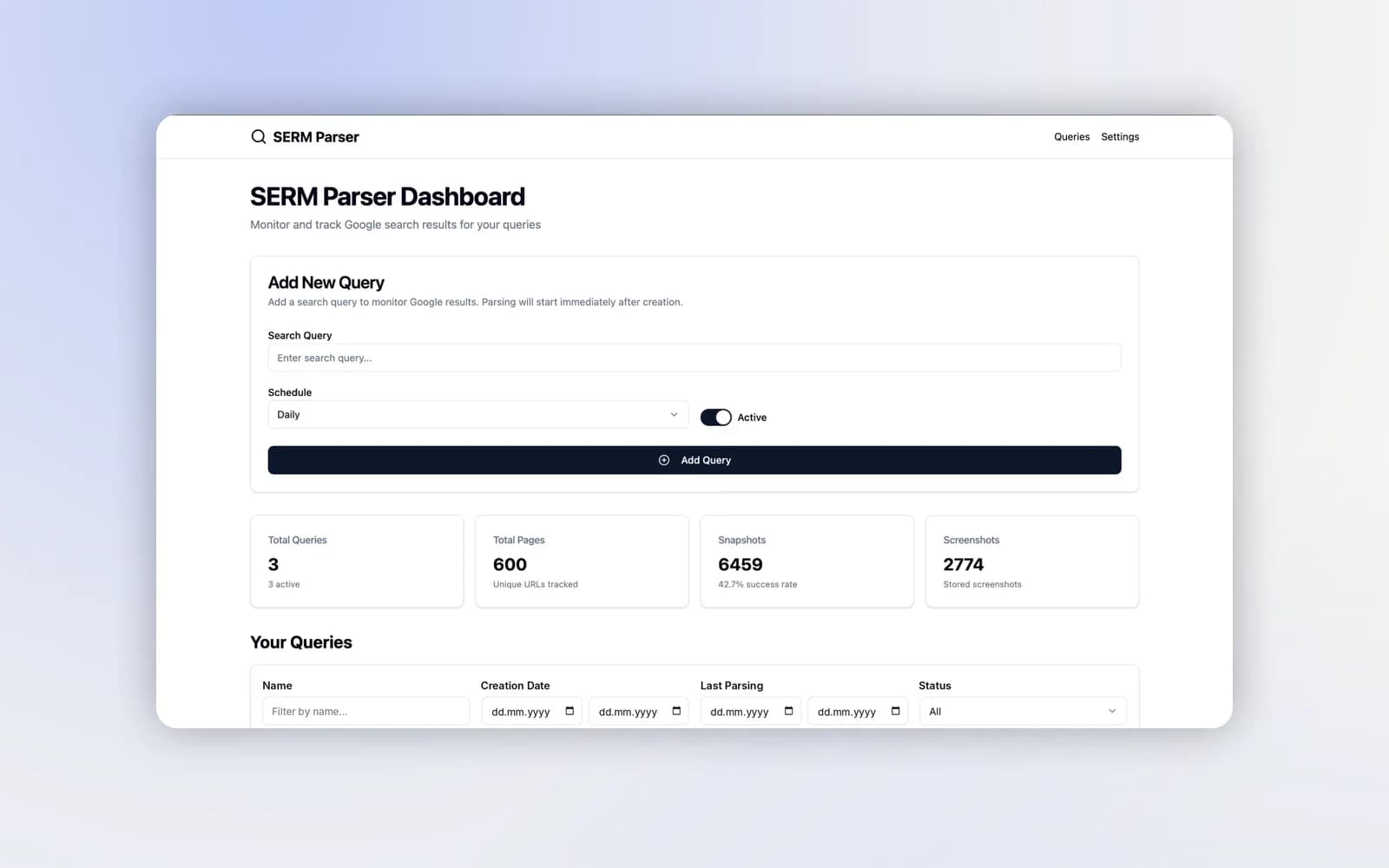
Three different systems, the same approach: AI where the work already is.
AI consulting and integration cost
A first integration can be planned from around two weeks once the information and access are ready. Further workflows and integrations are scoped and priced one by one and agreed in writing.
Running costs are listed separately: AI model usage (billed at cost), messaging providers, hosting and third-party subscriptions. You see them before you commit.
Every build comes with a six-month warranty and full IP transfer. You pay by card or bank transfer; the contract is with Pazl LLC, a US company.
Why take AI advice from a team that builds
Pure consultants hand over a report. Pure vendors recommend what they sell. We sit in between: we build AI agents, workflow automation, web and mobile products, so our advice has to be something we can actually ship at the price we quote.
- Fixed price, fixed scope, fixed dates for every build, agreed before you pay.
- Senior engineers review the work.
- Chat first. Everything can run in chat; a call in English is there if you prefer.
- You own the result: code, prompts and workflows, running in your accounts.
The stack we build with.
One team, six crafts.
Fair questions, straight answers.
Show us the work that eats your week
Send a short description of your business and two or three tasks your team repeats every day. We’ll tell you where AI fits, where it doesn’t, and what the first step would cost.