
What is OCR?
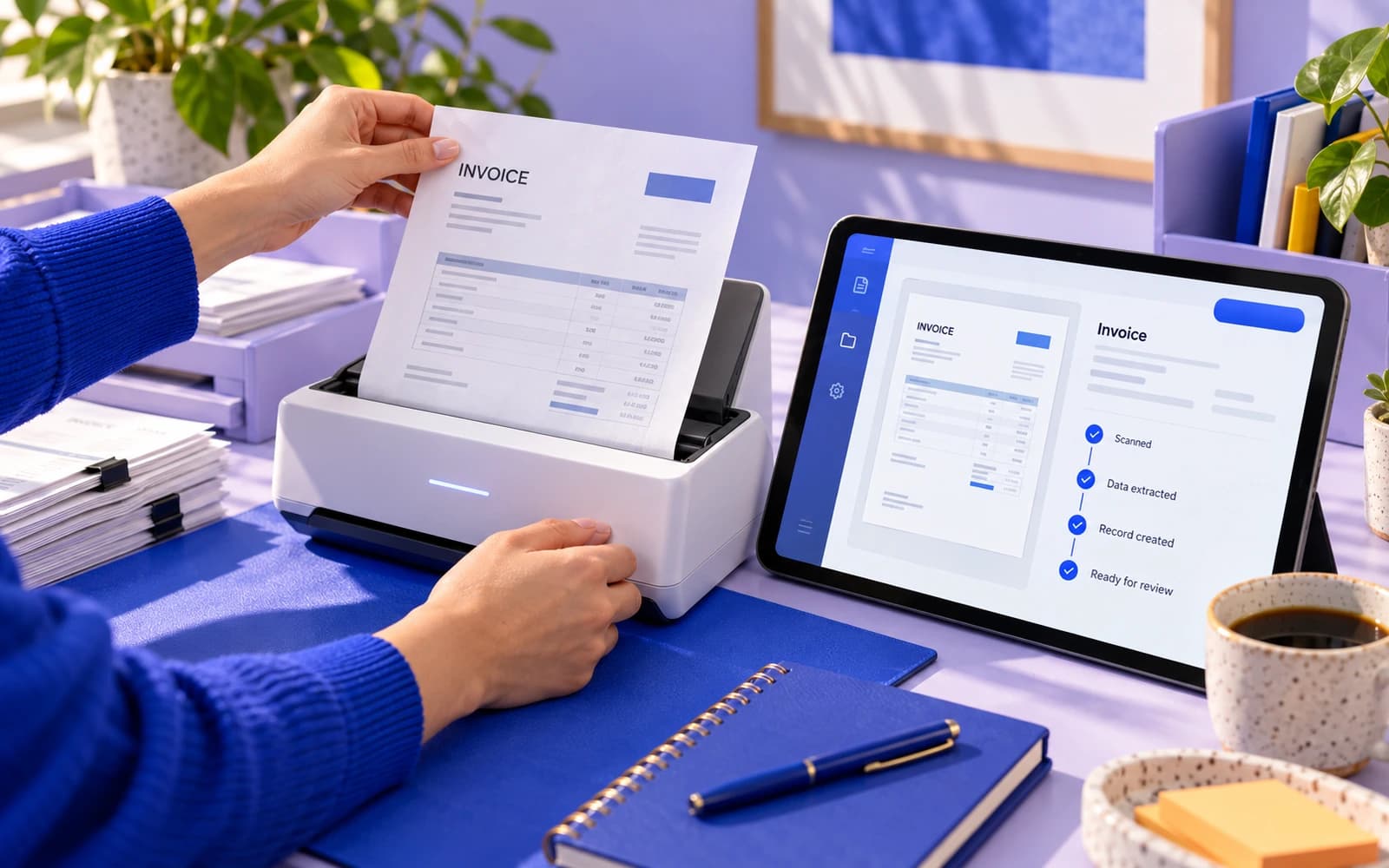
OCR (optical character recognition) is technology that recognises the letters and numbers in an image, scan or PDF and turns them into text a computer can search, copy and process.
Also calledoptical character recognition

Why it matters for a business
If staff retype data from supplier invoices, delivery notes or forms, OCR is the first step to automating it.
More
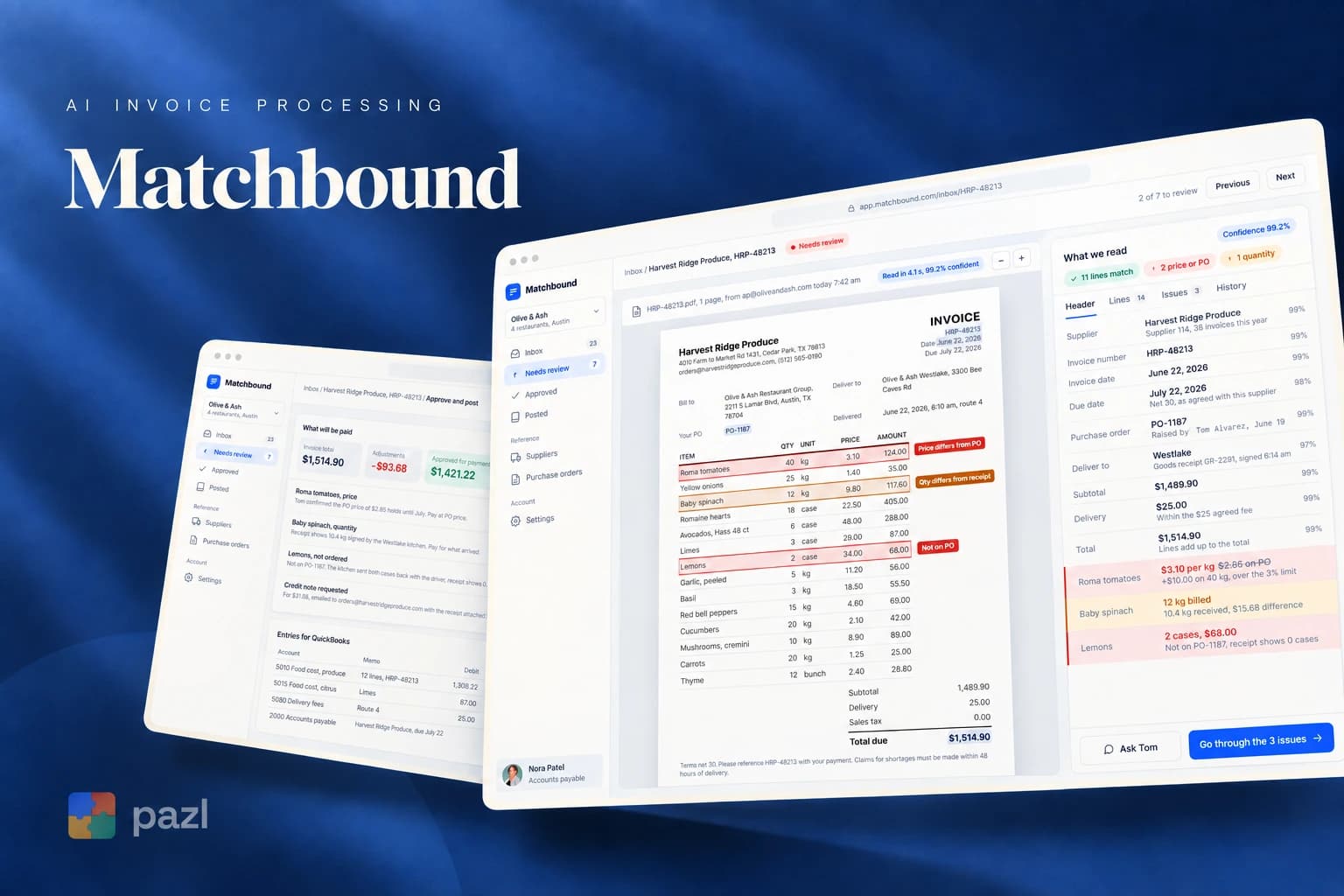
Modern OCR often adds AI to find fields, such as an invoice total or a supplier name.
Plain OCR gives you text; the value comes from extracting the right fields and checking them against your records. Invoices that arrive as structured e-invoices need no OCR at all.
OCR in a PDF
A scanned PDF is only a picture of text; OCR adds a hidden text layer so you can search and copy it.
From text to data
Document AI goes further, finding fields like dates, totals and VAT numbers and returning them as structured data.
Check the confidence
Each value read has a confidence score; low scores should go to a person rather than straight into the accounts.
- OCRInputA question, a message, a document
- ContextYour data, found by search
- Language modelReads, reasons and writes
- ResultAn answer, or an action in your tools
What it costs
Starting prices of our services on this topic, in your currency.


OCR in practice
Technology that reads text from scans, photos and PDFs and turns it into editable, searchable text.
Example
- A building supplies merchant in Cardiff receives supplier invoices as PDFs and photos.
- OCR reads each one, extracts the supplier, date, lines and VAT, and matches them to the purchase order.
- Matching invoices go to the accounts system for approval; the rest wait in a queue for the accounts team.
Which term is it?
Sending invoices as structured data that the buyer’s software can read, not as a PDF or on paper.



From the founder
I want AI that does a real job inside your tools, with a person checking what matters. We test it on your own data before you rely on it.
Anatoly MikhailovFounder of Pazl