Swap, staking and lending products: the contracts, the screens and the data between them. Every rate and every risk is shown as the protocol reports it.
from £2,100
Independent audit before mainnet
Rates from the protocol, not from us
Code and repo are yours
Fixed price / You own 100% of the code / 6-month warranty
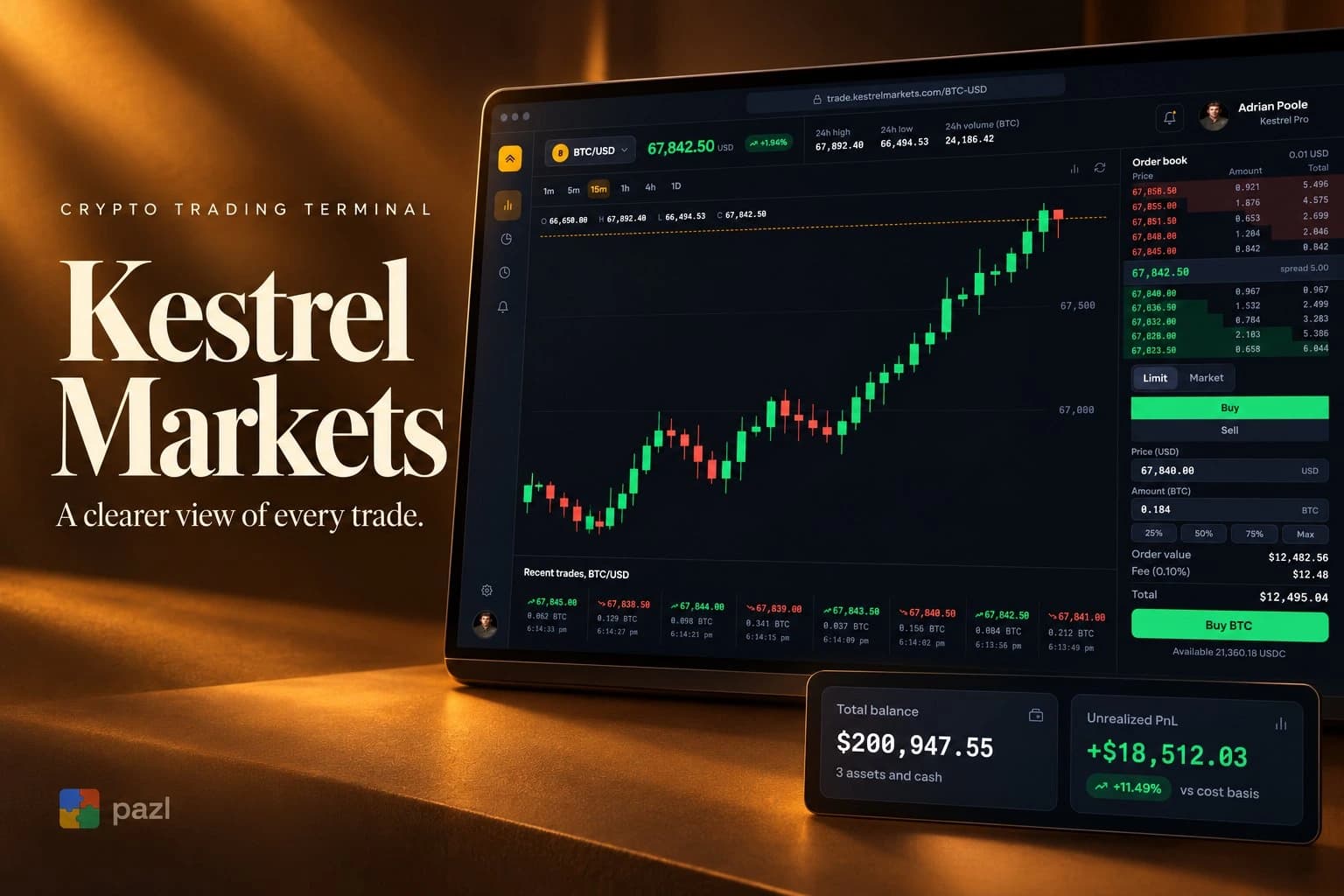
Concept Kestrel Markets: Crypto Terminal
01 How it fits together
Five layers, one product.
Every Web3 product is the same chain of parts. Tap a layer to see what it does; the bright ones are what this page builds.
02 / 05Smart contract
The rules: who can mint, pay, vote or withdraw, enforced on-chain.
We build Connected
02 Delivered work
Real projects by the same team.
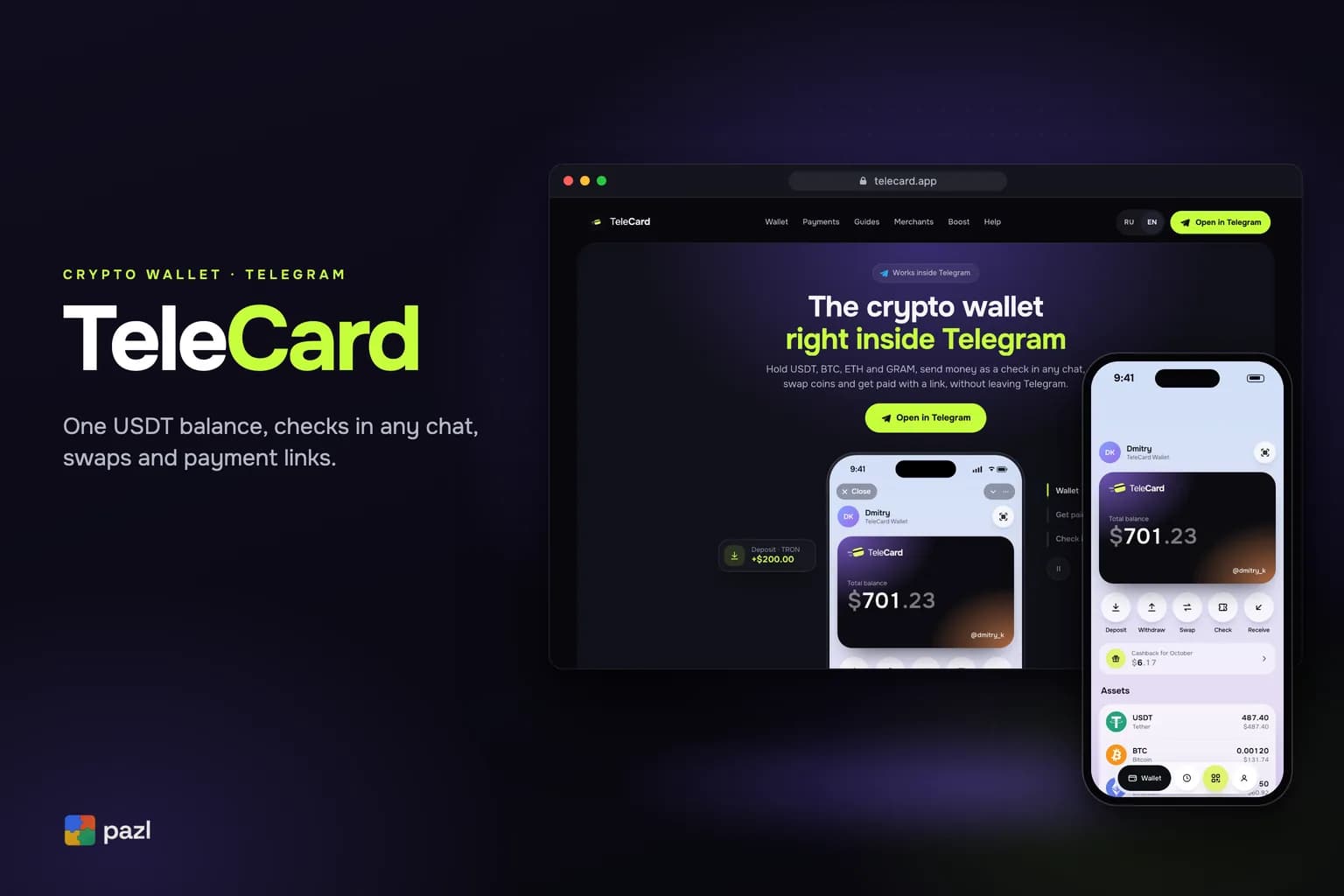
TeleCard is our own crypto wallet. We have no Web3 client project to show yet; the other projects are the same kind of work, built and shipped by the same team.
01Contracts deployed, but no interface people trust.
02Figures on screen that drift from what the chain says.
03An audit slot booked before the code is ready for it.
04A forked front end nobody on the team wants to touch.
06 In the UK
Staking and trading venues come under FCA rules.
Authorisation usually sits with whoever runs the product for users, and the dates are already set.
Starting pricefrom £2,100Fixed price for the agreed scope, set after the brief.
SI 2026/102Staking becomes a regulated activityFCA · GatewayApplications close on 28 February 2027FCA · PS26/18Writing the code is not the regulated part
Details and sources
Staking becomes a regulated activity. The FSMA 2000 (Cryptoassets) Regulations 2026 make staking, operating a cryptoasset trading platform, dealing and arranging deals regulated activities, in full from 25 October 2027. If your product does one of them, its operator plans for it now.
Applications close on 28 February 2027. The FCA window for the new regime opened on 30 September 2026. Firms already registered under the Money Laundering Regulations still need FSMA authorisation, so the release plan and the application should line up.
Writing the code is not the regulated part. The FCA’s perimeter guidance says developing software is not a regulated activity as such; authorisation typically falls on those who provide access to or use of it. We build; the operator holds any licence.
No. Staking and lending rates come from the protocol and the parameters your team sets. We show them as the contract reports them, with the risks beside them, and never promise a figure.
Who audits the contracts?+
An independent audit firm, before mainnet. We prepare the specs, tests and code for the audit and fix what the auditors find.
Do we need a licence for a DeFi product?+
It depends on what you run and for whom. In the UK, staking and operating a cryptoasset trading platform become regulated activities in full from 25 October 2027. We are a software studio, not a crypto service provider: we build, and the operator settles the licensing model with their lawyer.
What does DeFi development cost?+
A first DeFi interface with its contracts starts at £2,100. The fixed price for your scope follows the brief and is agreed before work starts.
Which chains do you build on?+
Ethereum and EVM chains such as Arbitrum, Base and Polygon in Solidity, and Solana in Rust. Outside prices come from Chainlink oracles where the design needs them.
Anatoly MikhailovFounder of Pazl
15 From the founder
Rather talk it through?
Web3 is software first. I want every contract, wallet and screen to be clear to your users, your auditor and your lawyer, with the price agreed before any code.
A free 30-min call with a product lead, or a fixed-price quote by email within 24h.
 pazlWEB3←Main site