Custodial vs non-custodial wallet: which should you build?
Short answer
Build custodial for an app run by a licensed firm and non-custodial for users who hold their own keys on-chain; a hybrid, such as an embedded wallet, fits when both do.
Your app is run by a licensed firm and builds on a registered custodian’s API.
02 Delivered work
Real projects by the same team.
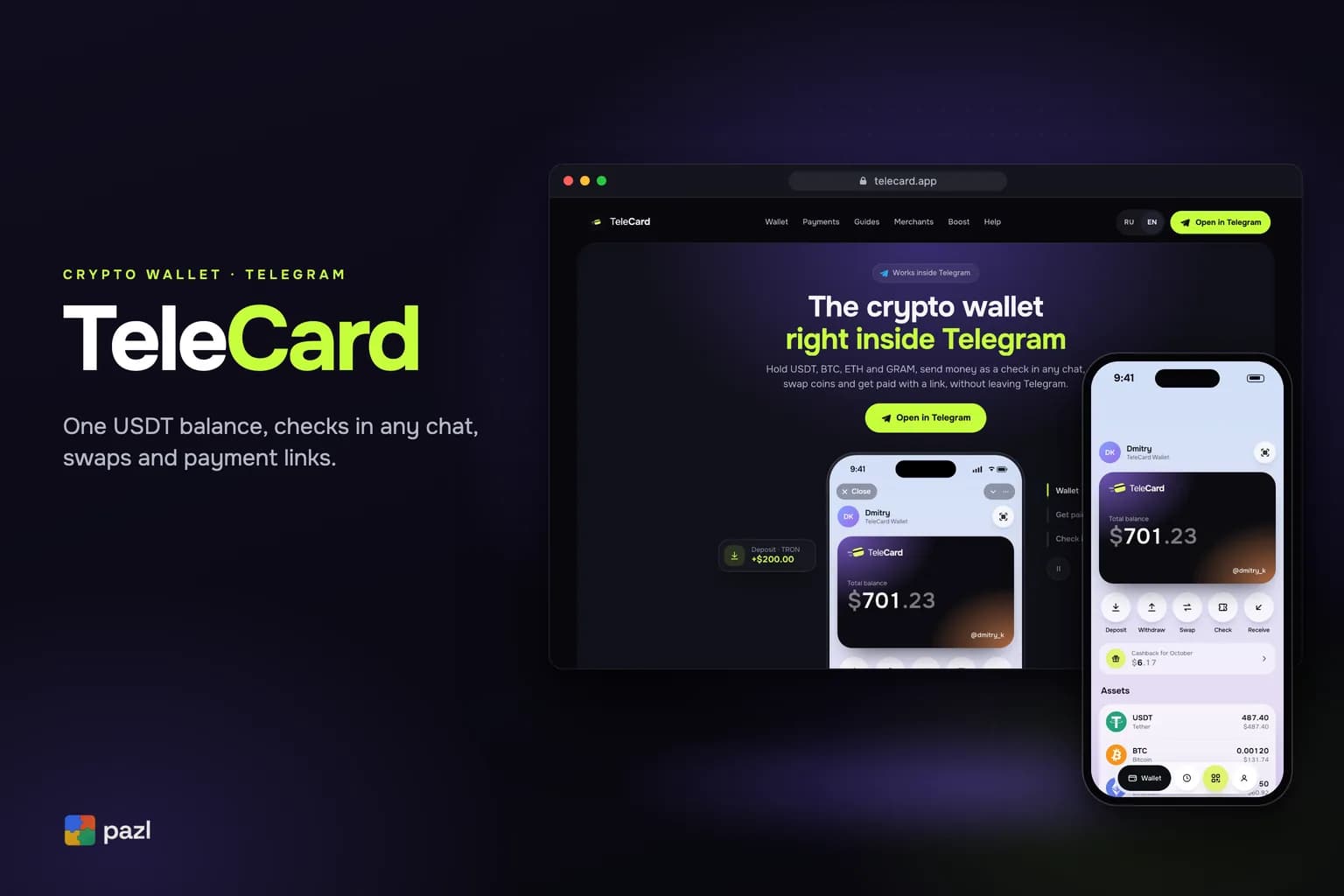
TeleCard is our own crypto wallet. We have no Web3 client project to show yet; the other projects are the same kind of work, built and shipped by the same team.
01Can users get their funds back if they lose the phone?
02Would we need to register with the FCA?
03Can a non-custodial wallet feel as simple as a bank app?
04Can we start one way and switch later?
05 In the UK
In the UK, custody is judged on what your design can do.
Whether you hold users’ cryptoassets is a question of fact about keys and servers, so the custody choice is also a regulatory one.
Starting pricefrom £4,100Fixed for the agreed custody model and platforms, set after the brief.
FCA · MLR 2017Custodian wallet providers register before launchFCA · PS26/18Self-custody means no way to move the fundsSI 2026/102Safeguarding is regulated in full from 25 October 2027
Details and sources
Custodian wallet providers register before launch. Custodian wallet providers must register with the FCA under the Money Laundering Regulations 2017 before starting in-scope services; the FCA has supervised UK cryptoasset businesses for anti-money laundering since 10 January 2020. Registered firms are on the Financial Services Register, so you can check a custodian before we build on its API.
Self-custody means no way to move the funds. The FCA’s perimeter guidance (September 2026) says a firm offering self-custody is not safeguarding only if it genuinely has no means to move the client’s cryptoassets, judged on the technical design. Recovery servers and co-signers are listed and explained.
Safeguarding is regulated in full from 25 October 2027. The FSMA 2000 (Cryptoassets) Regulations 2026 make safeguarding cryptoassets a regulated activity, alongside issuing a qualifying stablecoin, operating a trading platform, dealing, arranging deals and staking, in full from that date. A custodial app’s operator plans its authorisation around it.
Checked on 12 November 2026 on the regulators’ own pages. General information, not legal advice: your lawyer confirms what applies to your project.
06 FAQ
Straight answers.
Which is safer, custodial or non-custodial?+
Neither by default. Custodial puts the risk on the custodian’s security and solvency; non-custodial puts it on the user’s device and backup. Good recovery design matters more than the label.
Is an embedded wallet custodial?+
It depends on who can move the funds. Some embedded wallets split the key so the provider alone cannot sign; others let the provider restore it. The FCA looks at whether you have any means to move users’ cryptoassets, so we document the setup.
Can we start custodial and switch later?+
Yes, if it is planned: the app keeps custody behind one layer, so a self-custody mode can be added later. Moving existing users’ funds needs their action and a careful migration flow.
How much does a custodial or non-custodial wallet cost?+
A first wallet app in either model starts at £4,100; the fixed price for your scope follows the brief. A custodial build also depends on your custodian’s API, a non-custodial one on the recovery method.
Does the custody model decide whether we need a licence?+
It is one of the main factors. Custodian wallet providers register with the FCA, and safeguarding becomes a regulated activity in full from 25 October 2027. We build either model and hold no licence; your lawyer confirms where you stand.
07 Included
In the starting price
A wallet whose custody model is clear in the code and in the docs.
from £4,100for an agreed scope
More
✓ Custody model chosen and written down first
✓ A key map: every key, server and co-signer
✓ Custodial: your app over your custodian’s API
✓ Non-custodial: keys on the device, passkeys, recovery
✓ Signing, send and receive on the agreed chains
✓ App store submission, 6-month warranty
08 Proof
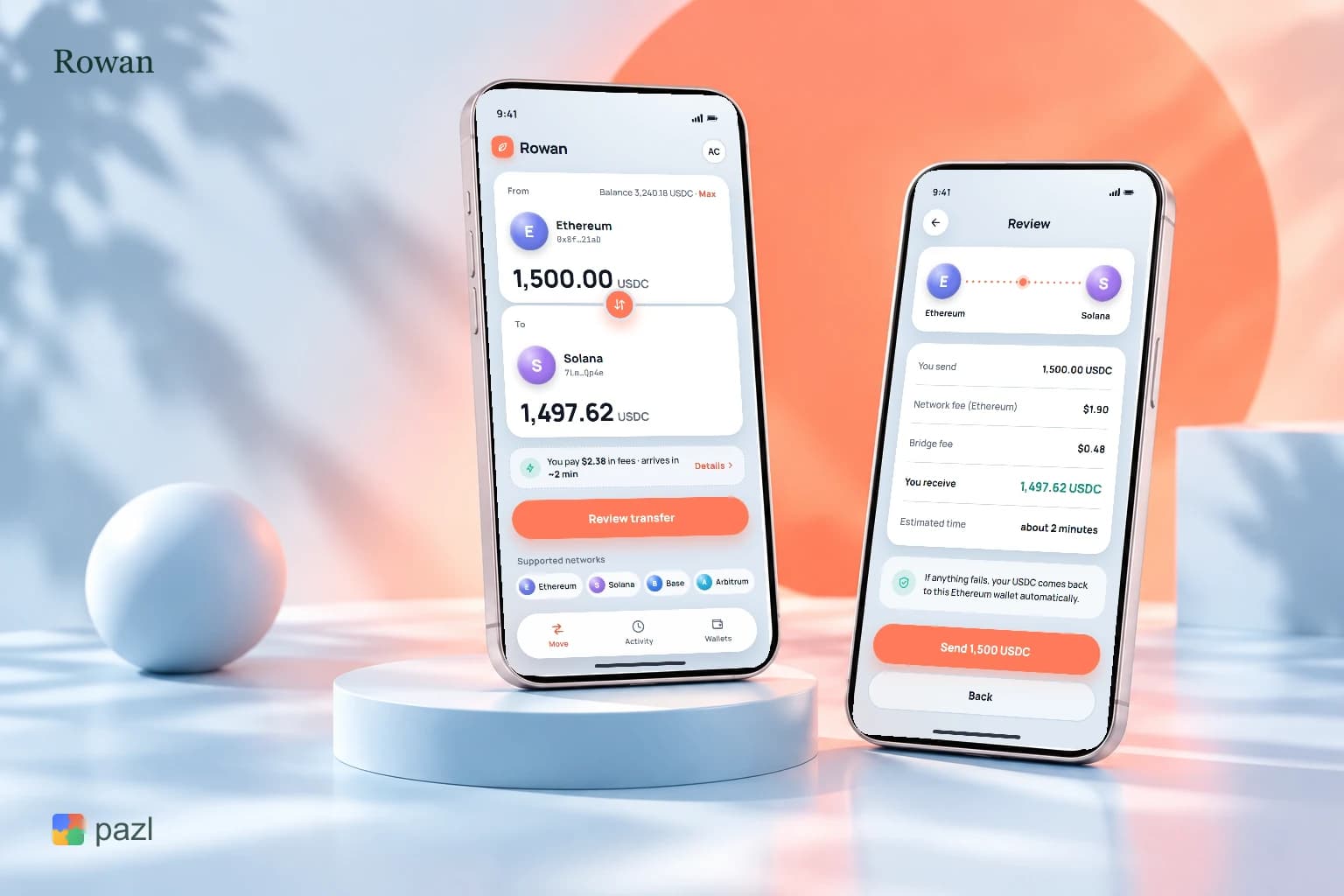
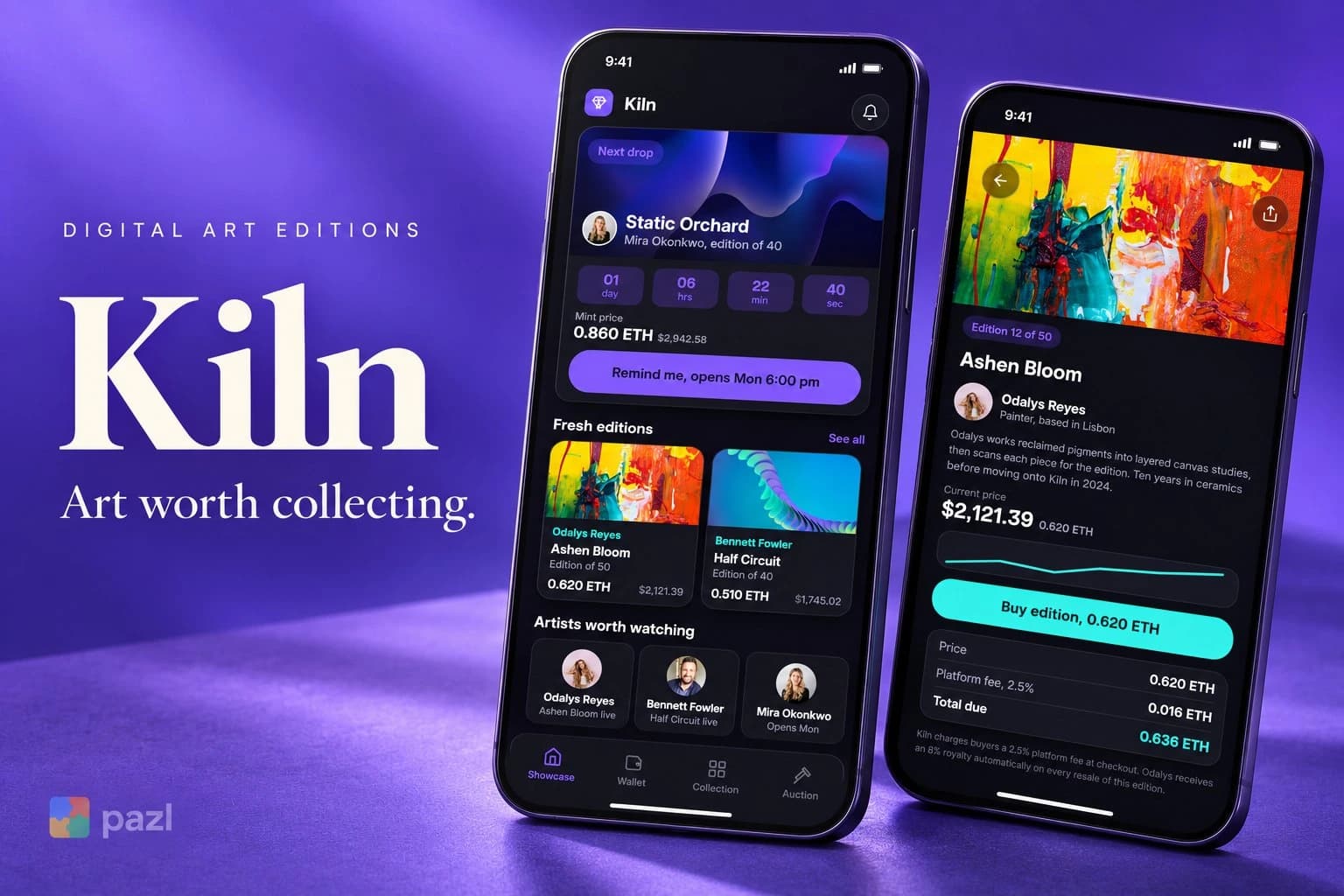
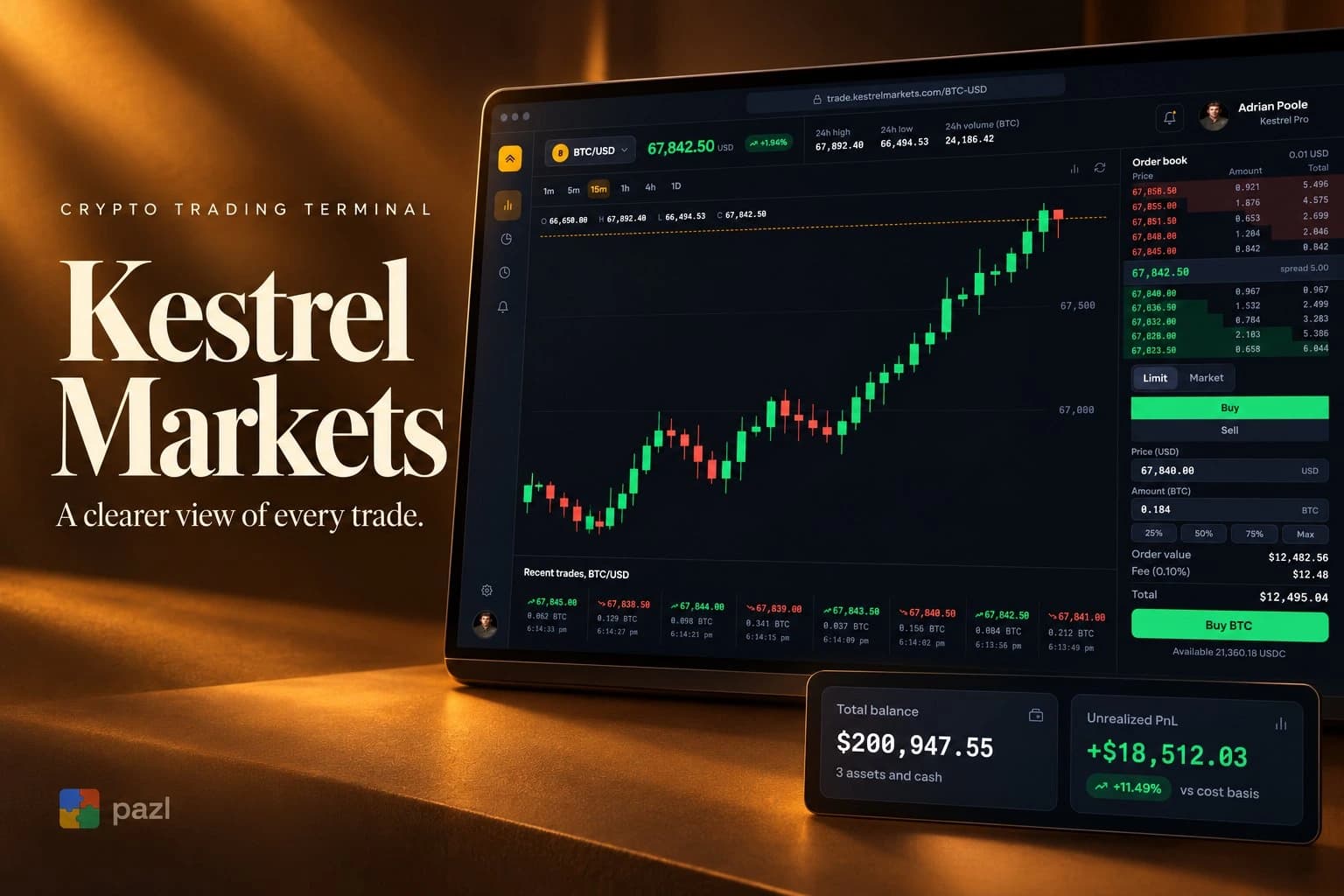
Rowan, our transfer app concept, and two more. Concepts, no client wallets.
 pazlWEB3←Main site