Wallets people can set up without writing down a seed phrase, sign with confidence and recover when the phone is lost. For iOS, Android and the web.
from £4,100
iOS, Android and web
Passkeys and secure enclave
Built for app store review
Fixed price / You own 100% of the code / 6-month warranty
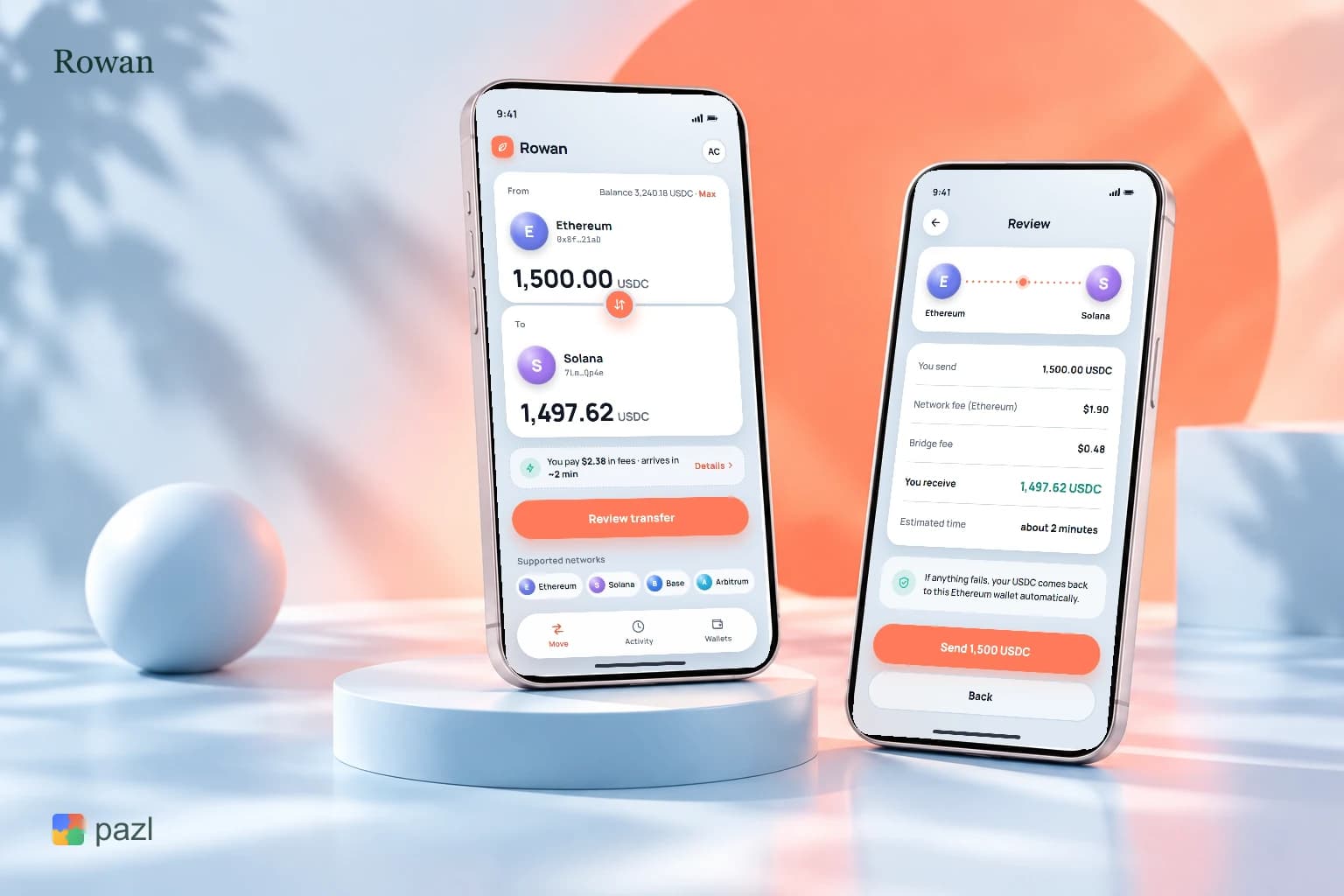
Concept Rowan: Cross-Chain USDC Transfers
01 How it fits together
Five layers, one product.
Every Web3 product is the same chain of parts. Tap a layer to see what it does; the bright ones are what this page builds.
01 / 05Wallet
Where the user’s keys live and every transaction is signed.
We build Connected
02 Delivered work
Real projects by the same team.
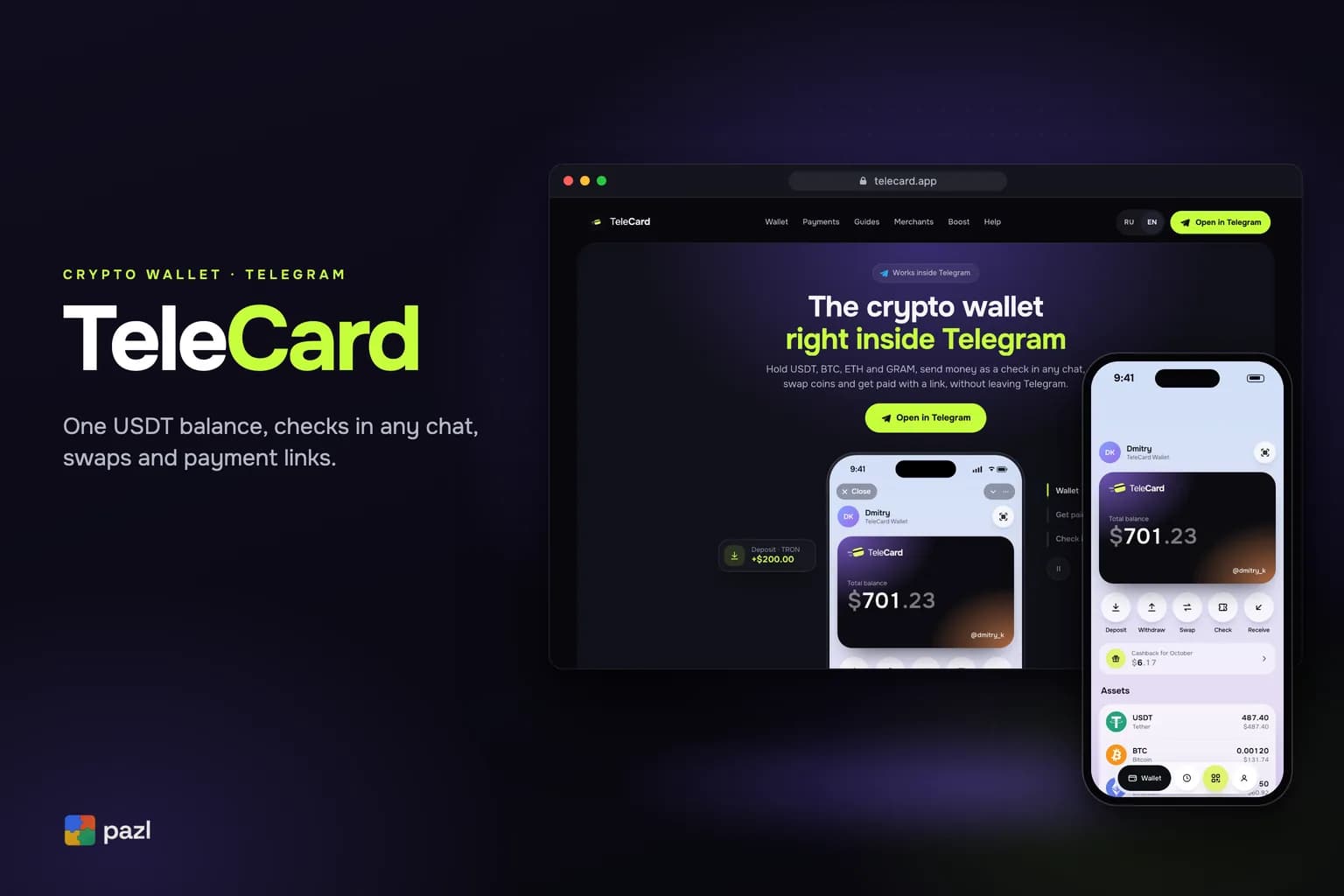
TeleCard is our own crypto wallet. We have no Web3 client project to show yet; the other projects are the same kind of work, built and shipped by the same team.
In the UK, whether a wallet counts as self-custody is judged on its technical design, so we document it from the first sketch.
Starting pricefrom £4,100Fixed for the agreed platforms and chains, set after the brief.
FCA · MLR 2017Custodian wallets register firstFCA · PS26/18Self-custody is judged on the designTravel RuleTransfer data travels with the transfer
Details and sources
Custodian wallets register first. Since 10 January 2020 the FCA supervises UK cryptoasset businesses for anti-money laundering; custodian wallet providers must register under the Money Laundering Regulations 2017 before starting in-scope services. Registered firms are on the FCA Financial Services Register.
Self-custody is judged on the design. A firm offering self-custody is not safeguarding only if it genuinely has no means to move the client’s cryptoassets, judged on the technical design (September 2026). We list every key, server and co-signer that could move funds, for your lawyer to review.
Transfer data travels with the transfer. Since 1 September 2023 UK cryptoasset businesses must collect, verify and share originator and beneficiary information on crypto transfers. In a custodial wallet, those fields belong in the send flow.
Yes. A smart account (ERC-4337) can use a passkey as its signer, or the key can live in the phone’s secure enclave, with recovery agreed up front. Advanced users can still export a phrase if you want that.
Which chains do you support?+
Ethereum and EVM chains such as Polygon, Arbitrum and Base, and Solana. We add chains by what your users actually hold, not to make a long list.
Will it pass App Store review?+
We build to Apple’s and Google’s guidelines for crypto apps and write the review notes. The decision is theirs; if they flag something, we fix it.
What does a crypto wallet app cost?+
A first wallet app starts at £4,100; the fixed price for your scope follows the brief, with each extra chain or custody model priced in it.
Do we need a licence for a wallet?+
It depends on custody. Custodian wallet providers register with the FCA before they start; a self-custody wallet is not safeguarding only if you genuinely have no means to move users’ cryptoassets. We build either and document the key design for your lawyer.
Web3 is software first. I want every contract, wallet and screen to be clear to your users, your auditor and your lawyer, with the price agreed before any code.
A free 30-min call with a product lead, or a fixed-price quote by email within 24h.
 pazlWEB3←Main site