
Software and AI for Edinburgh’s finance, tourism and research
Finance and insurance provide 11.3% of Edinburgh’s jobs, visitors spent £2.57 billion here in 2024, and more people are enrolled at the city’s universities than at its schools.
More
We build the platforms, apps and AI agents those three worlds rely on, connected to the UK tax software they file with.
What we build for Edinburgh organisations
Choose a service for its starting price and usual schedule. Each opens an Edinburgh page with the UK rules and payment methods it must handle.
 Websitesfrom £2,100Sites for guesthouses, tour operators and Fringe venues that sell direct, and for finance firms whose readers want detail without jargon.
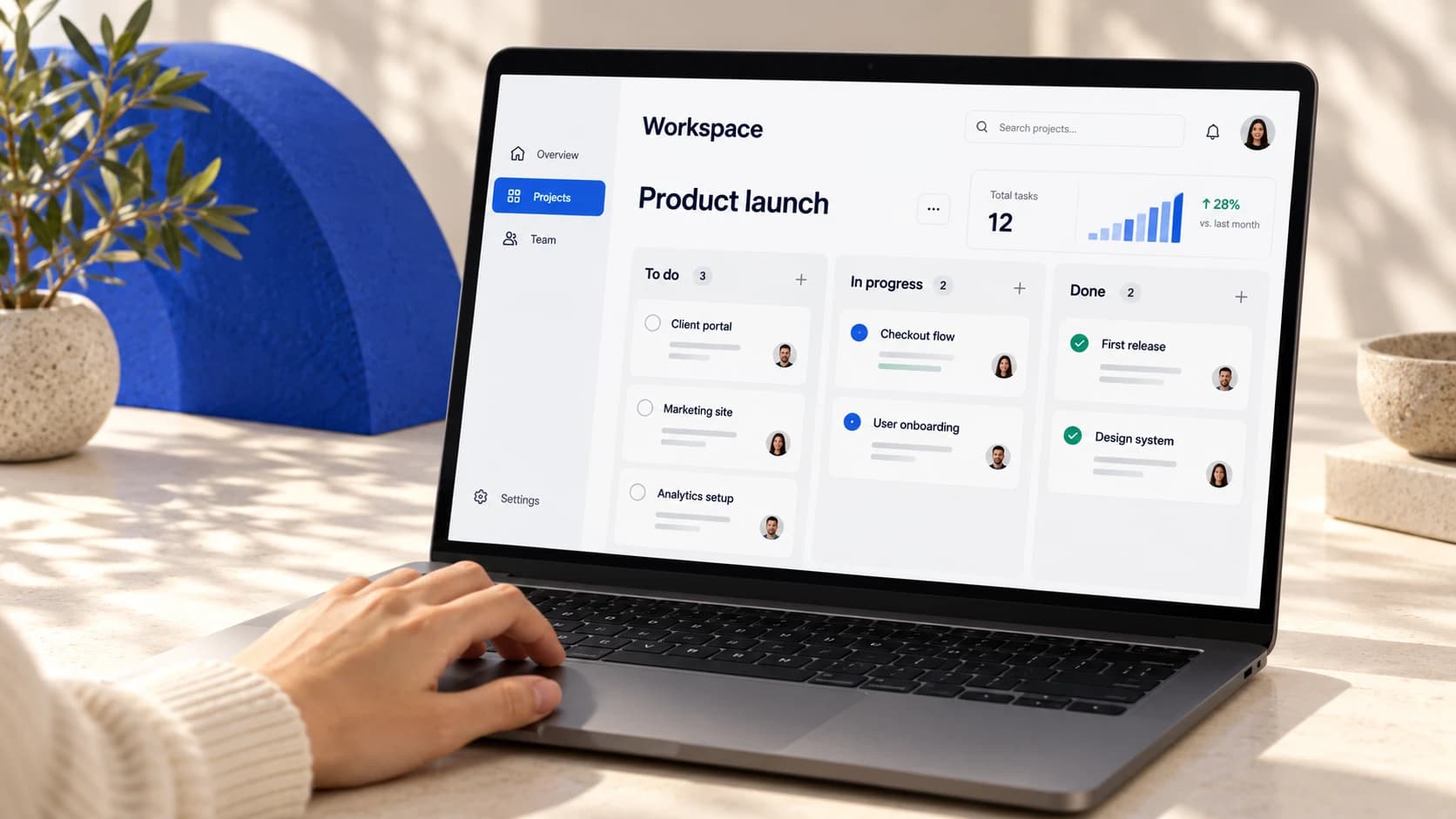 Web apps and MVPsfrom £2,100Portals for insurers and lenders, and first products for founders coming through Techscaler at CodeBase or the Data-Driven Innovation hubs.
 Mobile appsfrom £4,100Apps for students and the businesses around them, for visitor attractions, and for festival audiences looking for their next show.
 AI agents and automationfrom £1,900Agents that sort claims, draft investor updates or answer guests in their own language, with a person approving the result.
 Online storesfrom £2,100Stores for tours, tickets and vouchers, and for local makers who want to keep selling to visitors once they are home.
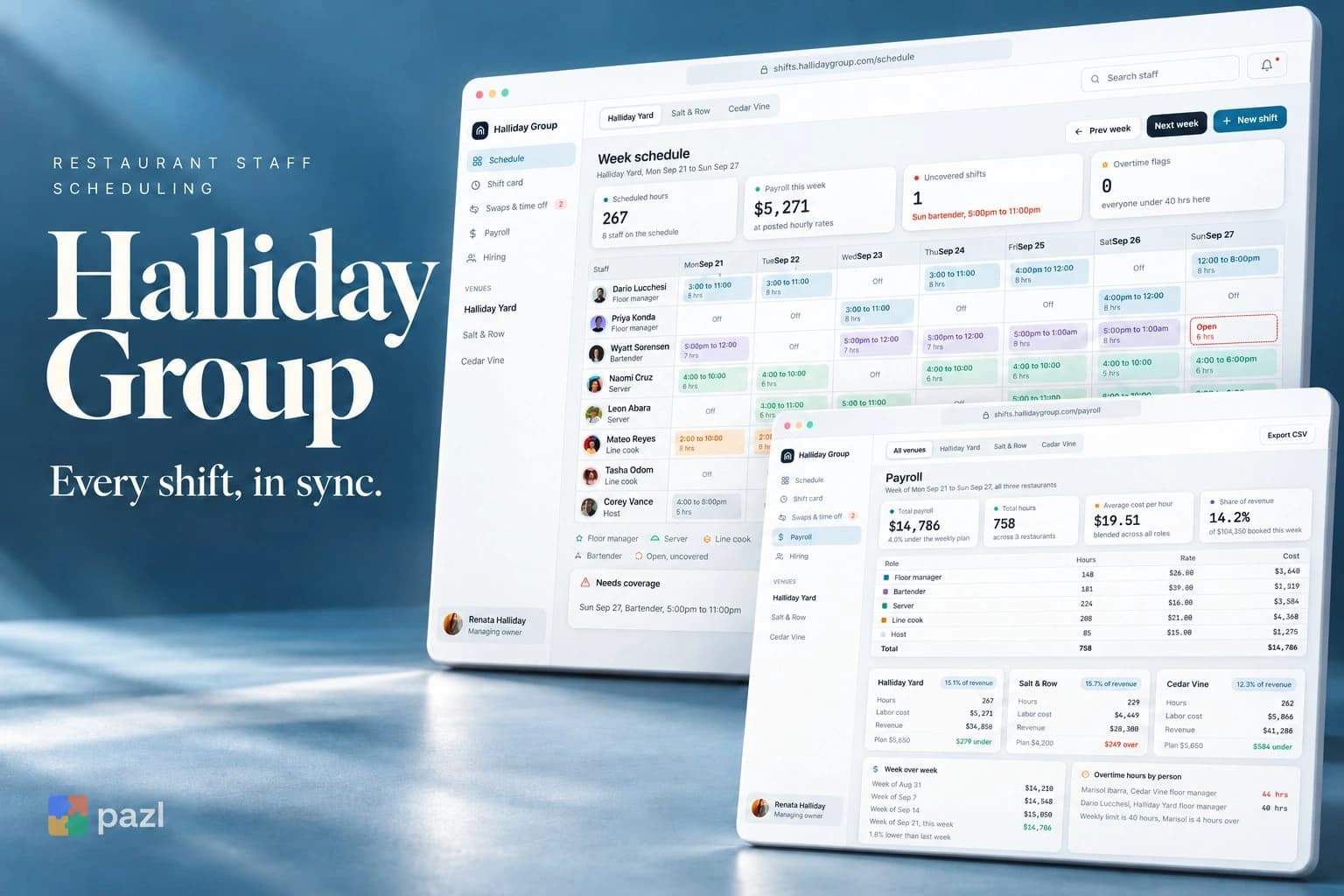 Integrations and systemsfrom £1,900Links from booking engines, policy systems and CRMs to the Making Tax Digital software your VAT return comes from.
Projects we can show you
 Web · FilmCasting Platform for the Film IndustryRoles, castings, a blog, subscriptions, personal accounts.
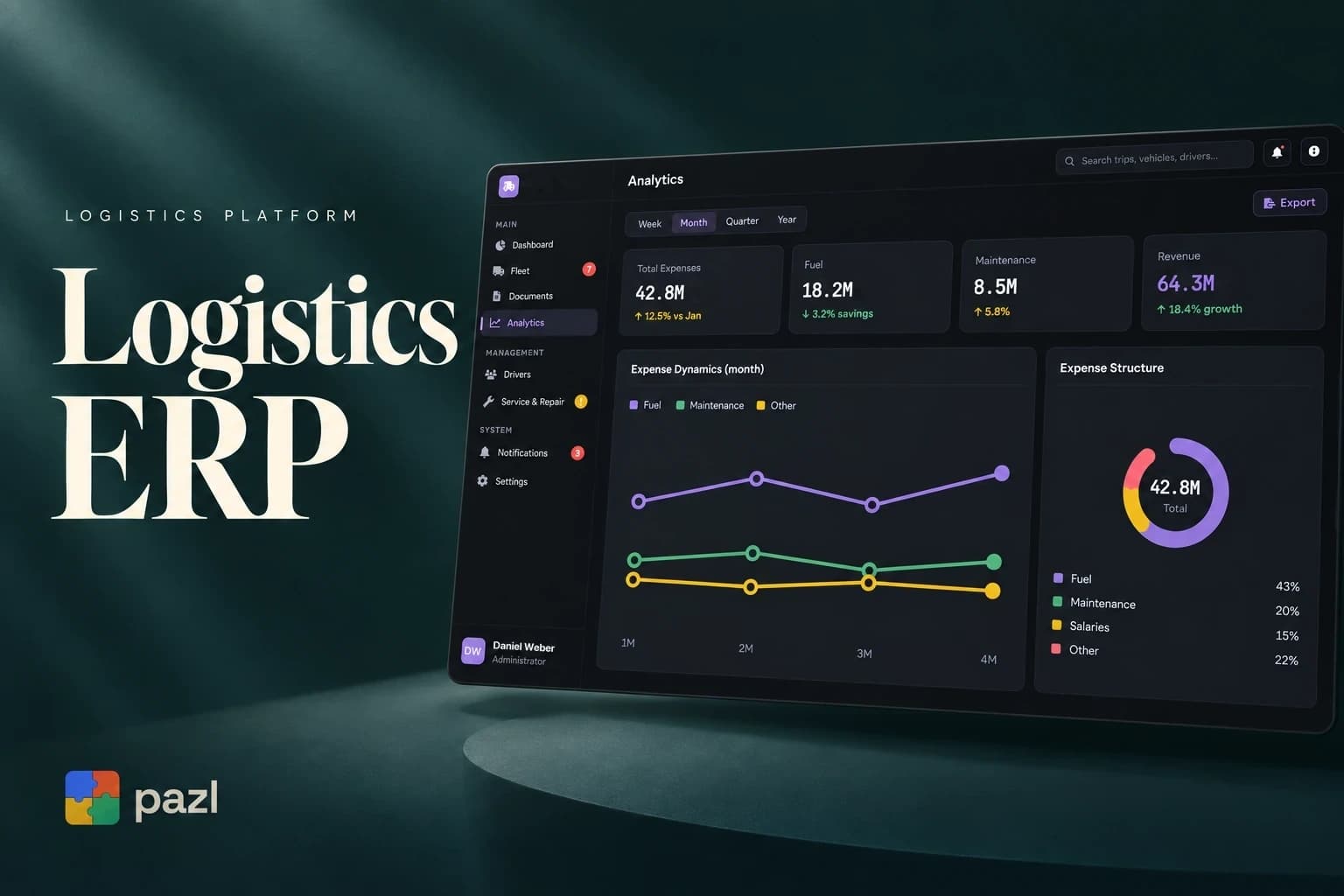 Web · LogisticsERP for a Logistics CompanyFleet, documents, finance and operations in one place.
 Mobile · RetailMobile App for a Beverage ChainBuilt from scratch: loyalty, gamification, sales analytics.
Edinburgh’s economy in three parts
The figures come from the council’s Edinburgh by Numbers report. Choose a sector to see where the hours go and what we would build first.
Finance and insurance account for 11.3% of jobs in Edinburgh and generate £8.8 billion in GVA, according to Edinburgh by Numbers 2025.[3]
- Claims intake that reads every attachment
- Summaries of policy and fund documents
- Case queues with a named approver
What gets in the way
Insurers, lenders and fund administrators run on long documents: policy wordings, claims files, investor reports. Staff spend the day reading and rekeying before any decision is made.
Edinburgh had 5 million staying visits in 2024, which generated £2.57 billion in total visitor spend.[3]
- Direct booking with deposits
- Gift vouchers and tour bundles
- A guest list you own and can email
What gets in the way
Tour operators, guesthouses and attractions sell through platforms that take commission and keep the guest’s details, so a returning visitor is hard to reach directly.
University enrolment in Edinburgh reached 72,365 in 2024/25, more than the city’s entire school population.[3]
- Student app with sign-up and payments
- Booking for rooms, classes or tutors
- Notices sent to the right year group
What gets in the way
Student housing, societies, tutors and food businesses serve a population that changes every academic year and lives on its phones. Paper sign-ups and group chats cannot keep up with that churn.
UK rules that apply to an Edinburgh project
An Edinburgh business files VAT through Making Tax Digital software like any other VAT-registered firm in the UK, faces mandatory e-invoicing for all VAT invoices from 2029, and answers to the Information Commission for personal data.
- Debit cards
- Contactless
- Faster Payments
- Direct Debit
- Buy Now Pay Later
- Open banking
- Xero, Sage, QuickBooks, FreeAgent
- Sage
All dates and details
The timeline and payment figures follow.
The standard VAT rate is 20%, with a 5% reduced rate and a 0% zero rate for some goods and services.[2]
- In forceMaking Tax Digital for Income Tax
From 6 April 2026, sole traders and landlords with self-employment and property income over £50,000 must use Making Tax Digital for Income Tax.[4]
- Sources checked on 14 November 2026
- Coming upE-invoicing for all VAT invoices
The UK will make e-invoicing mandatory for all VAT invoices from 2029, B2B and B2G, with a decentralised model. The standard is not decided yet.[5]
- Making Tax Digital for VAT
Every VAT-registered business must keep digital records and file VAT Returns with compatible software.[6]
- A roadmap at Budget 2026
The government said it would publish the roadmap for the 2029 mandate at Budget 2026.[5]
- Public buyers and the NHS
Bodies covered by the Public Procurement Act 2023 must accept e-invoices that comply with BS EN16931; NHS Supply Chain requires its suppliers to use Peppol.[5]
- Debit cardsThe most used method in 2025, with 26.6 billion payments; cards made up 64% of all UK payments.[7]
- Contactless19.2 billion contactless card payments in 2025, while cash fell to 8% of all payments.[7]
- Faster PaymentsWith other remote banking, 6.2 billion payments in 2025: the second most used method after debit cards.[7]
- Direct DebitGrew 2% to 5 billion payments in 2025, 10% of all UK payments.[7]
- Buy Now Pay Later12.9 million UK adults, or 22%, used it at least once in 2025.[7]
- Open bankingPassed 1 billion payments and 100 billion API calls in September 2026.[8]
Hubs, a programme and a festival that shape Edinburgh projects
Three things in the city that decide what gets built here and how firm the deadline is.
- Data-Driven Innovation hubs[12]
The University of Edinburgh’s Data-Driven Innovation hubs, including the Bayes Centre, support data and digital innovation under the City Region Deal.
What it means for your project
Projects from these hubs often have a model or a dataset before they have users. We build the product around it: sign-in, permissions, a clear interface and logs, so the research can face customers.
- Techscaler at CodeBase[13]
CodeBase runs the Edinburgh hub of the Scottish Government’s Techscaler startup programme, which hosted 408 events between November 2022 and December 2024.
What it means for your project
Founders in a scaling programme meet investors on a timetable. A fixed scope and a release date in writing let them demo working software at the next session instead of slides.
- The Festival Fringe[3]
The Edinburgh Festival Fringe attracted over 3 million attendees in 2024, nearly half of them from outside Scotland.
What it means for your project
Venues, producers and the businesses near them face a short, intense peak. Ticketing, bookings and payments must hold up under it and make sense to visitors who are new to the city.
Our product came out of the Bayes Centre. Can you turn a research prototype into something customers use?
Yes. Your model or data pipeline stays the core, and we build around it: accounts, permissions, an interface people understand and the logs a buyer’s security team will ask for. The code and the cloud accounts are yours, so your own engineers can take over later.
Can our booking and ticketing cope with the Fringe peak?
If they are built for that peak, yes. With over 3 million Fringe attendees in 2024, demand comes in bursts: we cache what can be cached, hold seats during checkout and load-test the busiest hour before sales open. A failed payment releases its seats automatically.
Which payment methods should a tour operator accept?
Debit cards first, as the UK’s most used method in 2025, with Apple Pay and Google Pay for guests booking on a phone; contactless card payments reached 19.2 billion that year. For group deposits, open banking lets the organiser pay straight from a bank app.
We hold student and applicant data. Who regulates how we use it?
The Information Commission, the regulator formerly called the Information Commissioner’s Office. We map what each form and app screen collects, keep data in a region you choose and set how long it is held, so a request from a student about their data can be answered quickly.
We are an insurer. What do the coming e-invoicing rules mean for us?
The UK intends to require e-invoices for all VAT invoices from 2029, under a decentralised model, and said the roadmap would come at Budget 2026; the standard is open. Bodies under the Public Procurement Act 2023 already accept e-invoices to BS EN16931. Structured invoice data today keeps the change small.

In Edinburgh a claims team, a festival producer and a university lab can all need software in the same month, and they need very different things.
More
From our blog



Checked on 14 November 2026
All 13 sources
- ons.gov.uk/peoplepopulationandcommunity/populationandmigration/…
- gov.uk/vat-rates
- edinburgh.gov.uk/downloads/file/36663/edinburgh-by-numbers-acce…
- gov.uk/government/publications/making-tax-digital/overview-of-m…
- gov.uk/government/consultations/promoting-electronic-invoicing-…
- gov.uk/government/publications/vat-notice-70022-making-tax-digi…
- ukfinance.org.uk/system/files/2026-08/PaymentMarketsReport_2026…
- openbanking.org.uk
- tax.service.gov.uk/making-tax-digital-software
- investnewcastle.com/sectors/corporate-services
- gov.uk/government/organisations/information-commissioner-s-offi…
- local.ed.ac.uk/city-region-deal/about-data-driven-innovation
- gov.scot/publications/early-evaluation-techscaler-programme-202…
The facts about the city and its country come from the pages listed, read on that day. Rules change: confirm what applies to your company with your tax adviser.
A project in Edinburgh?
Tell us what you need and by when. We reply with questions or a first estimate.