Waypoint: Physical Therapy App
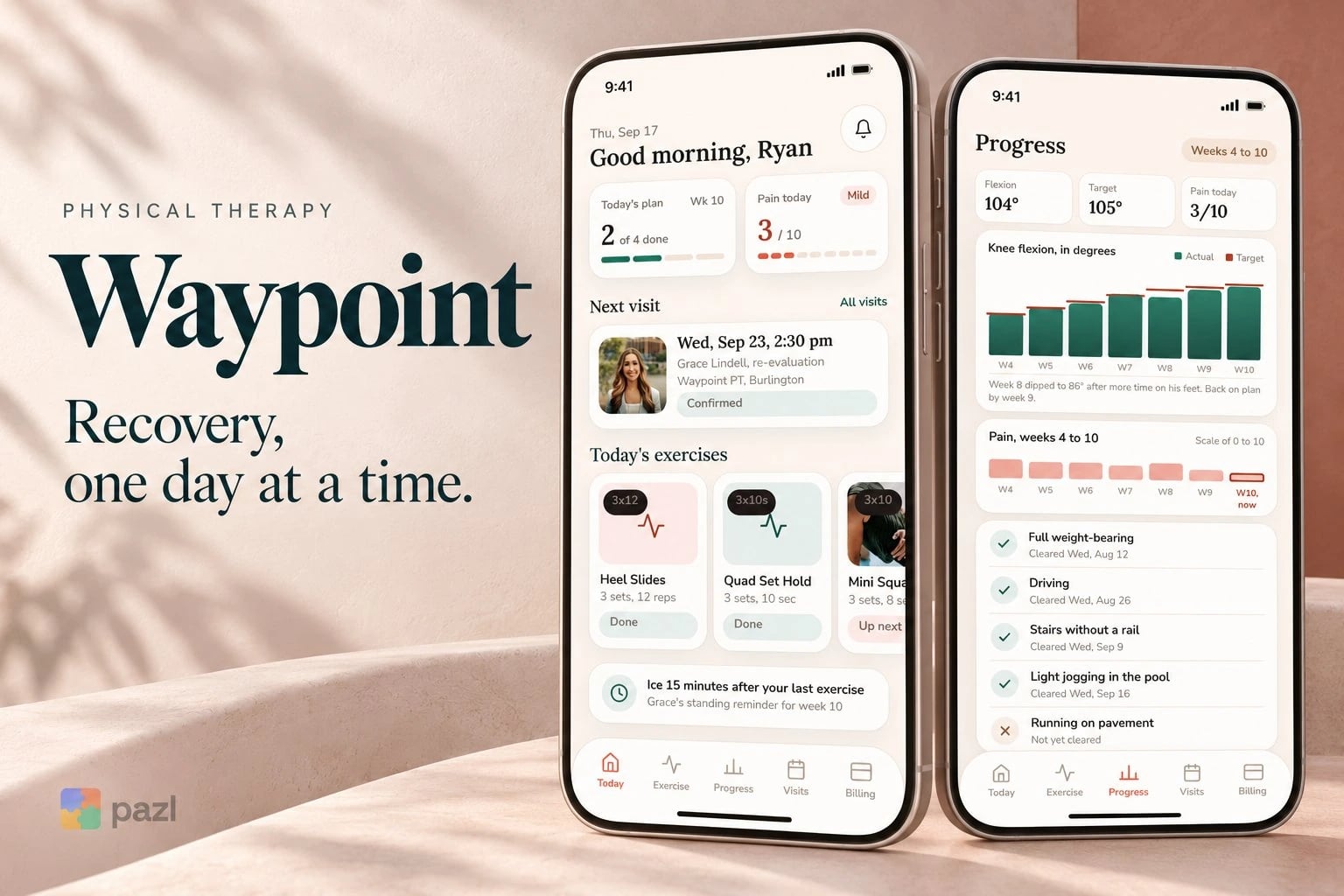
Waypoint is a concept app we designed for a physical therapy clinic. It carries the patient between visits: the day’s exercises, pain and progress, the next visit and the bill.
A fictional product exploration showing interface and interaction design. No live deployment or commercial results are implied.
- Project type
- Concept project
- Industry
- Physical therapy
- Platform
- Mobile app for patients
- Our role
- Product and interface design
- Scope
- Five screens
Who the physical therapy app is for
Patients recovering on a prescribed programme, and the therapists who set it. The patient sees what to do today; the therapist sees whether the plan is followed.
- Patients doing home exercises between clinic visits.
- Therapists who set the plan, leave tips and notes, and clear new activities.
- Patients who want to know what insurance paid and what they owe.
Recovery continues between visits
Between clinic visits the patient does the exercises at home. Waypoint connects the visits with that work, so the patient and the therapist both see whether the plan is actually followed.
- What to do today, and how much of it is done.
- How range of motion and pain change week by week.
- What each visit cost, and what insurance covered.
What the Waypoint app includes
Today
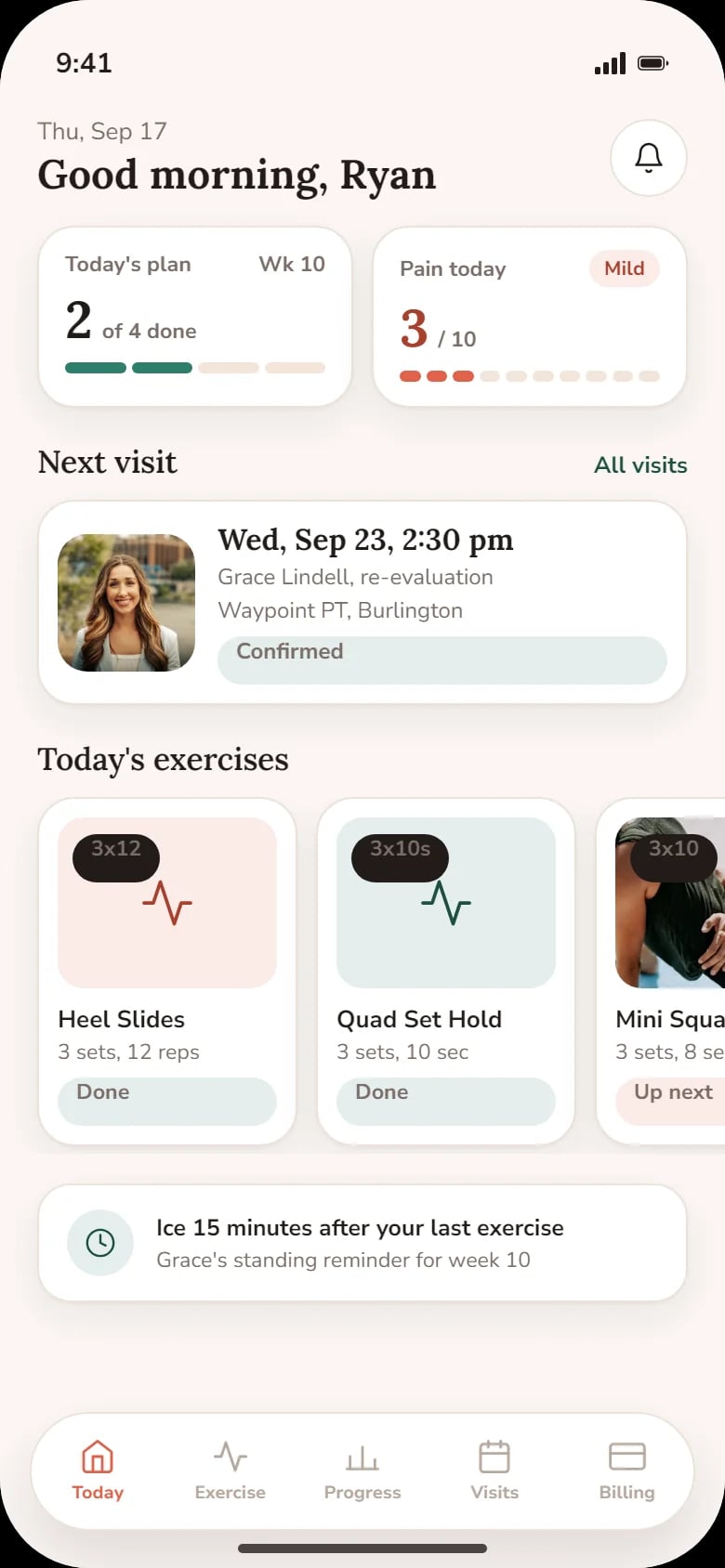
Today’s plan and what is done, pain on a 0 to 10 scale, the next visit and the day’s exercises.
Exercise
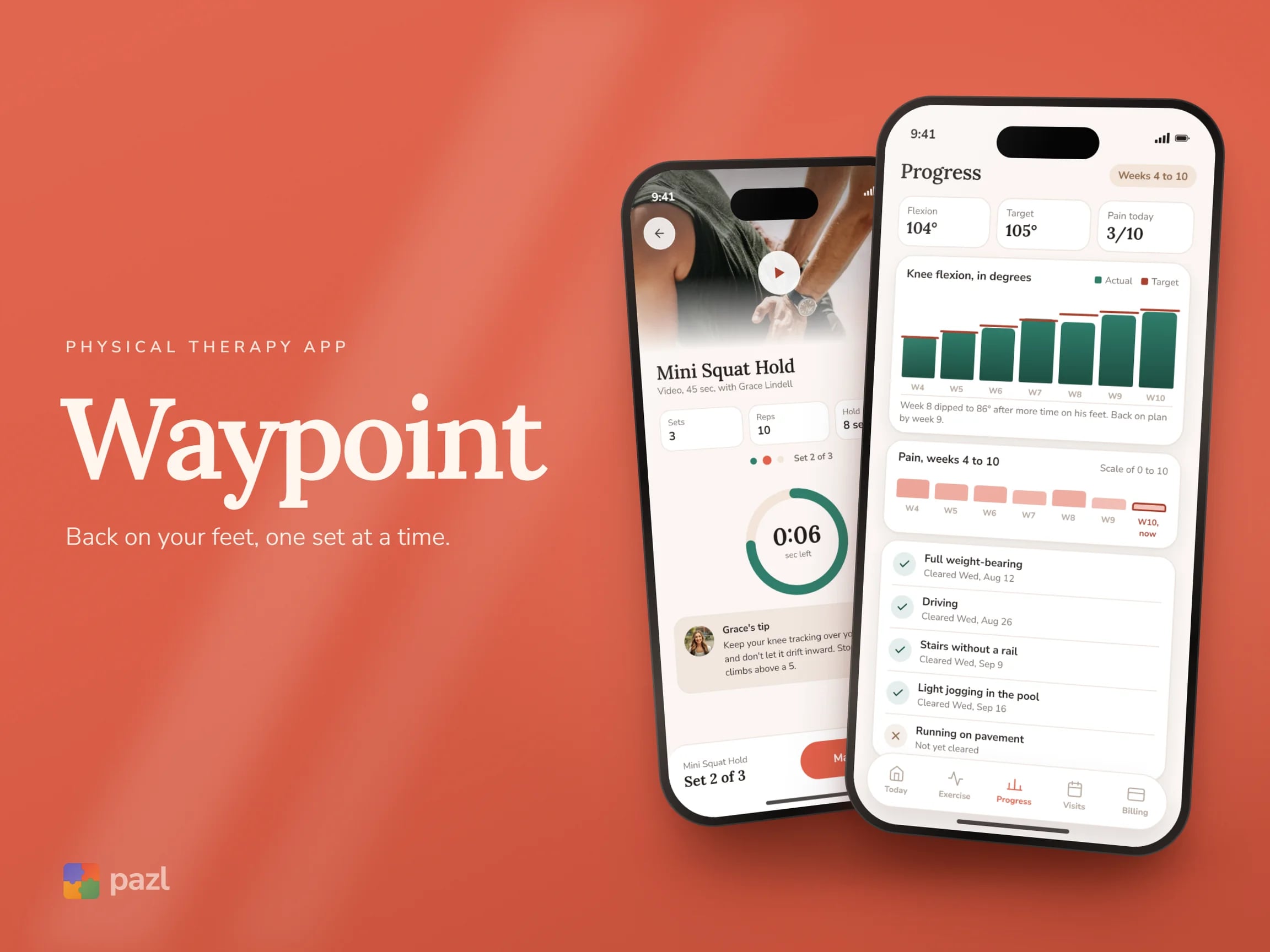
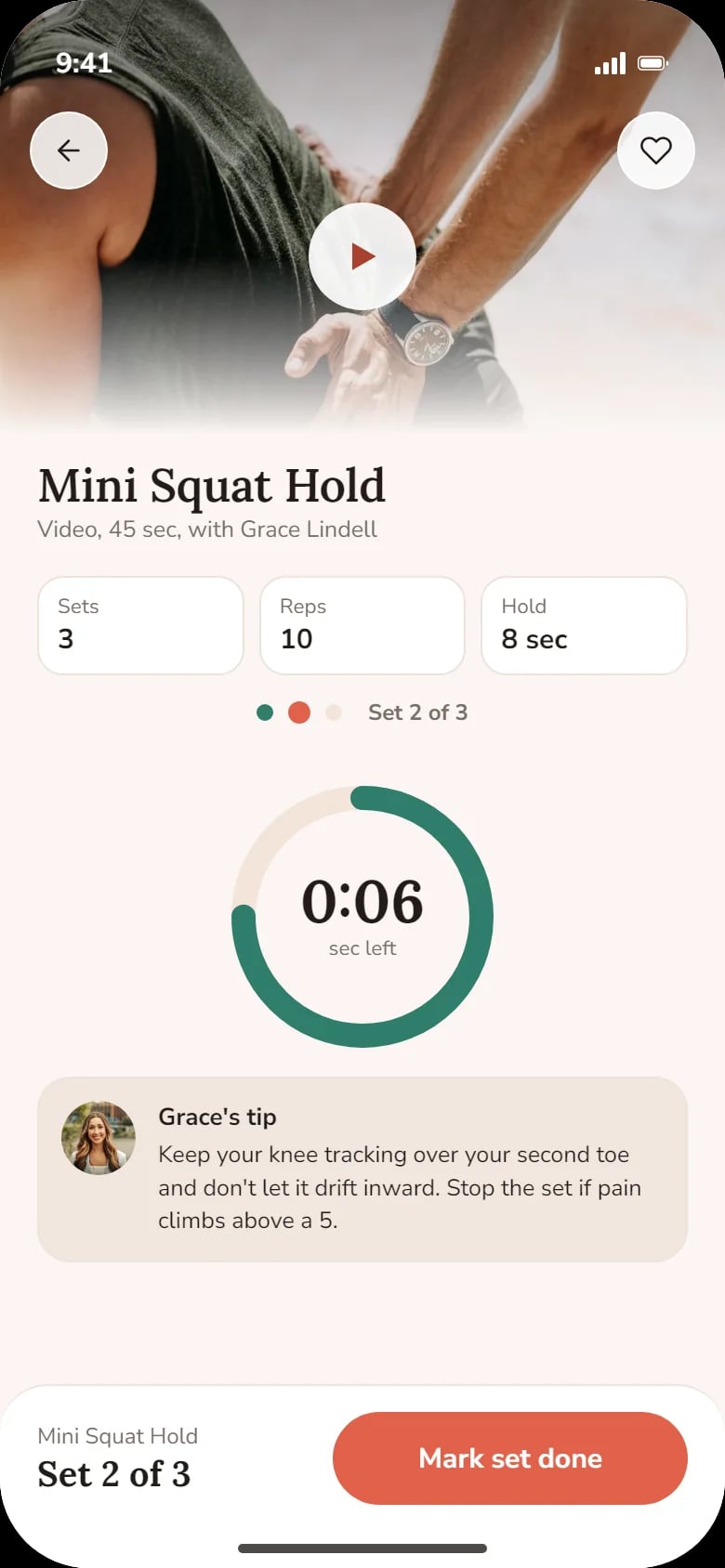
A video with the therapist, sets, reps and a hold timer, a tip from the therapist and a button to mark the set done.
Progress
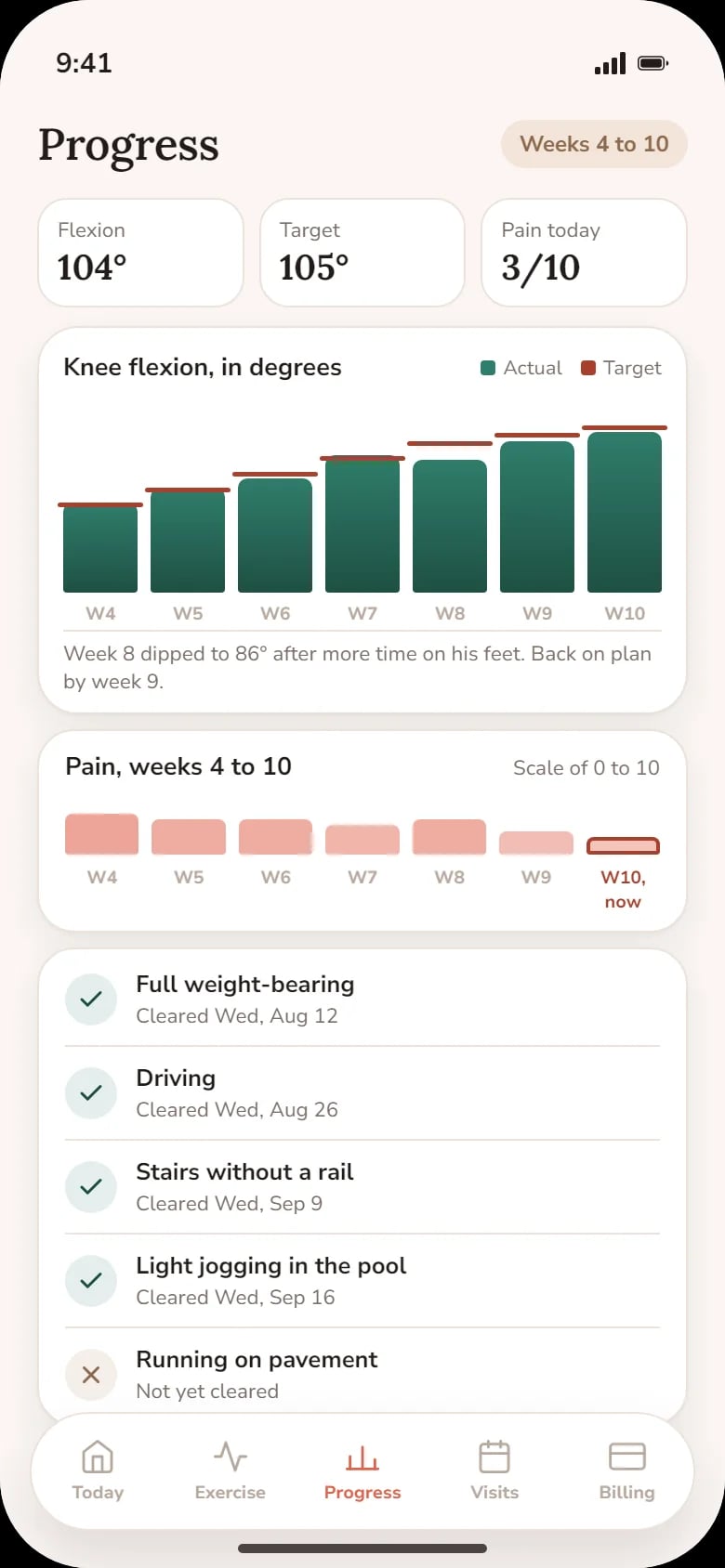
Knee flexion in degrees against the target, pain by week and the activities the therapist has cleared.
Visits
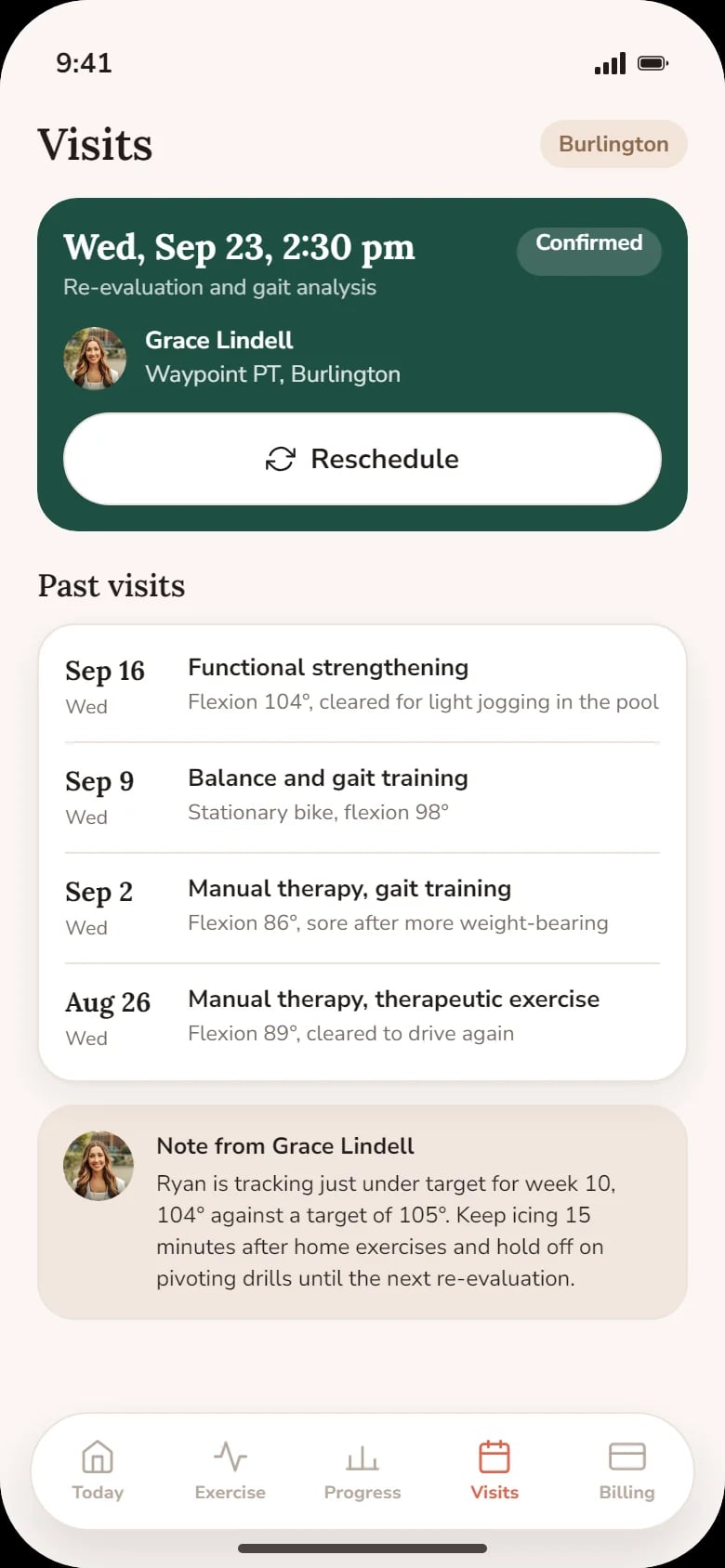
The next visit with a reschedule button, past visits with what was done and a note from the therapist.
Billing
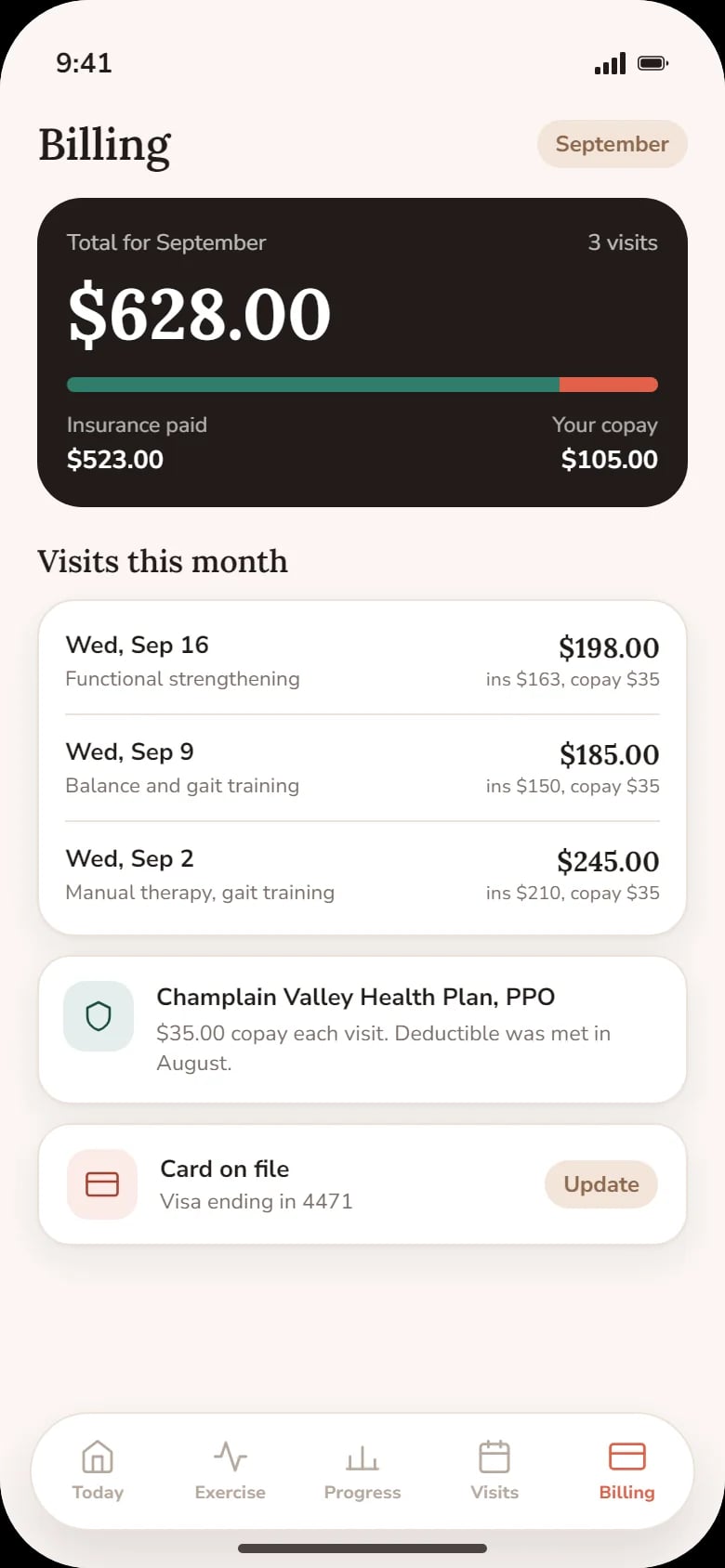
This month’s visits with the insurance share and the copay, and the total for the month.
How a patient uses Waypoint
Check today
Open the app: today’s exercises, the pain level and the next visit.
Do the exercises
Follow the video, hold with the timer and mark each set done.
Watch the trend
Progress shows range of motion against the target and pain over the weeks.
Prepare for the visit
Read past visits and the therapist’s note; reschedule if needed.
Understand the bill
Each visit shows what insurance paid and what you owe.
How we designed the Waypoint concept
The screens tell the story of one invented patient recovering from knee surgery. All five share his plan, his numbers and his therapist, so the flexion on the progress chart is the one in the therapist’s note.
The day comes first
The home screen answers what to do today; charts, visits and bills are one tap away.
Clinical numbers, plainly
Flexion in degrees against a target, pain on a 0 to 10 scale and a short line that explains a dip.
A warm clinic palette
Off-white background, coral and dark teal accents, Lora serif for headings and figures, Nunito Sans for text.
The therapist in the loop
Tips on exercises, notes after visits and cleared activities come from the therapist.
A closer look at the screens
What the concept shows
- A daily plan with progress the patient can see.
- Exercises with video, sets, reps and a hold timer.
- Range of motion tracked against the target, and pain by week.
- Visit history with the therapist’s notes.
- A bill split into the insurance share and the copay.
Questions about this project
No. Waypoint is a concept with an invented patient, therapist and bills. It shows how a patient app for a physical therapy clinic could work.