
What is a layer 2 blockchain?
A layer 2 is a blockchain network that processes transactions on top of a main chain such as Ethereum, then posts compressed results back to it for security.
Also calledL2layer 2 blockchain

Why it matters for a business
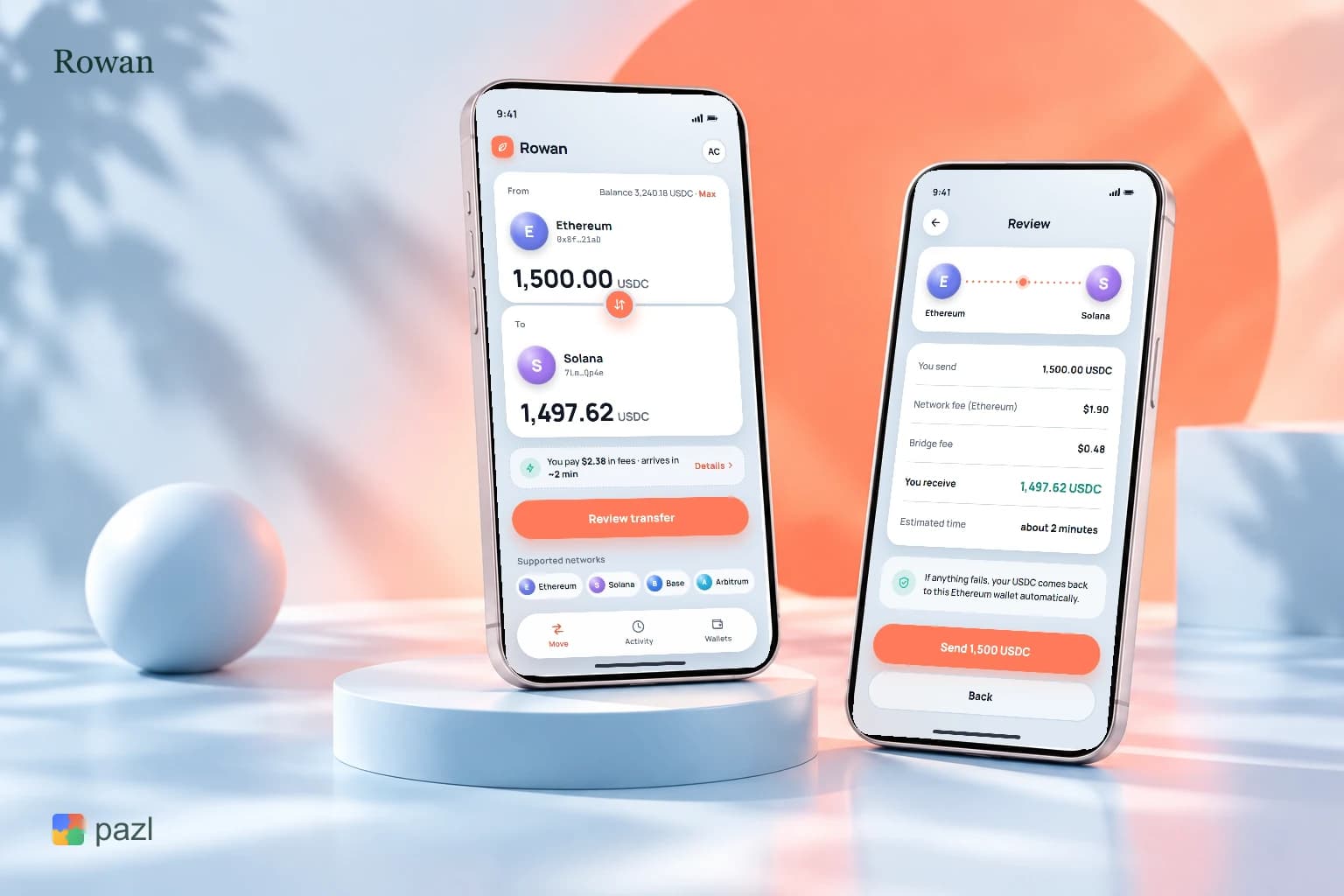
Fees on Ethereum itself can make small payments or frequent actions uneconomic; a layer 2 brings them down to a level that suits consumer apps.
More
Rollups such as Arbitrum, Optimism and Base are examples.
Arbitrum, Optimism, Base and Polygon all run the same Solidity code and EVM tools, so the choice rests on withdrawals, who runs the sequencer and where your users already are.
How rollups work
Transactions are batched off the main chain, and the batch data or a proof is posted to Ethereum.
Optimistic vs ZK
Optimistic rollups assume batches are valid unless challenged; ZK rollups post a cryptographic proof with each batch.
Not the network layer
In networking, layer 2 is the data link layer of the OSI model, where switches work; it is unrelated to blockchains.
- AppWhere people click
- WalletHolds the keys and signs
- Smart contractRules that run as code
- layer 2BlockchainRecords every transaction
Token
What it costs
Starting prices of our services on this topic, in your currency.


Layer 2 in practice
A network that runs on top of a blockchain such as Ethereum to make transactions faster and cheaper.
Example
- A loyalty platform in Bristol issues points as tokens for a large number of small purchases every day.
- On Ethereum itself, fees could exceed the value of many rewards, so the contracts run on a layer 2. Users do not see the chain, and withdrawals to Ethereum stay possible when someone needs them.
Which term is it?
A program stored on a blockchain that runs automatically when its conditions are met.




From the founder
In Web3 I care about products people can actually use: clear wallets, tested smart contracts, costs you can see. Scope and price are agreed up front, as for everything we build.
Anatoly MikhailovFounder of Pazl